Insulin Resistance
Read Time: 6min
Written By

Dr. Hassan Khan
Internist
Insulin Resistance: Symptoms Causes and Treatment Guide 2026
If your energy feels low most days, you are not alone.
If weight feels “stuck,” you are not failing.
If brain fog hits after meals, there may be a medical reason.
Table of Contents
FAQs
Insulin Resistance FAQs
Please feel free to Send a Message or call us if your related question is not included here. we are happy to serve you.
Often, yes. Many people improve with diet, movement, sleep, and stress support. Additionally, some benefit from medical treatment.
Common early signs include fatigue after meals, cravings, belly weight gain, and brain fog. Clusters matter most.
A protein-forward, high-fiber plan works well for many people. Focus on vegetables, protein, and slower carbs.
Some people feel better in weeks. Lab markers can take longer. Consistency is the key.
No. Insulin resistance can exist for years before diabetes. Prediabetes is a warning stage.
It can. Higher insulin can increase hunger and fat storage. However, a structured plan can help.
Clinicians often use A1C, fasting glucose, lipids, and sometimes fasting insulin.
For many people, yes. Improving insulin resistance can support metabolic health and PCOS symptom management.
Balanced meals, post-meal walks, better sleep, and medical evaluation often help.
Limit sugary drinks, frequent desserts, and ultra-processed snacks. Also, avoid skipping meals if it triggers overeating later.
Insulin Resistance is a common metabolic problem. However, it often stays hidden for years. Consequently, many adults push through fatigue at work. They also lose confidence in their body.
At our clinic, we take a practical approach. We listen first. Then we test what matters. After that, we build a plan you can follow. In this guide, we explain Insulin Resistance symptoms, causes, and modern treatment. Additionally, we show how to protect work productivity with medical support.
The Silent Struggle of Insulin Resistance
Insulin resistance is not rare. Still, it is easy to miss early. Many people feel tired and assume it is stress. Others gain belly weight and assume it is aging. Meanwhile, the real issue may be metabolic. Over time, insulin resistance can raise the risk of prediabetes. Prediabetes also increases the risk of type 2 diabetes. That is why early action matters. When we catch it sooner, the plan is often simpler.
What Insulin Resistance Means
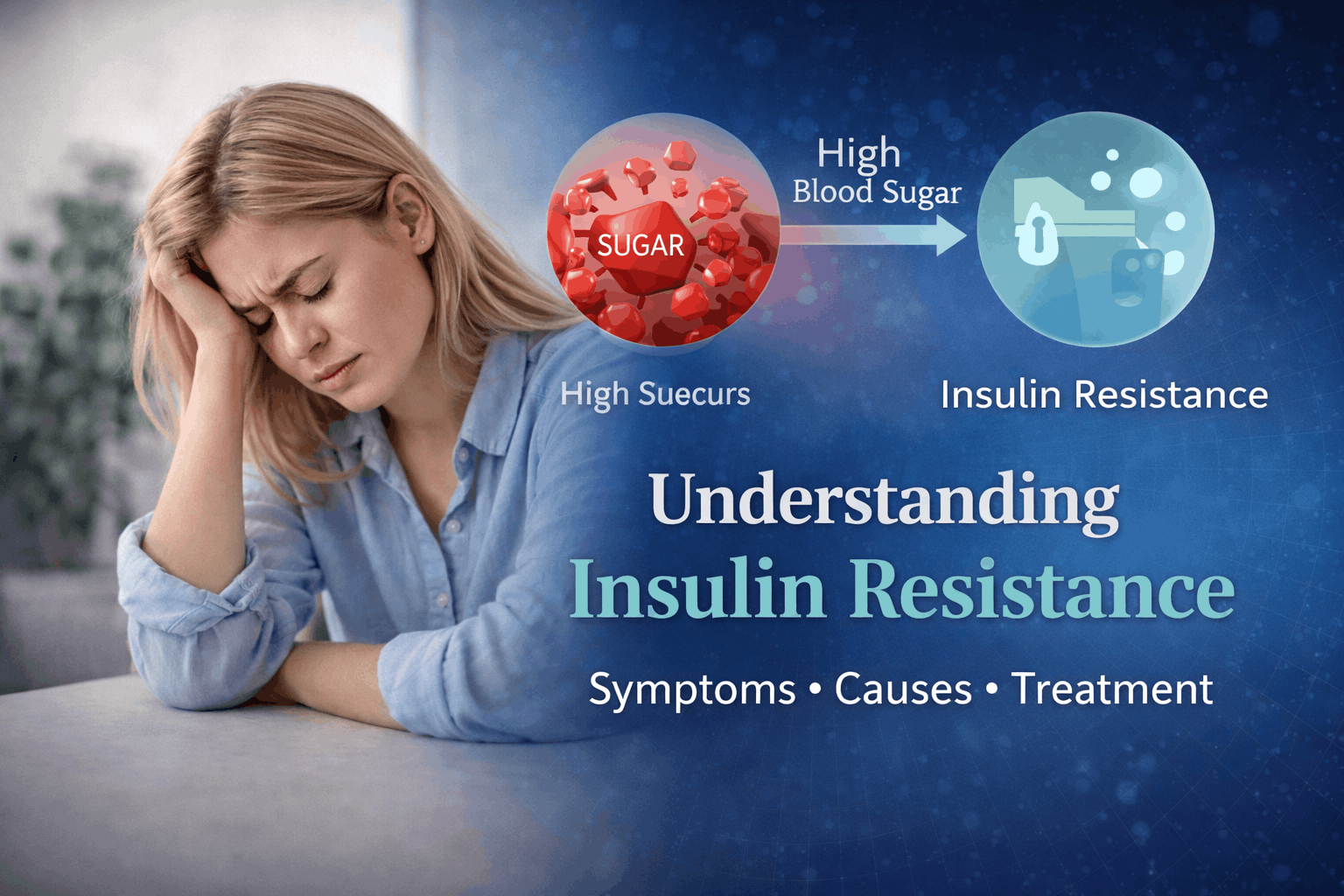
Insulin is a hormone. It helps move sugar from your blood into your cells for energy.
Here is a simple analogy:
- Insulin is the key
- Your cells are the lock
- Sugar is the fuel
With good insulin function, the key turns easily. Fuel enters the cells, and energy stays steady. With Insulin Resistance, the lock becomes “sticky.” So, your body makes more insulin to force the door open. High insulin can increase hunger. It can also increase fat storage. Additionally, it can worsen fatigue.
Insulin Sensitivity vs Insulin Resistance
Insulin sensitivity means the door opens fast. Your body needs less insulin to do the job. Insulin resistance means the door sticks. Your body needs more insulin to do the same job. Consequently, the body may stay in “high insulin mode.” That can lead to cravings, energy crashes, belly weight gain, and difficulty losing weight.
This is not about willpower. It is physiology. And it can improve.
Early Warning Signs of Insulin Resistance
One symptom alone does not confirm anything. However, clusters are meaningful.
Early warning signs checklist
- Fatigue after meals
- Strong sugar or carb cravings
- Hunger that returns quickly
- Belly weight gain
- Brain fog or low focus
- Afternoon energy crash
- Skin darkening on the neck or underarms
- Blood pressure trending higher over time
- Irregular periods or PCOS symptoms
- Sleep problems, especially unrefreshing sleep
If this list feels familiar, take it seriously. These Insulin Resistance signs are common, and they are treatable.
Insulin Resistance and PCOS (The Missed Link)
Many people with PCOS also have insulin resistance. Insulin resistance can worsen irregular cycles, acne, unwanted hair growth, and weight gain around the midsection. Additionally, higher insulin can affect ovulation patterns. So, improving insulin resistance may support both metabolic health and PCOS symptoms.
If PCOS is part of your story, testing sooner can save time and reduce frustration.
What Causes Insulin Resistance?
There is rarely one cause. Instead, insulin resistance develops from multiple drivers.
Common drivers we see
- Family history and genetics
- Low activity and low muscle mass
- High intake of ultra-processed foods
- Sugary drinks and frequent “liquid calories”
- Chronic stress
- Short or inconsistent sleep
- Certain medications (case-by-case review)
However, we avoid blame. We focus on what is changeable and measurable.
How We Diagnose Insulin
Testing makes the plan smarter. It also saves time.
We start with symptoms and health history. Then we confirm risk with labs.
Core labs we often use
- A1C
- Fasting glucose
- Lipid panel
- Sometimes fasting insulin
CDC explains A1C testing and why it matters.
Patterns that raise suspicion
Common patterns include:
- Fasting glucose at or above 100 mg/dL
- A1C in the prediabetes range
- Higher triglycerides
- Lower HDL
A Mayo Clinic expert discusses these patterns.
Optional tests (when useful)
- Oral glucose tolerance test (OGTT)
- HOMA-IR calculation (an estimate of insulin resistance)
We choose tests based on your case. Additionally, we explain the results in plain language.
Modern Treatment (What Works Now)
The goal is not perfection. The goal is progress you can repeat. Lifestyle changes can reduce insulin resistance. We focus on four pillars: nutrition, movement, sleep, and stress support.
Insulin resistance diet (simple plate method)
Use this plate approach:
- ½ plate: non-starchy vegetables
- ¼ plate: protein
- ¼ plate: high-fiber carbs
- Add: healthy fat in small portions
Better carb choices include beans, lentils, oats, quinoa, berries, and sweet potatoes.
Additionally, protein often reduces cravings. It also supports muscle, which supports metabolic health.
Limit these most days:
- Sugary drinks
- Pastry-style breakfasts
- Frequent snack grazing
- Ultra-processed chips and sweets
This is not “no carbs.” It is smarter carbs and better timing.
Movement that improves insulin sensitivity
Start small. Then build.
Good starters include:
- A 10-minute walk after meals
- Two to three strength sessions per week
- More steps on workdays
Strength training matters because muscle uses glucose efficiently. Consequently, insulin sensitivity improves.
Sleep and stress support
Sleep is a metabolic tool. So is stress control.
Aim for:
- A consistent bedtime
- Morning light exposure
- Caffeine before noon
- Fewer late-night screens
Additionally, use short stress resets:
- Two minutes of slow breathing
- A quick outdoor walk
- A short stretch break
These are small steps. However, they add up.
Medication and medical support (when appropriate)
Lifestyle is the base. However, some cases need medical support.
We consider treatment options when:
- Lab risk is high
- Symptoms disrupt daily life
- PCOS is present
- Lifestyle changes are not enough yet
We monitor carefully. We also adjust based on follow-up labs.
Reversing Insulin Resistance (14-Day Starter Plan)
You do not need a perfect week. You need a consistent start.
Days 1–7 (quick wins)
- Eat a protein-forward breakfast
- Replace sugary drinks with water
- Walk 10 minutes after dinner
- Sleep at a consistent time four nights
Days 8–14 (add structure)
- Add two strength sessions
- Add one high-fiber lunch daily
- Plan treats, do not “accident-eat” them
- Track energy after meals
Consequently, many people notice fewer cravings, less afternoon crash, and better focus at work.
Navigating Work Productivity
Work does not pause for fatigue. So, we treat this with urgency and respect. Insulin Resistance can affect work performance through post-meal crashes, brain fog, low stamina, and mood changes.
Workday strategies that help fast
- Eat protein at breakfast
- Pack a fiber-rich lunch
- Take a 5–10 minute walk break
- Drink water early in the day
- Keep caffeine before noon
- Use a balanced snack before long meetings
Additionally, use this rule: protein + fiber before carbs. It often reduces energy crashes.
When to Book a Visit
Book a visit if:
- Insulin Resistance symptoms affect your work
- Fatigue lasts more than four weeks
- Weight gain feels unexplained
- PCOS symptoms are present
- You want lab-based guidance
- You may need a work note evaluation
Additionally, seek urgent care for chest pain, fainting, or severe shortness of breath.
Ready to Get Support?
If insulin resistance is leaving you exhausted, stuck with weight changes, or struggling with PCOS symptoms, you don’t have to keep guessing. Book a telehealth appointment with our clinic so we can review your symptoms, order the right labs, and create a realistic plan for improving your metabolic health. And if fatigue is affecting your job, we can also discuss work documentation (like a doctor’s note) when it’s medically appropriate.
You can also explore our related hormone guides on adrenal imbalance, thyroid disorders, and estrogen and progesterone imbalance.
A caring note from MindShape Care
This article is for education only and is not a diagnosis. If your symptoms feel severe, urgent, or unsafe, please seek immediate emergency or crisis support.
This article was reviewed and written with insights from the medical team at MindShape Clinic in the USA — experienced healthcare professionals specializing in cancer treatment, mental health, and patient wellness. Learn more about our board-certified doctors and treatment experts who contribute to our educational blogs and patient support programs.
Recent Blogs
Learn more about Virtual Healthcare and Treatments






Why You Can Rely on Us?
At Mindshape Clinic, we are committed to providing clear and trustworthy health information that you can rely on.
Reliable Information – Every article is based on credible sources.
Expert Review – Content is carefully checked before publishing.
Up to Date – We keep information current with the latest insights.
Clarity First – Our goal is to make knowledge simple and accessible.