
Low eGFR
Low eGFR: What It Means, Causes & What to Do Next
Written by:

Mindshape Content Team
Medically Reviewed by:

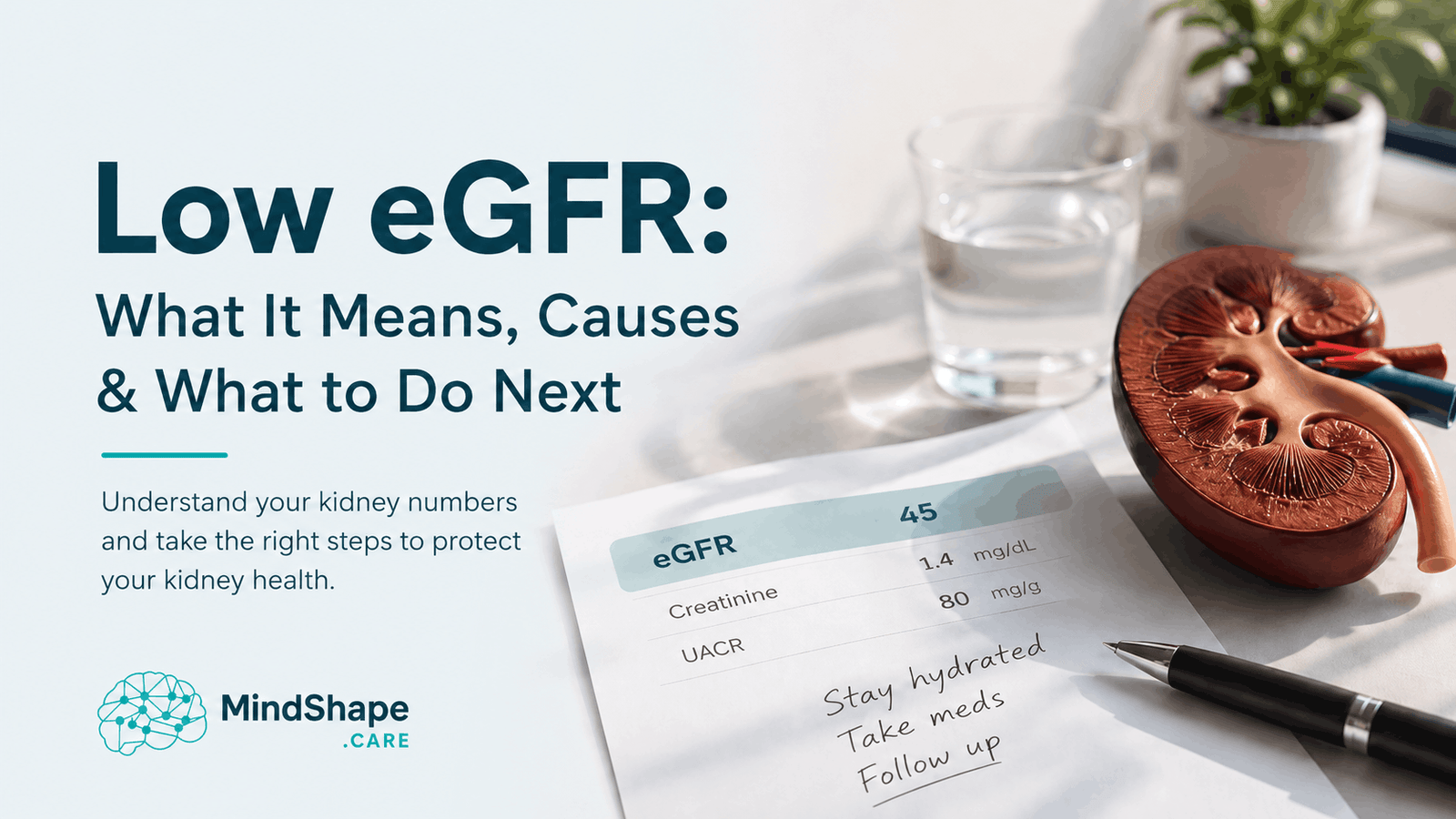
Seeing a low eGFR on a blood test can be unsettling, especially when no one has explained what the number means.
The first thing to know is that eGFR is an estimate of how well your kidneys are filtering your blood. A lower result can be a sign of reduced kidney function, but one abnormal test does not always mean you have chronic kidney disease.
Dehydration, an acute illness, certain medications, changes in creatinine, and other temporary factors can affect the result. What matters most is whether the number stays low, how it compares with your previous results, and whether there are other signs of kidney damage such as albumin in your urine.
If your eGFR is low, the next step is not to panic or try to raise the number on your own. The goal is to understand why it is low and whether anything needs to be treated now.
Have a low eGFR, high creatinine, or protein in your urine?
A MindShape physician can review your kidney results, medications, blood pressure, diabetes history, and other risk factors through a virtual consultation.
What Is eGFR?
eGFR stands for estimated glomerular filtration rate.
Your kidneys contain tiny filtering units that remove waste and extra fluid from your blood. GFR describes how much blood the kidneys are filtering over time.
Directly measuring GFR is complicated, so laboratories usually estimate it using a blood marker such as creatinine. Modern equations may also use cystatin C when additional accuracy is needed.
A higher eGFR generally means better filtration. A lower number means kidney filtration may be reduced.
But eGFR is still an estimate, not a direct measurement. That is why clinicians interpret it alongside your medical history, previous results, urine testing, medications, age, and other factors.
What Does a Low eGFR Mean?
In adults, an eGFR of 90 or higher is generally considered within the normal range, although kidney function naturally changes with age.
An eGFR between 60 and 89 does not automatically mean chronic kidney disease. CKD may still be present in this range if there is another sign of kidney damage, such as persistent albumin in the urine or a structural kidney abnormality.
An eGFR that remains below 60 for at least three months is one of the criteria used to diagnose chronic kidney disease.
eGFR Ranges at a Glance
| eGFR | G Category | General Meaning |
|---|---|---|
| 90 or higher | G1 | Normal or high filtration; CKD requires another marker of kidney damage. |
| 60–89 | G2 | Mildly reduced filtration; CKD requires another marker of kidney damage. |
| 45–59 | G3a | Mild to moderate reduction. |
| 30–44 | G3b | Moderate to severe reduction. |
| 15–29 | G4 | Severe reduction. |
| Below 15 | G5 | Kidney failure range. |
These numbers should not be interpreted in isolation. Your urine albumin-to-creatinine ratio (UACR) is also important because it shows whether albumin is leaking into your urine.
Does One Low eGFR Mean You Have Kidney Disease?
No, A single low eGFR is a reason to look more closely, but it is not always enough to diagnose CKD. Chronic kidney disease generally means that reduced kidney function or another marker of kidney damage has been present for at least three months.
Your clinician may repeat the blood test and order a UACR urine test. Depending on the situation, additional blood tests, urine tests, imaging, or other investigations may be needed. This is especially important when the result is new or very different from your usual kidney numbers.
What Causes a Low eGFR?
A low eGFR can happen for more than one reason. Some causes are chronic, while others may be temporary.
Diabetes
Diabetes is one of the leading causes of chronic kidney disease in adults. Over time, high blood glucose can damage the kidneys’ filtering structures. Kidney disease related to diabetes may show up as albumin in the urine, a falling eGFR, or both.
If you have diabetes and a low eGFR, your kidney results should be reviewed together with your A1C, UACR, blood pressure, medications, and cardiovascular risk.
High Blood Pressure
High blood pressure can damage the small blood vessels in the kidneys. Kidney disease can also make blood pressure harder to control. This means hypertension can be both a cause and a consequence of declining kidney function.
If your eGFR is low and your blood pressure is not well controlled, addressing both problems is important. Learn about online hypertension treatment.
Dehydration or Acute Illness
A low eGFR may sometimes occur during dehydration, infection, vomiting, diarrhea, or another acute illness.
These situations can reduce blood flow to the kidneys or temporarily change creatinine levels. If the cause is reversible, kidney function results may improve after the underlying problem is treated.
Medications
Some medicines can affect kidney function or change creatinine levels. NSAID pain relievers such as ibuprofen and naproxen can increase the risk of kidney injury, particularly when someone is dehydrated, has CKD, or has other risk factors. Other medications may require dose adjustment when kidney function is reduced.
Do not stop a prescribed medication simply because your eGFR is low. Ask your clinician or pharmacist to review everything you take, including over-the-counter medicines and supplements.
Kidney Diseases
Conditions that directly affect the kidneys can lower eGFR. Examples include:
- Glomerular diseases
- Inherited kidney disorders
- Autoimmune kidney disease
- Recurrent kidney injury
- Structural kidney abnormalities
- Urinary obstruction
Finding the cause matters because treatment can differ significantly from one condition to another.
What Is the Most Common Cause of Low GFR?
There is no single cause of every low GFR result. If the low result is persistent and caused by chronic kidney disease, diabetes and high blood pressure are the leading causes of CKD in adults.
If the decrease is sudden, the explanation may be different. Dehydration, acute illness, medication effects, or acute kidney injury may cause eGFR to fall over a short period. That is why the pattern over time matters more than one number.
Can eGFR Be Temporarily Low?
Yes. Creatinine-based eGFR can change because of factors that are not necessarily due to permanent kidney damage.
Examples may include:
- Dehydration
- Acute illness
- Certain medicines
- Creatine supplements
- Unusually intense exercise
- Differences in muscle mass
If your eGFR suddenly drops, your clinician may compare it with previous results, repeat the test, review medications, assess hydration and illness, and consider additional testing.
Why UACR Matters When Your eGFR Is Low
eGFR tells you about kidney filtration. UACR tells you whether albumin is leaking into the urine. You need both pieces of information to get a clearer picture of kidney health and future risk.
A UACR of 30 mg/g or higher, when persistent, can be a sign of kidney damage. Someone can have albuminuria even when eGFR is above 60. Likewise, someone can have reduced eGFR with little or no albuminuria.
The combination of eGFR and UACR helps clinicians assess CKD stage, risk, monitoring needs, and treatment options.
Can a Low eGFR Go Back Up?
Sometimes, if your eGFR fell because of a temporary problem such as dehydration, acute illness, or a medication-related effect, it may rise after the problem is corrected. Small changes from one test to another are also common.
Established chronic kidney disease is different. When CKD has caused permanent structural damage, treatment generally focuses on protecting the remaining function and slowing further decline, rather than trying to force the eGFR back to a particular number.
What Should You Do After a Low eGFR Result?
The most useful next step is to understand the result in context.
1. Compare It With Previous Results
Ask whether this is your first low eGFR or part of a longer trend. A stable eGFR of 55 over several tests means something different from a rapid fall from 90 to 55.
2. Repeat Testing When Appropriate
CKD is not normally diagnosed from one isolated eGFR result.
Your clinician may repeat the blood test after an appropriate interval, depending on how low the result is, how quickly it changed, and whether you are currently ill.
3. Check Your UACR
A urine albumin-to-creatinine ratio provides important information that eGFR alone cannot. If your UACR is elevated, your clinician may repeat it to confirm the result.
4. Review Your Medications
Bring a complete list of:
- Prescription medications
- Over-the-counter pain relievers
- Vitamins
- Herbal products
- Protein or workout supplements
- Creatine products
Some may affect kidney function, laboratory interpretation, or medication dosing.
5. Check Blood Pressure and Diabetes Control
Uncontrolled blood pressure and diabetes can accelerate kidney damage. If either condition applies to you, kidney care should include reviewing how well it is currently controlled.
6. Look for a Treatable Cause
Depending on your history and laboratory results, your clinician may investigate dehydration, infection, urinary obstruction, medication effects, autoimmune disease, or another kidney condition. The goal is not simply to label the eGFR as “low.” It is to find out why.
How Can You Protect Kidney Function When eGFR Is Low?
There is no safe shortcut for raising eGFR. The most effective approach is to reduce the factors that can continue to damage the kidneys.
Depending on your individual situation, this may include:
- Controlling blood pressure
- Managing diabetes
- Reducing albuminuria
- Avoiding unnecessary NSAID use
- Stopping smoking
- Following an appropriate sodium and protein intake
- Reviewing medication doses
- Using kidney-protective medication when clinically appropriate
- Monitoring eGFR and UACR over time
Current CKD guidelines include ACE inhibitors or ARBs for appropriate patients with albuminuria and recommend SGLT2 inhibitors for many adults with CKD who meet specific criteria. Other therapies may be appropriate depending on diabetes status, albuminuria, potassium, eGFR, and cardiovascular risk.
These treatments are not chosen based on eGFR number alone.
Should You Drink More Water to Raise eGFR?
Not automatically. If you are dehydrated, correcting dehydration may improve kidney function results. But drinking excessive water does not “flush” chronic kidney disease away, and too much fluid can be harmful for some people with advanced CKD, heart failure, or fluid-retention problems.
Your fluid needs depend on your health, medications, kidney function, and other conditions.
Are There Symptoms of Low eGFR?
Often, no. Early CKD may cause few or no noticeable symptoms, which is why blood and urine testing are so important.
As kidney disease becomes more advanced, symptoms may include:
- Swelling in the feet, ankles, legs, hands, or face
- Fatigue
- Nausea or reduced appetite
- Itching
- Muscle cramps
- Changes in urination
- Foamy urine
- Trouble concentrating
- Shortness of breath
These symptoms are not specific to kidney disease and can have other causes.
When Should You Seek Medical Care for a Low eGFR?
Arrange medical follow-up if you have a newly low eGFR, a persistent result below 60, protein or albumin in your urine, high creatinine, or a clear downward trend in kidney function.
More urgent evaluation may be needed if kidney function falls rapidly or you develop concerning symptoms.
Seek urgent medical attention for severe shortness of breath, chest pain, confusion, rapidly worsening swelling, persistent vomiting with dehydration, or a major reduction in urine output.
When Should You See a Kidney Specialist?
A nephrology referral may be appropriate when there is:
- Advanced CKD
- Rapidly declining eGFR
- Significant or persistent albuminuria
- Difficult-to-control blood pressure
- Recurring potassium or other electrolyte problems
- Uncertainty about the cause of kidney disease
- An inherited or complex kidney condition
- Concern about kidney failure
Referral decisions are based on the full clinical picture, not a single cutoff alone.
Get Your Kidney Numbers Reviewed
A low eGFR can leave you with more questions than answers:
Is this temporary? Do I have CKD? Is my creatinine high? Do I need another test? Is one of my medications affecting my kidneys?
Those questions are easier to answer when your results are reviewed together.
With MindShape’s virtual chronic kidney disease treatment, a physician can review your eGFR, creatinine, UACR, medications, blood pressure, diabetes history, symptoms, and previous kidney results to help determine what should happen next.
Book a virtual kidney consultation to understand your results and get a clear plan for the next step.
FAQs
Frequently Asked Questions
What does a low eGFR mean?
A low eGFR means your kidneys may be filtering blood less efficiently than expected. It does not always mean permanent kidney disease, especially if the result is new or affected by a temporary illness, dehydration, medication, or another reversible factor.
Is an eGFR below 60 serious?
An eGFR below 60 can be a sign of chronic kidney disease if it remains below that level for at least three months. The level of concern also depends on how quickly it changed, your UACR, your medical history, and other findings.
What is the most common cause of low GFR?
For persistent low GFR caused by chronic kidney disease, diabetes and high blood pressure are leading causes in adults. A sudden low result may instead be related to dehydration, acute illness, medications, or acute kidney injury.
Can dehydration cause a low eGFR?
Yes. Dehydration can temporarily reduce kidney filtration and may affect creatinine-based eGFR. If dehydration is the cause, kidney-function results may improve after hydration and treatment of the underlying problem.
Can eGFR improve?
It can improve when the decrease is caused by a reversible problem or normal test variation. In established CKD, treatment usually focuses on slowing further decline and protecting remaining kidney function.
Should I worry if my eGFR is 60 to 89?
Not necessarily. An eGFR of 60 to 89 does not by itself diagnose CKD. Other evidence of kidney damage, such as persistent albuminuria, is generally needed to diagnose CKD in this range.
Why are my creatinine high and eGFR low?
Creatinine is one of the blood markers used to estimate GFR. When creatinine rises, calculated eGFR often falls. The reason may be kidney dysfunction, but muscle mass, supplements, medications, dehydration, and other factors can also affect creatinine.
What should I ask my doctor after a low eGFR result?
Ask whether the result needs to be repeated, whether you should have a UACR urine test, how it compares with previous results, whether any medications may be contributing, and whether your blood pressure, diabetes, or other health conditions could be affecting your kidneys.
This article is for informational and educational purposes only and is not a substitute for professional medical advice, diagnosis, or treatment. If you are experiencing a medical emergency or a mental health crisis, please seek immediate care from emergency services or a local crisis line. This content has been written and reviewed by the Medical Team at mindshape.care. Read our full Medical Disclaimer.
References
View Clinical Sources & References
The following authoritative clinical sources support the medical information in this article.
- Kidney Disease: Improving Global Outcomes (KDIGO). Kidney International. KDIGO Clinical Practice Guideline for the Evaluation and Management of Chronic Kidney Disease .
- National Kidney Foundation. Estimated Glomerular Filtration Rate (eGFR) .
- National Kidney Foundation. Can You Improve Your eGFR? What the Science Says .
- National Institute of Diabetes and Digestive and Kidney Diseases (NIDDK), National Institutes of Health. Chronic Kidney Disease Tests & Diagnosis .
- National Institute of Diabetes and Digestive and Kidney Diseases (NIDDK), National Institutes of Health. Identify & Evaluate Patients with Chronic Kidney Disease .
- National Institute of Diabetes and Digestive and Kidney Diseases (NIDDK), National Institutes of Health. Keeping Kidneys Safe: Smart Choices about Medicines .
- American Diabetes Association Professional Practice Committee for Diabetes. Diabetes Care. Chronic Kidney Disease and Risk Management: Standards of Care in Diabetes .
Recent Blogs
Explore More Chronic Kidney Disease



Why You Can Rely on Us?
At Mindshape Clinic, we are committed to providing clear and trustworthy health information that you can rely on.
Reliable Information – Every article is based on credible sources.
Expert Review – Content is carefully checked before publishing.
Up to Date – We keep information current with the latest insights.
Clarity First – Our goal is to make knowledge simple and accessible.