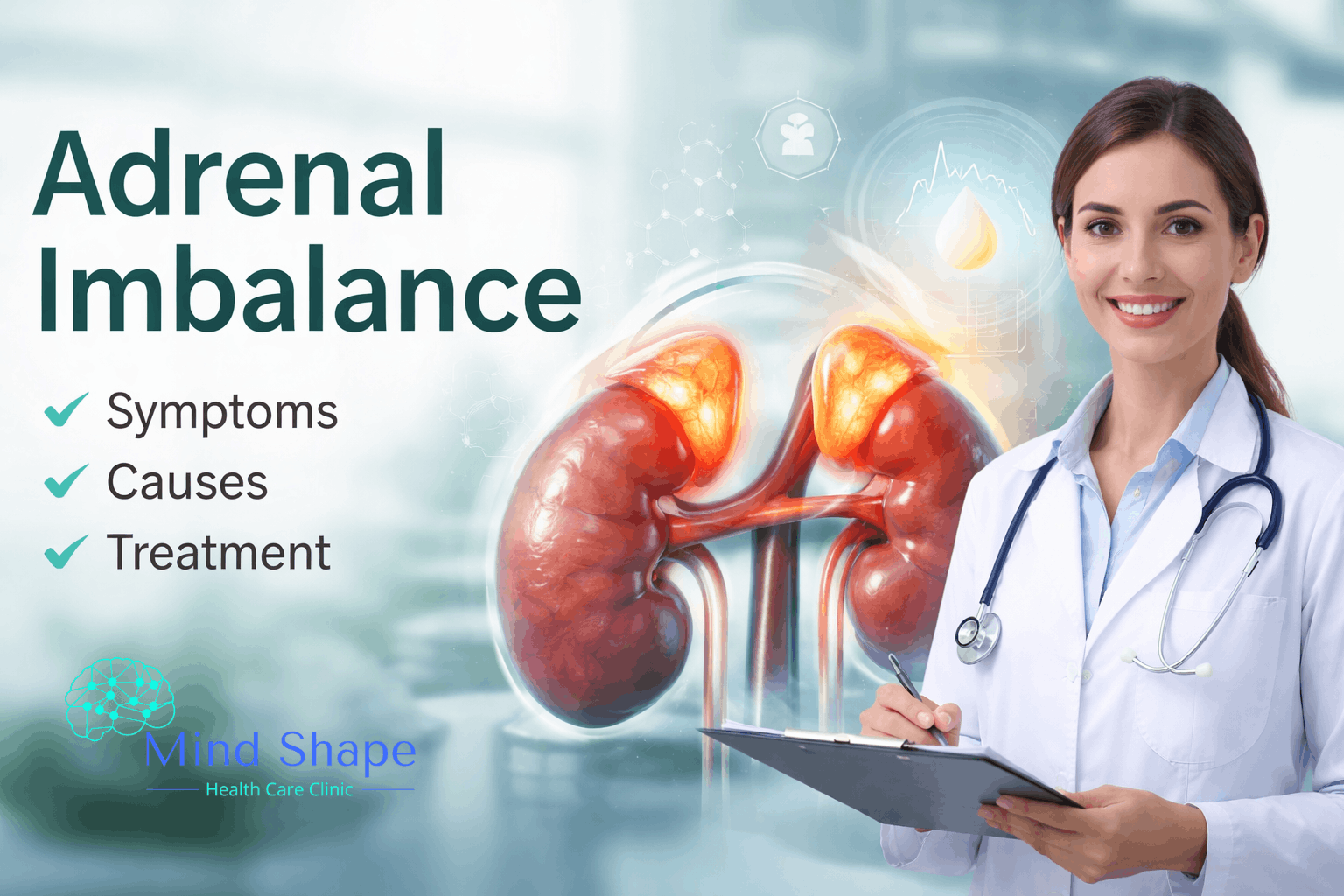
Adrenal Imbalance
Read Time: 12min
Written By

Dr. Hassan Khan
Internist
Adrenal Imbalance: Symptoms, Causes, and How to Restore Balance
If you have been feeling constantly tired, mentally drained, irritable, or just not like yourself, your body may be trying to tell you something important. One possible reason is adrenal imbalance.
Table of Contents
FAQs
Adrenal Imbalance FAQs
Please feel free to Send a Message or call us if your related question is not included here. we are happy to serve you.
Chronic stress can affect how the body produces and regulates stress hormones like cortisol. Over time, this may contribute to symptoms linked to adrenal imbalance, especially when stress is combined with poor sleep and burnout.
The symptoms can overlap with other health conditions, so the best way to find out is through a medical evaluation. A provider may review your symptoms, sleep, stress levels, and hormone-related concerns before recommending next steps.
Yes, constant fatigue is one of the most common complaints. Many people with adrenal-related symptoms say they feel exhausted even after sleeping or resting.
Yes. Some people have trouble falling asleep, while others wake up during the night or never feel fully rested in the morning. Stress hormone disruption can affect the body’s normal sleep-wake cycle.
Yes, it can. Hormone changes linked to stress can affect emotional balance and may lead to irritability, anxiety, feeling overwhelmed, or low mood.
Not exactly. “Adrenal fatigue” is a popular term people often use to describe symptoms like exhaustion and poor stress tolerance, but it is not always used as a formal medical diagnosis. A proper evaluation is important to rule out other hormone or medical issues.
There may be several contributing factors, including long-term stress, lack of sleep, poor nutrition, blood sugar swings, chronic illness, and ongoing physical or emotional exhaustion.
It can contribute to changes in weight, especially when stress hormones affect appetite, sleep, metabolism, and energy levels. Some people notice cravings, belly fat gain, or difficulty losing weight.
Balanced meals with protein, fiber, healthy fats, and nutrient-rich foods may support hormone health. Staying hydrated and reducing excess sugar and caffeine may also help.
Recovery time varies from person to person. Some people start to feel better within a few weeks, while others need longer-term support depending on stress levels, sleep, and overall health.
If symptoms are affecting your daily life, it is a good idea to speak with a healthcare provider. Severe fatigue, sleep problems, dizziness, mood changes, or worsening symptoms should not be ignored.
Yes. Adrenal hormone issues can affect both men and women, although symptoms may show up differently depending on overall hormone balance and health history.
Adrenal imbalance symptoms in men can include ongoing fatigue, low motivation, brain fog, irritability, poor stress tolerance, trouble sleeping, weight changes, and reduced libido. Some men also notice lower energy during the day, difficulty concentrating, or feeling physically and mentally worn out even after rest.
Adrenal imbalance symptoms in women may include fatigue, mood swings, anxiety, poor sleep, brain fog, low energy, sugar cravings, weight changes, and feeling overwhelmed more easily. In some cases, chronic stress and hormone disruption may also affect menstrual health, emotional balance, and overall well-being.
Your adrenal glands play a major role in how your body responds to stress, regulates energy, supports metabolism, and helps maintain hormone balance. When they are not functioning properly, even simple daily tasks can start to feel harder than they should.
In this guide, we will explain what adrenal imbalance is, what symptoms to watch for, what may cause it, and how treatment and lifestyle changes can help you feel more balanced again.
What Is Adrenal Imbalance?
Adrenal imbalance refers to a disruption in the way the adrenal glands produce and regulate hormones, especially stress-related hormones such as cortisol and adrenaline.
The adrenal glands are small glands located on top of each kidney. Even though they are small, they do a big job. They produce hormones that help regulate:
- Stress response
- Blood pressure
- Metabolism
- Energy levels
- Sleep and wake cycles
- Inflammation
- Blood sugar balance
When adrenal hormones become too high, too low, or irregular, the effects can be felt throughout the body.
Why the Adrenal Glands Matter
Your adrenal glands help your body respond to both physical and emotional stress. In short bursts, this response is helpful. It can give you the energy and alertness needed to deal with a demanding situation.
The problem starts when stress becomes constant.
Ongoing pressure from work, poor sleep, illness, emotional burnout, or lifestyle strain can disrupt the body’s normal stress response. Over time, this may contribute to symptoms associated with adrenal imbalance, including fatigue, mood changes, sleep problems, and difficulty focusing.
Common Symptoms of Adrenal Imbalance
The symptoms of adrenal imbalance can vary from person to person. Some people feel wired and anxious. Others feel drained and unable to recover, even after rest.
Common symptoms may include:
- Constant fatigue
- Trouble waking up in the morning
- Low energy in the afternoon
- Difficulty handling stress
- Brain fog
- Poor concentration
- Irritability
- Anxiety
- Mood swings
- Sleep disturbances
- Sugar cravings
- Weight changes
- Low motivation
- Feeling overwhelmed easily
These symptoms can overlap with other health conditions, which is why proper evaluation matters.
What Causes Adrenal Imbalance?
There is not always one single cause. In many cases, adrenal imbalance develops from a combination of stress, hormone disruption, and lifestyle factors.
Some common contributing factors include:
Chronic Stress
Long-term stress is one of the biggest drivers of adrenal hormone disruption. Emotional stress, financial pressure, family strain, burnout, and overwork can all affect cortisol regulation.
Poor Sleep
Sleep is essential for hormone recovery. When sleep is interrupted or too short, the stress system can become overactive.
Blood Sugar Swings
Frequent highs and lows in blood sugar may place additional pressure on the adrenal system and affect energy regulation.
Inflammation or Chronic Illness
Ongoing inflammation or underlying medical conditions can increase the body’s stress burden.
Overtraining or Physical Exhaustion
Too much physical strain without proper recovery can affect hormone balance over time.
Poor Nutrition
Skipping meals, restrictive dieting, or not getting enough nutrients can make it harder for the body to maintain stable hormone production.
Signs That Stress May Be Affecting Your Hormones
Many people do not realize how deeply stress can affect hormone health. If you feel tired but restless, anxious but exhausted, or unable to recover after a busy period, stress may be interfering with adrenal function.
Stress-related hormone disruption may show up as:
- Low patience
- Nighttime wake-ups
- Afternoon crashes
- Dependence on caffeine
- Reduced resilience
- Feeling “on edge” all the time
This does not necessarily mean a severe medical disorder is present, but it does mean the body may need support.
Is Adrenal Imbalance the Same as Adrenal Fatigue?
The phrase adrenal fatigue is commonly used online, but it is not a formal medical diagnosis in the same way as adrenal insufficiency or Cushing syndrome.
However, many people who use that term are describing very real symptoms, such as exhaustion, poor stress tolerance, sleep disruption, and low energy. These symptoms deserve proper evaluation rather than being ignored.
A healthcare professional can help determine whether symptoms may be related to cortisol imbalance, thyroid issues, sleep problems, nutritional deficiencies, mental health concerns, or another medical condition.
Medical Conditions Related to Adrenal Hormones
Sometimes, more serious adrenal disorders may be involved. These can include:
- adrenal insufficiency
- Addison’s disease
- Cushing syndrome
- abnormal cortisol production
Because symptoms often overlap with other conditions, it is important not to self-diagnose. Medical testing and professional guidance are the safest way to understand what is going on.
How Adrenal Imbalance Can Affect Daily Life
One reason adrenal imbalance is so frustrating is that it touches so many parts of everyday life.
You may notice changes in:
- Work performance
- Motivation
- Sleep quality
- Patience and mood
- Exercise recovery
- Appetite
- Focus
- Relationships
Many people begin blaming themselves, thinking they are lazy, unmotivated, or simply not trying hard enough. In reality, the body may be under hormonal strain.
Thyroid Disorders treatment options
Treatment depends on the type of thyroid problem. So, diagnosis comes first.
Thyroid medication for hypothyroidism
Hypothyroidism is commonly treated with thyroid hormone replacement. Levothyroxine is a standard option described by the American Thyroid Association and Mayo Clinic.
What to expect:
Many people start to feel better within weeks. Then, providers adjust the dose based on follow-up TSH testing.
Hyperthyroidism treatment options
Hyperthyroidism can be treated with:
- Anti-thyroid medicines
- Radioiodine therapy
- Surgery in selected cases
A provider chooses the path based on cause, severity, and overall health.
Thyroid cancer treatment (high-level overview)
Thyroid cancer treatment may include surgery, radioactive iodine therapy, thyroid hormone therapy, and other approaches depending on cancer type and stage. NCI outlines these treatment categories.
If you have a neck lump, hoarseness, trouble swallowing, or swollen lymph nodes, ask a clinician for evaluation.
How Adrenal Imbalance Is Evaluated
A proper evaluation usually starts with a full review of symptoms, lifestyle habits, stress levels, sleep patterns, and medical history.
Depending on your situation, a clinician may look at:
- Cortisol patterns
- Thyroid health
- Blood sugar balance
- Sleep quality
- Nutritional status
- Other hormone levels
Testing recommendations may vary based on your symptoms and overall health picture.
Treatment for Adrenal Imbalance
Treatment for adrenal imbalance depends on the cause. The goal is not just to reduce symptoms, but to restore balance in a way that supports long-term health.
Treatment may include a combination of the following:
Stress Management Support
Since stress often plays a major role, one of the first steps is improving how the body responds to daily strain. This may include practical stress-reduction techniques, counseling support, mindfulness tools, breathing exercises, or more structured mental health care when appropriate.
Sleep Improvement
Restoring healthy sleep is one of the most important ways to support adrenal health. Better sleep can help regulate cortisol rhythm and improve recovery.
Nutrition Changes
Balanced meals that support blood sugar stability can reduce extra strain on the body. Eating enough protein, fiber, and nutrient-dense foods may help improve energy and hormone balance.
Lifestyle Adjustments
Small lifestyle changes often make a big difference. This may include reducing over-scheduling, limiting caffeine, improving movement habits, and creating more recovery time.
Medical Evaluation and Targeted Care
If symptoms suggest an underlying hormone disorder or another medical condition, a provider may recommend further testing and a more individualized treatment plan.
Treatment for Adrenal Imbalance
Treatment for adrenal imbalance depends on the cause. The goal is not just to reduce symptoms, but to restore balance in a way that supports long-term health.
Treatment may include a combination of the following:
Stress Management Support
Since stress often plays a major role, one of the first steps is improving how the body responds to daily strain. This may include practical stress-reduction techniques, counseling support, mindfulness tools, breathing exercises, or more structured mental health care when appropriate.
Sleep Improvement
Restoring healthy sleep is one of the most important ways to support adrenal health. Better sleep can help regulate cortisol rhythm and improve recovery.
Nutrition Changes
Balanced meals that support blood sugar stability can reduce extra strain on the body. Eating enough protein, fiber, and nutrient-dense foods may help improve energy and hormone balance.
Lifestyle Adjustments
Small lifestyle changes often make a big difference. This may include reducing over-scheduling, limiting caffeine, improving movement habits, and creating more recovery time.
Medical Evaluation and Targeted Care
If symptoms suggest an underlying hormone disorder or another medical condition, a provider may recommend further testing and a more individualized treatment plan.
Foods and Nutrients That Support Adrenal Health
Nutrition alone is not a cure, but it can support the body’s recovery process.
Helpful nutrition habits may include:
- Eating regular meals
- Staying hydrated
- limiting excess sugar
- Reducing heavy reliance on caffeine
- Including protein at meals
- Choosing whole foods more often
Certain nutrients may also support stress response and overall hormone health, such as:
- Magnesium
- Vitamin C
- B vitamins
- Vitamin D
- Omega-3 fatty acids
Supplement choices should be personalized, especially if you have other health conditions or take medications.
Can Adrenal Imbalance Affect Mental Health?
Yes, adrenal imbalance can affect mental and emotional well-being.
When stress hormones are not well regulated, people may experience:
- Anxiety
- Irritability
- Low mood
- Emotional burnout
- Trouble focusing
- Feeling overwhelmed easily
This does not mean symptoms are “just in your head.” Hormones and mental health are closely connected, and many people feel better when both are addressed together.
How Long Does It Take to Feel Better?
Recovery looks different for everyone. Some people begin noticing improvement within a few weeks of better sleep, stress support, and lifestyle changes. Others need more time, especially if symptoms have been building for months or years.
The important thing is consistency. Hormone balance usually improves step by step, not overnight.
When to See a Doctor for Adrenal Imbalance
You should consider seeking medical help if you have symptoms such as:
- Severe fatigue
- Trouble functioning during the day
- Worsening anxiety or mood changes
- Dizziness
- Unexplained weight changes
- Major sleep disruption
- Symptoms that do not improve with rest
These symptoms may be related to adrenal imbalance, but they can also overlap with other medical issues that need attention.
How MindShape Care Supports Hormonal Health
At MindShape Care, we understand that hormone-related symptoms can affect every part of your life. Feeling constantly tired, stressed, or emotionally off-balance can make it hard to function at your best.
Our care approach focuses on understanding the full picture, including stress, sleep, metabolism, mood, and overall hormonal health. If adrenal-related symptoms are affecting you, professional support can help you take the next step with clarity.
A caring note from MindShape Care
This article is for education only and is not a diagnosis. If your symptoms feel severe, urgent, or unsafe, please seek immediate emergency or crisis support.
This article was reviewed and written with insights from the medical team at MindShape Clinic in the USA — experienced healthcare professionals specializing in cancer treatment, mental health, and patient wellness. Learn more about our board-certified doctors and treatment experts who contribute to our educational blogs and patient support programs.
Recent Blogs
Learn more about Virtual Healthcare and Treatments





Why You Can Rely on Us?
At Mindshape Clinic, we are committed to providing clear and trustworthy health information that you can rely on.
Reliable Information – Every article is based on credible sources.
Expert Review – Content is carefully checked before publishing.
Up to Date – We keep information current with the latest insights.
Clarity First – Our goal is to make knowledge simple and accessible.