Wrist Blood Pressure Monitors
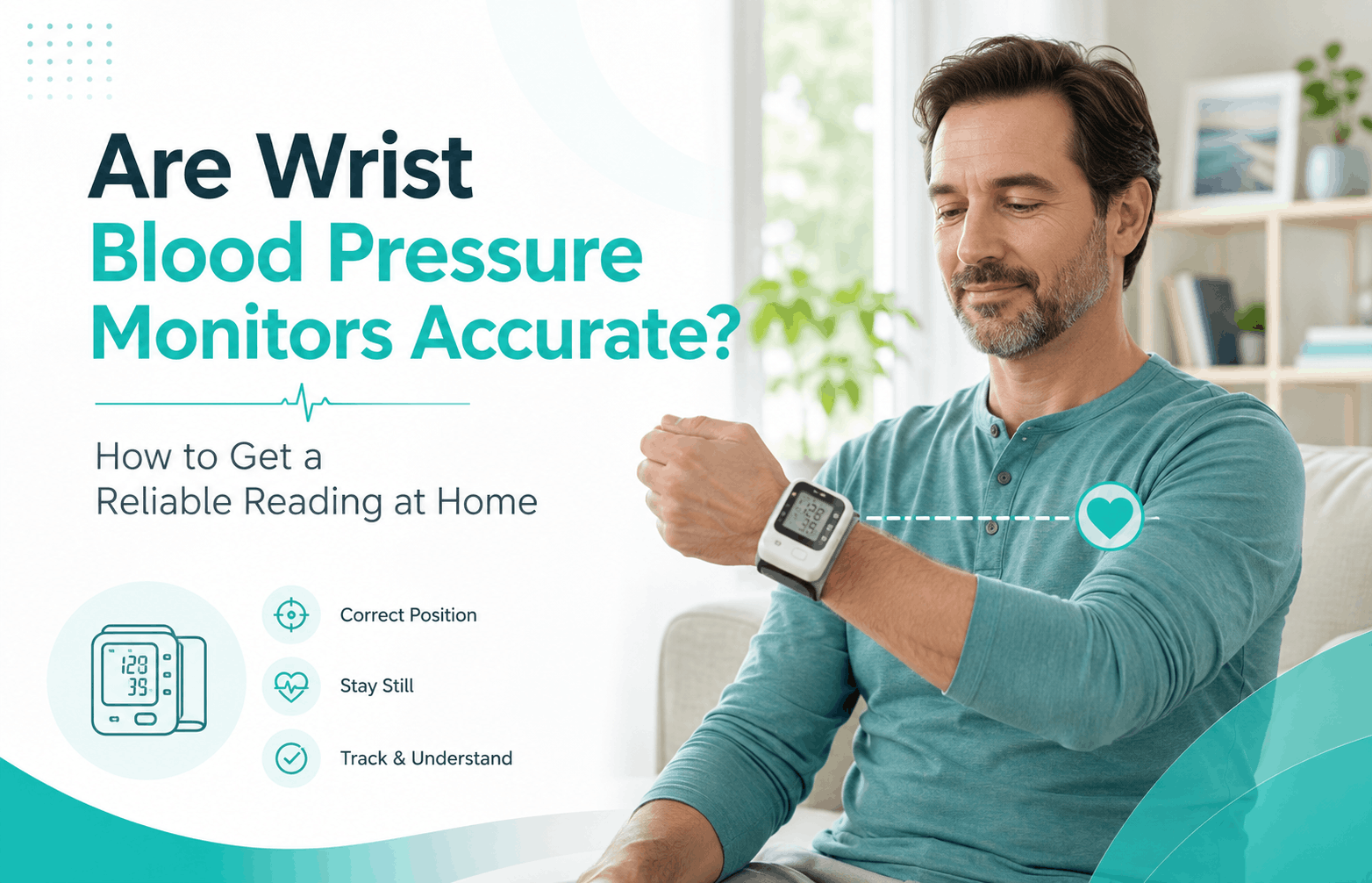
Are Wrist Blood Pressure Monitors Accurate? How to Get a Reliable Reading at Home
Written by:

Mindshape Content Team
Medically Reviewed by:

Checking your blood pressure at home can bring peace of mind—until the number on the screen seems different from what you expected.
Wrist blood pressure monitors are small, portable, and easy to pack. They can be useful for some people. But they are also less forgiving than upper-arm monitors. A small change in wrist position, body posture, or movement can affect the reading.
Quick answer: Wrist blood pressure monitors can provide useful readings when the device is validated and used exactly as instructed. However, for most adults, a validated upper-arm cuff is the preferred choice for routine home monitoring because it is generally more reliable and easier to position correctly.
If you have a wrist monitor and are unsure whether you can trust your readings, do not guess or change medication on your own. MindShape Care’s online hypertension treatment helps eligible adults review their home readings, device technique, medications, and next steps with a licensed clinician in the USA.
Are Wrist Blood Pressure Monitors Accurate?
They can be accurate, but incorrect use can make the readings less reliable. Wrist monitors measure blood pressure near the radial artery in the wrist. Because the wrist is smaller and more sensitive to position than the upper arm, even a slight change in height can affect the result.
For example, If you hold your wrist too low or too high compared with your heart, the number on the screen may not reflect your true blood pressure. Bending the wrist, talking, moving, checking immediately after activity, or using an unvalidated device can also make readings less reliable.
That does not mean every wrist monitor is unreliable. Some wrist monitors have clinical validation. Even then, you need to use the device correctly and choose one that fits your needs. Always use a clinically validated blood pressure monitor.
Why Are Upper-Arm Blood Pressure Monitors Usually Preferred?
For most people, an automatic upper-arm cuff is the better option for home blood pressure monitoring. Upper-arm monitors measure blood pressure over the brachial artery, which is closer to the method commonly used in clinics. They are generally less sensitive to small position changes than wrist monitors. They also make it easier to place the cuff at heart level while your arm rests on a table.
Upper-Arm vs. Wrist Monitor: A Simple Comparison
| Feature | Wrist Monitor | Upper-Arm Monitor |
|---|---|---|
| Everyday home use | May be suitable in select situations | Usually preferred |
| Sensitivity to position | High | Lower |
| Need to hold at heart level | Very important | Important, but easier to maintain |
| Ease of use | Small and portable | Slightly larger, but often simpler to position |
| Best for tracking long-term trends | Only if validated and used correctly | Usually the more reliable choice |
| Clinical recommendation | May be appropriate for some people | Preferred for most adults |
The most important point is not simply whether a monitor is on your wrist or upper arm. It is whether the device is validated, fits your needs, and is used with correct technique every time.
When a Wrist Monitor May Be Appropriate
A wrist monitor may be worth considering when an upper-arm cuff is difficult or unsuitable to use.
Examples may include:
- Your upper arm is not compatible with available cuff sizes
- You have a medical condition that makes upper-arm measurement difficult
- You have limited mobility and cannot comfortably position an upper-arm cuff
- You travel often and need a compact backup device
- A clinician has recommended a validated wrist monitor for your specific situation
Even if you receive care online, bring your monitor to a nearby clinic or in-person appointment when possible. A healthcare professional can compare your home monitor reading with a clinic blood pressure measurement and check that you are using the device correctly.
What “Validated” Really Means
A monitor being sold in a pharmacy, online marketplace, or major retail store does not automatically mean it has been tested for clinical accuracy. A validated device has been assessed against accepted standards to determine whether it can measure blood pressure accurately for the population it is intended to serve
Before buying or relying on a monitor, check:
- Whether the exact model is clinically validated
- Whether it is validated for adults, pregnancy, children, or older adults when relevant
- Whether the cuff or wrist range fits you correctly
- Whether the manufacturer provides clear instructions
- Whether your clinician or pharmacist recommends it
ValidateBP.org provides a useful starting point for finding devices with clinical validation.
How to Use a Wrist Blood Pressure Monitor Correctly
If you already own a wrist monitor, do not throw it away without first checking whether it is validated and whether you are using it correctly.
The steps below can help reduce common errors.
1. Prepare Before You Check
For about 30 minutes before taking a reading, avoid smoking, vaping, caffeine, exercise, and alcohol when possible. Empty your bladder first. Then sit quietly for at least five minutes. Stress, rushing around, climbing stairs, or drinking coffee right before your reading can affect the number.
2. Sit in a Stable Position
Sit in a chair with your back supported. Keep both feet flat on the floor and avoid crossing your legs. Rest quietly without talking, texting, or watching something stressful. Your body position matters just as much as the monitor itself.
3. Place the Wrist Cuff Exactly as Directed
Follow the instructions for your specific device. Most wrist monitors need to sit directly on bare skin, usually just above the wrist crease.
Avoid placing the cuff over clothing, jewelry, or a watch. Make sure the monitor is positioned over the correct artery area according to the manufacturer’s guide.
4. Hold Your Wrist at Heart Level
This is the step many people miss. Rest your elbow on a table or cushion, then gently bring your wrist to the center of your chest, roughly at heart level. Keep your wrist straight and relaxed. Do not let your hand hang down by your side. Do not hold it high near your face. Do not bend your wrist sharply. Even a well-made wrist monitor can give misleading readings if it is not held at heart level.
5. Stay calm and Do Not Talk
Press start, breathe normally, and stay quiet until the reading is complete. Talking, moving, clenching your hand, or adjusting the cuff while the monitor is working can affect the result.
6. Take Two Readings
Take two readings about one minute apart and write down both numbers.
If the readings are very different, sit quietly for another few minutes and take an additional reading. Do not keep checking repeatedly because you feel anxious; that can make it harder to see a useful pattern.
7. Track Your Numbers at Consistent Times
Your clinician may ask you to check your blood pressure in the morning and evening for several days.
Try to measure at roughly the same times each day. Record the date, time, both readings, medication timing, and anything that may have affected the result, such as poor sleep, pain, caffeine, stress, or illness.
For help understanding patterns in your morning readings, read Why Is My Blood Pressure High in the Morning?
Signs Your Wrist Monitor Reading May Not Be Reliable
A wrist monitor may be giving an unreliable result when:
- Your wrist was not held at heart level
- You were talking, moving, or tense during the reading
- You checked immediately after coffee, nicotine, exercise, or a stressful event
- The cuff was worn over clothing
- The monitor gives very different numbers each time
- The reading is consistently much higher or lower than readings from an upper-arm monitor
- Your device has not been validated
- The monitor is old, damaged, or has a weak battery
A surprising number should not be ignored, but it should also not automatically lead to panic or medication changes.
What Should You Do if a Wrist Monitor Shows a High Reading?
First, take a pause. Sit quietly for at least five minutes and check your technique. Then repeat the measurement. If you have access to a validated upper-arm monitor, use it to compare the reading after resting. Record both results rather than relying on memory.
Do not take an extra blood pressure pill, double your next dose, or stop medication because of one wrist-monitor reading unless a clinician specifically tells you to do so.
Repeated readings above your usual range deserve a clinical review. A licensed clinician can help determine whether the concern is your device, your technique, your routine, or your treatment plan.
When Is a High Blood Pressure Reading an Emergency?
A single high reading is not always an emergency, especially when poor technique may have affected the result. However, if your blood pressure is 180/120 mm Hg or higher, wait at least one minute and check it again.
Call 911 or seek emergency care immediately if the reading is still very high and you have symptoms such as:
- Chest pain
- Shortness of breath
- New weakness or numbness
- Difficulty speaking
- Sudden vision changes
- New confusion
- Fainting
- Severe back pain
- A sudden, severe, or unusual headache
Do not wait for an online appointment during a possible medical emergency.
How to Choose a Home Blood Pressure Monitor
Choosing a home blood pressure monitor is not just about finding the smallest device or the lowest price. The monitor needs to be accurate, fit properly, and be simple enough to use consistently.
For most adults, a validated automatic upper-arm monitor is the preferred option for home use. Upper-arm cuffs are generally easier to position correctly and tend to provide more reliable readings than wrist or finger devices.
When choosing a monitor, look for the following:
Choose a Clinically Validated Device
Look for a monitor that has been validated for clinical accuracy. This means the specific model has been tested against accepted blood pressure measurement standards.
Do not assume a device is accurate simply because it is widely sold or has positive customer reviews. You can check validated options through resources such as ValidateBP.org, or ask your clinician or pharmacist for guidance.
Make Sure the Cuff Fits Your Upper Arm
Cuff size matters. A cuff that is too small or too large can give inaccurate readings. Measure around the middle of your upper arm and compare the measurement with the cuff range listed by the manufacturer. Do not rely on a “one-size-fits-all” cuff unless it matches your arm size.
Prefer an Automatic Upper-Arm Cuff
For routine monitoring, choose an automatic upper-arm cuff whenever possible. These devices are easier to use correctly and are generally preferred for tracking blood pressure over time.
A clinician may recommend a wrist monitor in select situations, such as when you cannot use an upper-arm cuff comfortably or it does not fit properly. If you use a wrist device, choose a validated model and ask a clinician to confirm that your technique is accurate.
Choose a Device That Fits Your Needs
A large display, clear buttons, memory storage, and a simple start button can make it easier to check your blood pressure regularly. Some monitors can store readings or share them through an app, but added features should not replace accuracy and correct cuff fit.
If you are pregnant, older, have a larger or smaller arm circumference, or are buying a monitor for a child, confirm that clinical validation supports the device for that use.
Bring Your Monitor to a Medical Appointment
One of the most helpful things you can do is bring your home blood pressure monitor to your next appointment.
A clinician can:
- Check whether the cuff fits properly
- Watch your technique
- Compare your device with office equipment
- Help you understand whether your readings are consistently high
- Recommend whether an upper-arm monitor would be a better option
- Review medications, supplements, and lifestyle factors that may affect blood pressure
This simple step can prevent months of confusion over numbers that may not be accurate.
How MindShape Care Can Help
Home monitoring should make blood pressure management clearer—not more stressful. MindShape Care helps eligible adults review new or ongoing high blood pressure through private online visits with a licensed clinician. Your visit may include:
- Reviewing your home blood pressure log
- Discussing whether your monitor and technique are appropriate
- Reviewing prescription medications, over-the-counter medicines, and supplements
- Discussing medication side effects or missed doses
- Looking at lifestyle factors such as sleep, sodium intake, activity, alcohol, and stress
- Helping you decide when in-person testing, lab work, urgent care, or specialist referral may be needed
The goal is to understand the full pattern, not just react to one number on a screen.
If your home readings feel confusing, inconsistent, or concerning, you do not have to sort through them alone.
FAQs
Most common Questions
Are wrist blood pressure monitors accurate enough to use at home?
A validated wrist monitor (medically approved) may provide useful readings when it is used correctly. However, upper-arm monitors are generally preferred for most adults because they are less sensitive to positioning errors.
Do wrist blood pressure monitors usually read high?
They can read higher or lower than your actual blood pressure when your wrist is not positioned at heart level, when you move during the measurement, or when the device is not validated. The direction of the error is not always predictable.
Can I use a wrist monitor if I have a large upper arm?
Possibly. Some people may have difficulty finding an upper-arm cuff that fits correctly. In this situation, ask a clinician or pharmacist about validated options rather than choosing a wrist monitor at random.
Should I replace my wrist monitor with an upper-arm cuff?
For routine home monitoring, an upper-arm cuff is often the better choice. Before replacing your monitor, bring your wrist device to an appointment and ask whether it is validated and suitable for you.
Can I diagnose hypertension with a wrist blood pressure monitor?
No. A diagnosis should be based on repeated, properly measured readings and a clinician’s review of your health history and risk factors.
How often should I check my blood pressure at home?
The right schedule depends on your health needs. Many people are asked to take readings in the morning and evening for several days, but follow the plan provided by your clinician.
Should I worry about one high morning reading?
One high reading is not always a reason to panic. Rest, check again, and record both readings. Contact a clinician if readings stay above your target or you have symptoms. Seek emergency care for readings of 180/120 mm Hg or higher with concerning symptoms.
This article is for informational and educational purposes only and is not a substitute for professional medical advice, diagnosis, or treatment. If you are experiencing a medical emergency or a mental health crisis, please seek immediate care from emergency services or a local crisis line. This content has been written and reviewed by the Medical Team at mindshape.care. Read our full Medical Disclaimer.
References
View Clinical Sources & References
The following authoritative clinical sources support the medical information in this article.
- American Heart Association. Home Blood Pressure Monitoring . Last reviewed August 14, 2025. Accessed July 1, 2026.
- Centers for Disease Control and Prevention. Measuring Your Blood Pressure . Updated May 12, 2026. Accessed July 1, 2026.
- National Heart, Lung, and Blood Institute. High Blood Pressure: Diagnosis . Last updated June 26, 2025. Accessed July 1, 2026.
- ValidateBP.org. American Medical Association. Validated Device Listing . Accessed July 1, 2026.
- ValidateBP.org. American Medical Association. Validated Device Listing (VDL) Criteria . Accessed July 1, 2026.
- American Heart Association. When To Call 911 About High Blood Pressure . Last reviewed August 14, 2025. Accessed July 1, 2026.
Recent Blogs
Learn more about Virtual Healthcare and Treatments






Why You Can Rely on Us?
At Mindshape Clinic, we are committed to providing clear and trustworthy health information that you can rely on.
Reliable Information – Every article is based on credible sources.
Expert Review – Content is carefully checked before publishing.
Up to Date – We keep information current with the latest insights.
Clarity First – Our goal is to make knowledge simple and accessible.