High Blood Pressure Cause Headaches
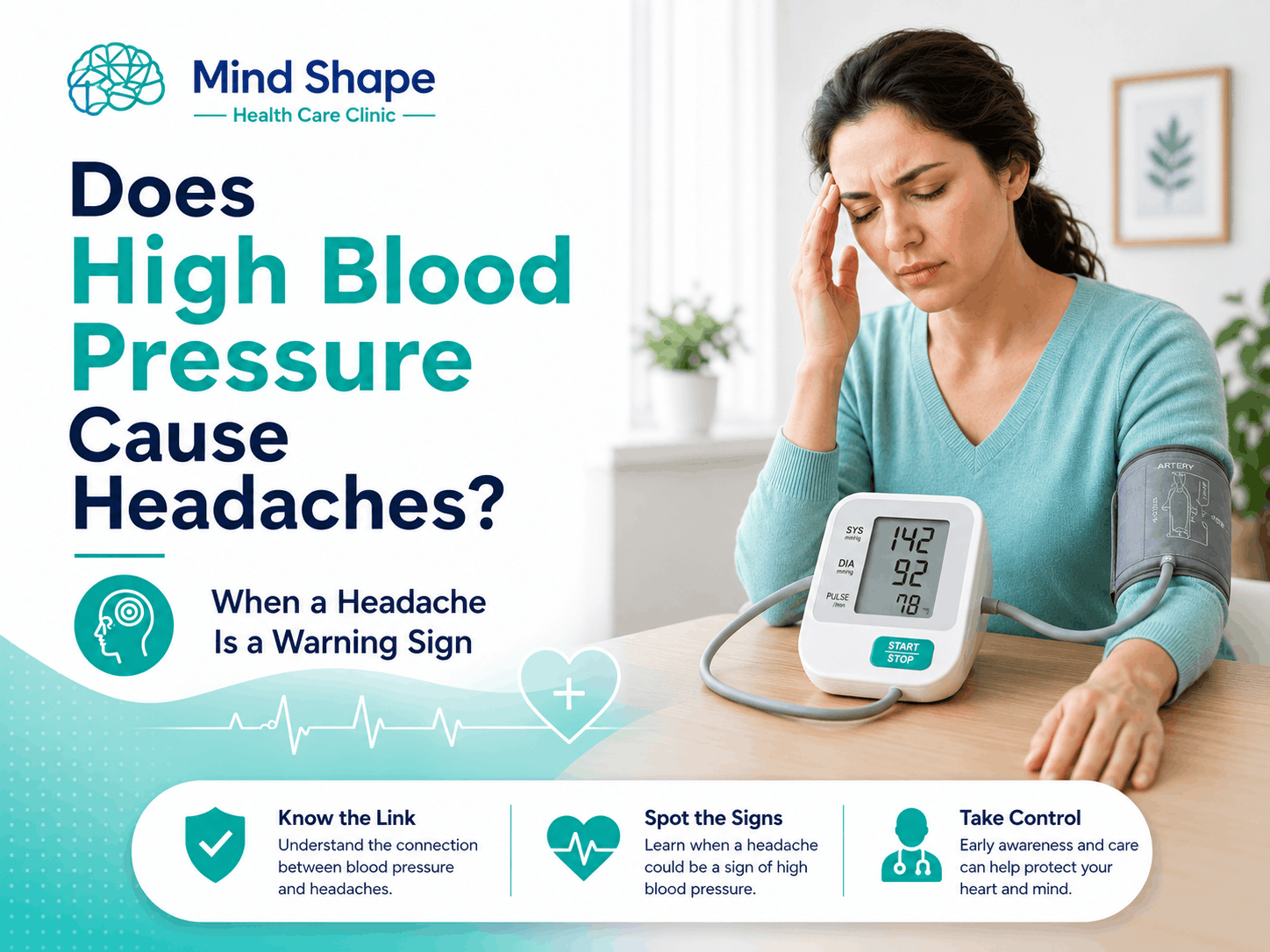
Does High Blood Pressure Cause Headaches? When a Headache Is a Warning Sign
Written by:

Mindshape Content Team
Medically Reviewed by:

Does high blood pressure cause headaches? Usually, no. High blood pressure often causes no noticeable symptoms, which is why it is sometimes called a “silent” condition.
That said, a severe headache can be a warning sign when it occurs with a very high blood pressure reading or symptoms such as chest pain, shortness of breath, weakness, vision changes, or trouble speaking. A headache alone cannot tell you what your blood pressure is. The only way to know is to measure it correctly.
Quick answer: Most everyday headaches are not caused by high blood pressure. But if your reading is 180/120 mm Hg or higher and you have a severe headache or other concerning symptoms, call 911 or seek emergency care immediately.
If you are noticing repeated high readings, medication concerns, or frequent headaches that need review, MindShape Care’s online hypertension treatment can help eligible adults get clear next steps from a licensed clinician.
Is a Headache a Symptom of High Blood Pressure?
Most of the time, no.
Mild or moderately elevated blood pressure usually does not cause obvious symptoms, including headaches. Many people discover they have hypertension during a routine checkup or after tracking readings at home.
A headache and a high blood pressure reading can happen at the same time without one necessarily causing the other. For example, pain, stress, poor sleep, caffeine, illness, anxiety, or an existing migraine may lead someone to check their blood pressure more often. That can make the two seem connected even when the situation is more complicated.
Still, very high blood pressure can be linked with headache in rare or urgent situations. That is why the blood pressure number, your symptoms, and how suddenly they started all matter.
What Does a High Blood Pressure Headache Feel Like?
There is no specific headache pattern that can reliably prove your blood pressure is high.
A throbbing headache, pressure in the head, pain at the back of the head, or a headache that appears in the morning can happen for many reasons. Migraine, tension-type headache, dehydration, poor sleep, medication overuse, sinus illness, viral infections, and vision problems are only a few possibilities.
The main point is this: you cannot diagnose high blood pressure based on how a headache feels.
Instead of trying to identify a “blood pressure headache,” check your reading correctly and pay close attention to warning signs.
When a Headache and High Blood Pressure May Be an Emergency
A severe headache can be part of a hypertensive emergency, especially when blood pressure is extremely high and there may be signs of damage to the brain, heart, kidneys, or other organs.
Call 911 or Seek Emergency Care Now If You Have:
- A blood pressure reading of 180/120 mm Hg or higher
- A sudden, severe, or unusual headache
- Chest pain or pressure
- Shortness of breath
- New weakness or numbness
- Trouble speaking or understanding speech
- New confusion
- Changes in vision, including blurred or double vision
- Severe back, chest, or abdominal pain
- Fainting, seizure, or loss of balance
Do not wait for an online appointment if these symptoms are present. Do not drive yourself if you feel weak, confused, faint, or unsafe.
What if Your Reading Is 180/120 or Higher but You Do Not Have Symptoms?
Sit quietly and check again after at least one minute.
If the reading is still that high, contact a healthcare professional immediately for guidance, even if you feel okay. A severe reading without symptoms still needs prompt attention.
A number below 180/120 does not automatically rule out a serious problem. A sudden “worst headache of your life,” new weakness, speech trouble, severe vision changes, fainting, or chest pain needs emergency evaluation regardless of the reading.
Headaches During Pregnancy or After Delivery Need Extra Attention
Pregnancy and the weeks after delivery require a lower threshold for seeking care. A headache that is severe, persistent, new, or different from your usual headaches can be a warning sign of preeclampsia or another serious pregnancy-related condition, particularly when it occurs with:
- Vision changes or seeing spots
- Shortness of breath
- Pain in the upper abdomen
- Sudden swelling of the face or hands
- Nausea or vomiting
- High blood pressure
If you are pregnant or recently gave birth and have these symptoms, contact your obstetric care team urgently or seek emergency care.
What to Do When You Have a Headache and a High Reading at Home
A single reading can be affected by how, when, and where it was taken. Before assuming the worst, make sure the number is accurate.
Step 1: Pause and Sit Quietly
Rest in a chair for at least five minutes. Keep your back supported, feet flat on the floor, and legs uncrossed.
Step 2: Check Your Blood Pressure Correctly
Use a validated upper-arm monitor with the correct cuff size. Place the cuff directly on bare skin, not over clothing. Support your arm at heart level and do not talk during the reading.
Avoid smoking, caffeine, and exercise for at least 30 minutes before checking your blood pressure when possible.
Step 3: Take a Second Reading
Take two readings at least one minute apart. Write down both numbers, the time, and any symptoms you are having.
Step 4: Do Not Change Your Medication on Your Own
Do not take an extra dose, double your next dose, or stop a prescribed blood pressure medication unless a clinician tells you to do so.
Step 5: Know When to Get Help
Use the emergency guidance above if your reading is severely elevated or you have concerning symptoms. If you have repeated readings above your usual range, frequent headaches, or uncertainty about your medications, schedule a clinical review.
Why Headaches and High Blood Pressure Can Seem Connected
It is understandable to make the connection. A headache can feel alarming, and seeing a higher-than-usual number on the blood pressure monitor can add to that worry.
But blood pressure changes throughout the day. It may rise temporarily after caffeine, exercise, smoking, stress, a poor night of sleep, pain, or rushing to take a reading.
That is why clinicians look at patterns rather than reacting to a single number. A home blood pressure log can be especially helpful because it shows what is happening over several days, not only during one stressful moment.
Include the following in your log:
- Date and time of each reading
- Both blood pressure numbers
- Heart rate, if your monitor records it
- Symptoms, including headache
- Medication timing
- Caffeine, alcohol, exercise, poor sleep, pain, or illness
- Any missed doses
Could Morning Headaches Be Related to Blood Pressure?
Sometimes people notice headaches soon after waking and assume blood pressure is the cause. Morning headaches can happen for many reasons, including poor sleep, jaw clenching, migraine, dehydration, medication effects, or sleep disorders.
If morning headaches happen along with loud snoring, gasping during sleep, daytime exhaustion, or witnessed pauses in breathing, it may be worth discussing sleep apnea with a clinician. Untreated obstructive sleep apnea is associated with a higher risk of hypertension and can make blood pressure harder to manage.
Learn more about online obstructive sleep apnea treatment if these symptoms sound familiar.
When to Book a Non-Emergency Hypertension Visit
You do not need to wait for a crisis to ask for help. A routine or prompt appointment may be helpful if you have:
- Repeated home readings above your clinician’s target
- New headaches that keep returning
- Headaches plus dizziness, fatigue, medication side effects, or missed doses
- Questions about whether your blood pressure cuff is accurate
- Difficulty understanding what your numbers mean
- High blood pressure along with diabetes, kidney concerns, sleep apnea, or heart disease
- Concerns about starting, stopping, or adjusting medication
A clinician can review your home readings, medications, symptoms, lifestyle factors, and medical history to decide whether virtual care, in-person care, labs, or specialist evaluation is appropriate.
How MindShape Care Helps With High Blood Pressure Concerns
Managing blood pressure should not mean trying to interpret every number alone.
MindShape Care offers online hypertension visits for eligible adults who need help with new or ongoing high blood pressure. During a private virtual visit, a licensed clinician can review:
- Your home blood pressure log
- Current prescriptions, over-the-counter medicines, and supplements
- Medication side effects or adherence concerns
- Headache patterns and other symptoms
- Lifestyle factors such as sodium intake, sleep, exercise, alcohol, and stress
- Whether you need in-person assessment, urgent care, lab work, or a specialist referral
The goal is not simply to react to one reading. It is to build a practical plan that helps you understand your numbers and stay on track safely.
FAQs
Most common Questions
Can high blood pressure cause headaches?
Usually, high blood pressure does not cause headaches. In rare cases, extremely high blood pressure may be associated with severe headache or other symptoms of a hypertensive emergency.
Can a headache raise blood pressure?
Pain, stress, and anxiety can affect blood pressure temporarily. A high reading during a headache does not prove that blood pressure caused the headache. Check your reading properly and look at patterns over time.
What if my blood pressure is 160/100 and I have a headache?
A reading of 160/100 is high and deserves medical follow-up, especially if it is repeated. But the number alone is not the only factor. Seek emergency care right away for a sudden severe headache, chest pain, shortness of breath, weakness, vision changes, trouble speaking, fainting, or confusion.
How do I get rid of a high blood pressure headache instantly?
Do not try to “fix” a possible high blood pressure headache by taking extra blood pressure medication or using someone else’s prescription. First, check your blood pressure correctly. If it is 180/120 or higher with concerning symptoms, call 911. If you are not having emergency symptoms but your readings stay elevated, contact a clinician for individualized advice.
Can high blood pressure cause dizziness?
Dizziness has many possible causes, including dehydration, inner-ear conditions, medication side effects, low blood sugar, anxiety, and more. It should not be used alone to diagnose high blood pressure. Sudden dizziness with weakness, trouble speaking, vision changes, chest pain, or fainting needs urgent evaluation.
Should I check my blood pressure every time I have a headache?
Checking can be reasonable if you already monitor blood pressure at home, especially when a headache feels different or you have other symptoms. But repeatedly checking out of anxiety can make it harder to see a useful pattern. Follow the monitoring schedule recommended by your clinician and keep a simple log.
This article is for informational and educational purposes only and is not a substitute for professional medical advice, diagnosis, or treatment. If you are experiencing a medical emergency or a mental health crisis, please seek immediate care from emergency services or a local crisis line. This content has been written and reviewed by the Medical Team at mindshape.care. Read our full Medical Disclaimer.
References
View Clinical Sources & References
The following authoritative clinical sources support the medical information in this article.
- Centers for Disease Control and Prevention. About High Blood Pressure . Updated 2025. Accessed June 28, 2026.
- American Heart Association. When To Call 911 About High Blood Pressure . Updated August 14, 2025. Accessed June 28, 2026.
- American Heart Association. Home Blood Pressure Monitoring . Updated August 14, 2025. Accessed June 28, 2026.
- MedlinePlus. U.S. National Library of Medicine. High Blood Pressure in Adults – Hypertension . Updated February 13, 2025. Accessed June 28, 2026.
- MedlinePlus. U.S. National Library of Medicine. High Blood Pressure in Pregnancy . Updated May 29, 2024. Accessed June 28, 2026.
- National Heart, Lung, and Blood Institute. Sleep Apnea: Causes and Risk Factors . Updated January 9, 2025. Accessed June 28, 2026.
- World Health Organization. Migraine and Other Headache Disorders . Updated October 24, 2025. Accessed June 28, 2026.
Recent Blogs
Learn more about Virtual Healthcare and Treatments



Why You Can Rely on Us?
At Mindshape Clinic, we are committed to providing clear and trustworthy health information that you can rely on.
Reliable Information – Every article is based on credible sources.
Expert Review – Content is carefully checked before publishing.
Up to Date – We keep information current with the latest insights.
Clarity First – Our goal is to make knowledge simple and accessible.