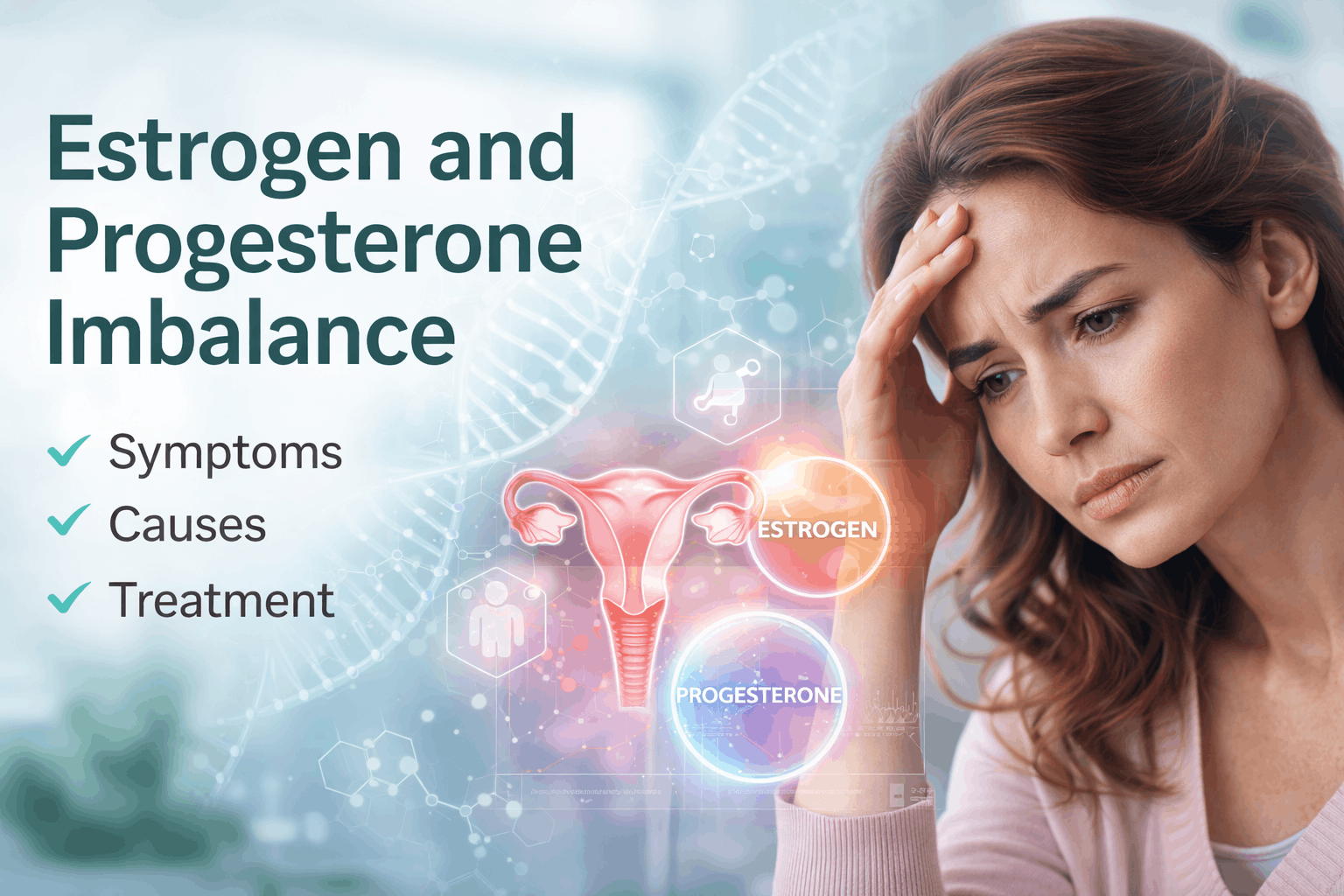
Estrogen and Progesterone Imbalance
Read Time: 8min
Written By

Dr. Hassan Khan
Internist
Estrogen and Progesterone Imbalance: Symptoms, Causes, and Treatment
Hormones affect far more than just your menstrual cycle. They influence your mood, sleep, energy, weight, skin, and overall sense of well-being. When estrogen and progesterone fall out of balance, the changes can feel frustrating, confusing, and sometimes overwhelming.
Table of Contents
FAQs
Thyroid Disorders FAQs
Please feel free to Send a Message or call us if your related question is not included here. we are happy to serve you.
Low estrogen can happen for several reasons, including perimenopause or menopause, problems with ovulation, being under a lot of stress, very low body weight, intense exercise, some medical conditions, or certain medications. As women get closer to menopause, estrogen levels often start to fluctuate and gradually decline.
When estrogen and progesterone are out of balance, you may notice changes in your periods, mood, sleep, energy, and overall well-being. Some women experience heavier or irregular periods, bloating, breast tenderness, irritability, anxiety, or trouble sleeping. Progesterone and estrogen work together, so when one drops too low or the balance shifts, symptoms can become more noticeable.
Many women describe feeling tired, emotionally off, anxious, mentally foggy, or not fully like themselves. Low estrogen is often linked with hot flashes, night sweats, vaginal dryness, sleep problems, and mood changes, while low progesterone may be associated with irregular periods, trouble sleeping, and anxiety or depression.
Common signs of low progesterone include irregular periods, headaches, trouble sleeping, mood changes, anxiety, depression, bloating, weight gain, and difficulty conceiving. In some cases, people also notice breast tenderness or low libido.
Low progesterone is not usually described by doctors as a direct cause of belly fat, but hormone imbalance can be linked with bloating, weight gain, and changes in how your body feels. Weight changes are usually influenced by several factors at once, including stress, sleep, activity, age, and overall hormone balance.
A drop in estrogen can feel different for each woman, but common symptoms include hot flashes, night sweats, sleep disruption, mood swings, lower energy, vaginal dryness, discomfort during sex, urinary urgency, and more frequent bladder or vaginal irritation.
Treatment depends on the cause and your stage of life. Doctors may recommend hormone therapy in some cases, especially around menopause. Estrogen therapy can help with symptoms like hot flashes and vaginal dryness, and if you still have a uterus, progestin is usually added to help lower the risk of uterine cancer from estrogen alone
Less commonly, low estrogen may show up as vaginal dryness, pain during sex, burning with urination even without a UTI, more frequent urinary or vaginal infections, urinary leakage, or stronger urinary urgency. These symptoms can be easy to overlook, but they are recognized effects of lower estrogen levels.
Many women notice that something feels “off” long before they understand the reason. You may feel more tired than usual, emotionally sensitive, bloated, anxious, or experience changes in your period. In many cases, these symptoms may be linked to estrogen and progesterone imbalance.
In this guide, you will learn what estrogen and progesterone do, what happens when they are out of balance, the most common symptoms to look for, and the treatment options that may help restore hormonal balance.
What Is Estrogen and Progesterone Imbalance?
Estrogen and progesterone imbalance happens when the levels of these two important hormones are too high, too low, or out of proportion with each other.
Estrogen and progesterone work together to support many important functions in the female body. They help regulate the menstrual cycle, fertility, mood, sleep, metabolism, and reproductive health.
When one hormone rises too much or the other falls too low, it can create symptoms that affect both physical and emotional health. Even a small hormonal shift can make a noticeable difference in how you feel day to day.
What Do Estrogen and Progesterone Do?
Estrogen and progesterone are two of the main female sex hormones, but their effects go far beyond reproduction.
Estrogen helps support:
- Menstrual cycle regulation
- Bone health
- Skin health
- Brain function
- Mood stability
- Reproductive function
Progesterone helps support:
- Menstrual cycle balance
- Preparation for pregnancy
- Sleep quality
- Emotional calm
- Nervous system regulation
These hormones are meant to work in balance. When that balance is disrupted, symptoms can begin to appear.
Symptoms of Estrogen and Progesterone Imbalance
The symptoms of estrogen and progesterone imbalance can vary from one woman to another. Some symptoms may feel mild at first, while others can interfere with daily life.
Common symptoms may include:
- Irregular periods
- Heavy menstrual bleeding
- Missed periods
- Mood swings
- Anxiety
- Irritability
- Poor sleep
- Fatigue
- Bloating
- Breast tenderness
- Headaches
- Weight changes
- Low libido
- Brain fog
- Hot flashes or night sweats in some cases
Some women may mainly notice emotional changes, while others experience more physical symptoms such as cycle changes or bloating.
Signs of High Estrogen or Low Progesterone
One of the most common patterns in women’s hormone health is when estrogen becomes relatively high compared with progesterone, or progesterone drops too low.
This may lead to symptoms such as:
- PMS that feels more intense than usual
- Heavier or painful periods
- Breast swelling or tenderness
- Feeling emotionally reactive
- Water retention
- Poor sleep before the menstrual cycle
- Increased anxiety or restlessness
This kind of imbalance can happen during times of stress, perimenopause, or other hormonal transitions.
What Causes Estrogen and Progesterone Imbalance?
There is not always one single cause. In many cases, estrogen and progesterone imbalance develops because of a combination of hormonal, lifestyle, and health-related factors.
Common causes may include:
- Chronic stress
- Perimenopause
- Menopause
- Poor sleep
- Thyroid issues
- Polycystic ovary syndrome
- Weight changes
- Insulin resistance
- Certain medications
- Lack of ovulation
- Hormonal birth control changes
Stress is one of the biggest hidden contributors because it can affect ovulation and reduce healthy progesterone production.
How Stress Can Affect Estrogen and Progesterone
Stress does not just affect your mood. It can also interfere with hormone balance.
When the body is under ongoing stress, it prioritizes stress hormone production. Over time, this may disrupt ovulation, sleep, and hormone regulation. As a result, progesterone levels may drop, and estrogen may begin to feel dominant in comparison.
This is one reason many women notice worse symptoms during busy, emotionally draining, or physically exhausting periods of life.
Estrogen and Progesterone Imbalance During Perimenopause
Perimenopause is one of the most common times for hormonal imbalance to develop.
During this stage, hormone levels may rise and fall unpredictably. Estrogen may fluctuate, while progesterone often starts to decline because ovulation becomes less consistent.
This can lead to symptoms such as:
- Irregular periods
- Mood swings
- Poor sleep
- Night sweats
- Increased anxiety
- Fatigue
- Brain fog
For many women, these symptoms begin years before menopause officially starts.
Can Estrogen and Progesterone Imbalance Affect Mental Health?
Yes, it can.
Estrogen and progesterone both influence brain chemistry and emotional regulation. When these hormones shift, many women notice changes in how they feel mentally and emotionally.
Hormonal imbalance may contribute to:
- Anxiety
- Irritability
- Sadness
- Low motivation
- Feeling overwhelmed easily
- Difficulty concentrating
- Emotional sensitivity
This does not mean the symptoms are “just stress” or “just emotions.” Hormonal changes can have a real impact on mental well-being.
How Estrogen and Progesterone Imbalance Is Diagnosed
Diagnosis usually begins with a full review of your symptoms, menstrual history, lifestyle, sleep patterns, and overall health.
A clinician may consider:
- Symptom patterns
- Cycle changes
- Age and reproductive stage
- Stress levels
- Thyroid health
- Metabolic health
- Hormone testing when appropriate
Because symptoms can overlap with thyroid issues, stress-related hormone changes, or metabolic concerns, it is important to look at the full picture instead of focusing on one symptom alone.
Treatment for Estrogen and Progesterone Imbalance
Treatment depends on the cause, the severity of symptoms, and your stage of life.
The goal is to improve balance in a safe, personalized way. Treatment may include:
- Lifestyle changes
- Stress management
- Improved sleep habits
- Nutrition support
- Weight management support
- Hormone therapy in some cases
- Treatment of related conditions such as thyroid issues or insulin resistance
There is no one-size-fits-all solution. The right plan depends on your symptoms, goals, and overall health.
Lifestyle Changes That May Help
Daily habits can have a real effect on hormone balance.
- Helpful changes may include:
- Sleeping on a regular schedule
- Reducing chronic stress
- Eating balanced meals
- Exercising regularly without overtraining
- Cutting back on excess sugar
- Limiting alcohol if it worsens symptoms
- Creating time for recovery and rest
Small improvements done consistently often make a noticeable difference over time.
Nutrition and Hormone Support
Nutrition plays an important role in supporting hormone health.
A balanced eating pattern may help support estrogen and progesterone balance by improving blood sugar control, reducing inflammation, and supporting healthy metabolism.
Helpful nutrition habits may include:
- Eating enough protein
- Including fiber-rich foods
- Drinking enough water
- Choosing whole foods more often
- Avoiding frequent meal skipping
Some women may also benefit from specific nutrients, but support should be personalized.
When Medical Treatment May Be Needed
Some women may need medical treatment when symptoms are severe, persistent, or clearly linked to hormone changes.
A healthcare provider may consider:
- Hormone therapy
- Cycle regulation support
- Treatment for perimenopausal symptoms
- Support for related conditions such as PCOS or thyroid imbalance
The best treatment approach depends on your age, symptoms, medical history, and hormone pattern.
When to See a Doctor
You should consider seeking professional help if you have:
- Very irregular periods
- Heavy bleeding
- Worsening mood changes
- Severe fatigue
- Sleep disruption
- New symptoms that continue for months
- Symptoms affecting work, relationships, or daily life
Hormonal symptoms are common, but that does not mean you have to simply live with them.
How MindShape Care Supports Hormonal Health
At MindShape Care, we understand that hormone-related symptoms can affect every part of life. When estrogen and progesterone are out of balance, even everyday tasks can feel harder than they should.
Our care approach looks at the bigger picture, including stress, sleep, metabolism, cycle health, and overall well-being. If you are experiencing symptoms of estrogen and progesterone imbalance, the right support can help you better understand what is happening and what steps may help you feel more balanced again.
A caring note from MindShape Care
This article is for education only and is not a diagnosis. If your symptoms feel severe, urgent, or unsafe, please seek immediate emergency or crisis support.
This article was reviewed and written with insights from the medical team at MindShape Clinic in the USA — experienced healthcare professionals specializing in cancer treatment, mental health, and patient wellness. Learn more about our board-certified doctors and treatment experts who contribute to our educational blogs and patient support programs.
Recent Blogs
Learn more about Virtual Healthcare and Treatments





Why You Can Rely on Us?
At Mindshape Clinic, we are committed to providing clear and trustworthy health information that you can rely on.
Reliable Information – Every article is based on credible sources.
Expert Review – Content is carefully checked before publishing.
Up to Date – We keep information current with the latest insights.
Clarity First – Our goal is to make knowledge simple and accessible.