Anxiety
Read Time: 9min
Written By

Dr. Hassan Khan
Internist
How to Deal With Anxiety Effectively
Anxiety affects over 40 million adults in the United States every year. Yet many of us still struggle silently.
Table of Contents
FAQs
Anxiety FAQs
Please feel free to Send a Message or call us if your related question is not included here. we are happy to serve you.
You may be dealing with anxiety if worry or fear feels hard to control and starts affecting your daily life.
Signs it may be more than everyday stress:
- you worry often and feel unable to “switch it off”
- your body feels tense, shaky, or overwhelmed
- sleep is affected
- you avoid certain places, people, or situations
- anxiety interferes with work, school, relationships, or routines
If this sounds familiar, talking with a doctor or mental health professional can help you understand what’s going on — and what support might help.
Anxiety usually doesn’t disappear overnight, and that’s not a failure; it’s just how healing often works.
For many people, anxiety gets easier to manage through a combination of:
- supportive habits (sleep, food, movement)
- calming tools (breathing, grounding, mindfulness)
- emotional support (friends, family, community)
- therapy
- and sometimes medication, if needed
The goal isn’t to become a person who never feels anxious. The goal is to feel more steady, more supported, and more able to move through life without anxiety running everything.
Anxiety can feel different from person to person, but some common signs include:
- Racing thoughts or constant worry
- Feeling tense, restless, or “on edge.”
- Trouble sleeping or waking up anxious
- Fast heartbeat, tight chest, or shaky feelings
- Sweating, nausea, or a sense that something is wrong
Some people feel anxiety mostly in their minds. Others feel it strongly in their body. Both are real.
If anxiety starts rising, try not to fight it all at once. Start small.
Here are a few gentle steps:
- Slow your breathing (especially your exhale)
- Place your feet on the ground and feel the support beneath you
- Look around and name a few things you can see
- Relax your jaw and shoulders
- Say to yourself: “This is anxiety. It feels uncomfortable, but I am safe right now.”
You don’t need to solve your whole life in that moment. You just need to help your body feel safe enough to settle.
Relieving anxiety often starts with caring for your nervous system, not criticizing yourself.
Things that can help:
- getting enough rest
- eating regularly
- moving your body (even a short walk counts)
- reducing caffeine
- taking breaks from overstimulation
- journaling or talking things through
- reaching out for professional support when anxiety feels persistent
Little changes can add up. You do not have to do everything at once.
Anxiety triggers are personal, but common ones include:
- stress from work, school, or family
- financial pressure
- conflict or uncertainty in relationships
- lack of sleep
- too much caffeine
- health worries
- social situations
- trauma reminders
- major life changes (even positive ones)
And sometimes anxiety shows up without a clear trigger. That can feel unsettling, but it’s a common experience too.
For many people, the quickest relief comes from a simple combination:
Slow breathing + grounding
Why it helps: Anxiety can make your body feel like it’s in danger. Breathing slowly and grounding yourself can help send a message of safety.
Try this:
- breathe in gently through your nose
- breathe out slowly through your mouth
- repeat for 1–3 minutes
- notice what you can see, hear, and feel around you
It may not erase anxiety immediately, but it can soften the intensity and help you regain control.
Yes, Anxiety can get better.
For some people, it passes after a stressful season. For others, it may come and go at different times in life. And for many, it becomes much more manageable with the right support and tools.
If you’re struggling right now, it doesn’t mean it will always feel this way.
No food can cure anxiety on its own, but steady, nourishing meals can help your body feel more balanced.
Foods that may support a calmer mood include:
- Protein-rich foods (eggs, beans, fish, yogurt, nuts)
- Whole grains (oats, brown rice, whole-grain bread)
- Fruits and vegetables
- Healthy fats (avocado, olive oil, nuts, seeds)
- Omega-3-rich foods (such as salmon or walnuts)
A helpful reminder: skipping meals can sometimes make anxiety feel stronger, especially if your blood sugar drops.
There isn’t one drink that “fixes” anxiety, but some drinks can feel gentler on the body and mind.
Many people find comfort in:
- Water
- Herbal tea (like chamomile or peppermint)
- Warm caffeine-free drinks
- Decaf alternatives if caffeine tends to make them feel jittery
If you notice your anxiety gets worse after coffee or energy drinks, it may help to cut back and see how your body responds.
Anxiety is more than stress. It’s a persistent feeling of fear, worry, or nervousness that can interfere with daily life. The good news? We can learn how to deal with anxiety effectively using science-backed strategies.
In this complete guide, we’ll break down:
- What anxiety really is
- Why does it happens
- Practical ways to deal with anxiety
- Long-term anxiety relief strategies
- When to seek professional help
Let’s take control.
What Is Anxiety and Why Does It Happen?
Anxiety is the body’s natural response to perceived danger. It activates our fight-or-flight system.
Short-term anxiety can help us perform better. However, chronic anxiety disrupts sleep, concentration, relationships, and health.
Common causes include:
- Chronic stress
- Financial pressure
- Work burnout
- Social comparison
- Trauma
- Health concerns
In the U.S., workplace stress and digital overload are major contributors.
Common Anxiety Symptoms We Shouldn’t Ignore
Recognizing anxiety symptoms early helps us deal with anxiety faster.
Physical Symptoms of Anxiety
- Rapid heartbeat
- Sweating
- Muscle tension
- Shortness of breath
- Headaches
- Digestive issues
Emotional Symptoms of Anxiety
- Constant worry
- Irritability
- Restlessness
- Feeling overwhelmed
- Difficulty concentrating
If these symptoms persist for weeks, it may indicate an anxiety disorder.
10 Proven Ways to Deal With Anxiety
Now let’s focus on what works.
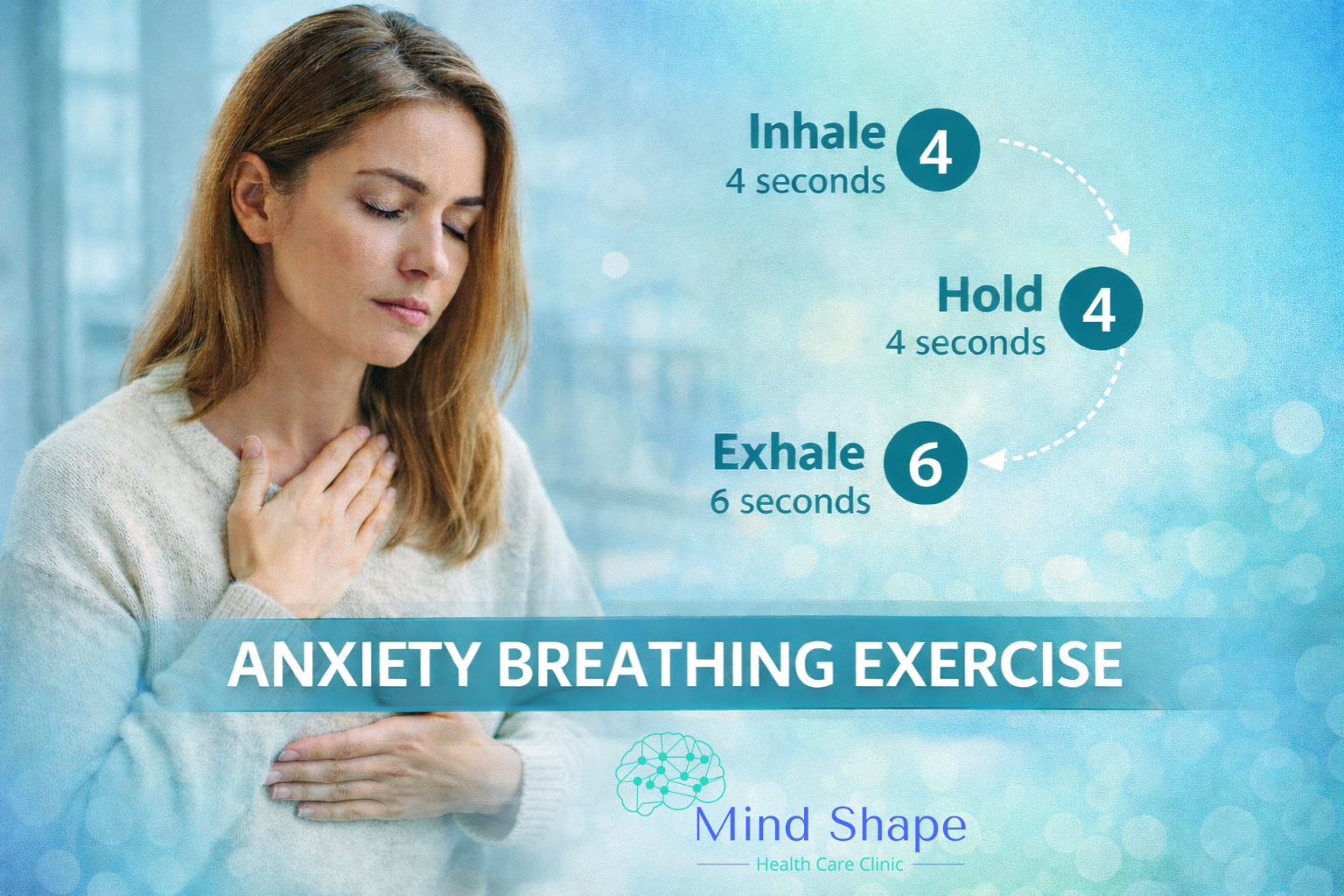
1. Control Breathing to Calm Anxiety Fast
Deep breathing reduces stress hormones immediately.
Try this:
- Inhale for 4 seconds
- Hold for 4 seconds
- Exhale for 6 seconds
Repeat for 2–3 minutes. This signals safety to the brain.
2. Limit Caffeine and Sugar
High caffeine intake increases anxiety symptoms. Studies show caffeine can mimic panic attack symptoms.
Switch to:
- Herbal tea
- Decaf coffee
- Water with electrolytes
Small changes create big anxiety relief.
3. Move Your Body Daily
Exercise reduces anxiety naturally.
We recommend:
- 30-minute brisk walk
- Strength training
- Yoga
- Stretching
Physical movement releases endorphins and regulates cortisol.
4. Practice Grounding Techniques
When anxiety spikes, grounding helps.
Try the 5-4-3-2-1 method:
- 5 things you see
- 4 things you feel
- 3 things you hear
- 2 things you smell
- 1 thing you taste
It brings the brain back to the present moment.
5. Improve Sleep to Reduce Anxiety
Sleep deprivation worsens anxiety.
We suggest:
- Fixed bedtime
- No screens 1 hour before sleep
- Dark, cool room
- Avoid heavy meals late
Good sleep = better emotional regulation.
6. Challenge Negative Thoughts
Anxiety often exaggerates threats.
Ask:
- Is this thought realistic?
- What evidence supports it?
- What would I tell a friend?
Cognitive restructuring is powerful.
7. Reduce News and Social Media Exposure
Constant negative news fuels anxiety.
Set boundaries:
- Check the news once daily
- Limit social scrolling
- Disable notifications
Digital hygiene protects mental health.
8. Try Mindfulness Meditation
Mindfulness reduces anxiety by training awareness.
Start with 5 minutes daily. Apps can help. Over time, it rewires stress responses.
9. Talk to Someone You Trust
Isolation increases anxiety.
Open up to:
- Friends
- Family
- Support groups
Connection reduces fear.
10. Seek Professional Anxiety Treatment
If anxiety interferes with work or relationships, therapy helps.
Common treatments:
- Cognitive Behavioral Therapy (CBT)
- Exposure therapy
- Medication (when necessary)
Professional help is a strength, not a weakness.
Long-Term Strategies to Manage Anxiety
Short-term tools help. But long-term change prevents relapse.
Build a Daily Routine
Morning:
- Light stretching
- Deep breathing
- Journaling
Evening:
- Reflection
- Screen-free wind-down
Consistency reduces anxiety patterns.
Nutrition for Relief
Certain nutrients help regulate mood:
- Magnesium
- Omega-3 fatty acids
- Vitamin D
- B-complex
Balanced nutrition supports mental stability.
Set Boundaries to Prevent Burnout
- Learn to say no.
- Protect your energy.
- Chronic overcommitment fuels anxiety.
When Anxiety Becomes an Anxiety Disorder
If anxiety lasts 6+ months and disrupts life, it may be:
- Generalized Anxiety Disorder (GAD)
- Social Anxiety Disorder
- Panic Disorder
- Health Anxiety
In the U.S., licensed therapists and psychiatrists are widely available. Early treatment leads to better outcomes.
Quick Action Plan to Deal With Anxiety Today
If anxiety feels intense right now:
- Slow your breathing
- Drink water
- Step outside
- Avoid caffeine
- Call someone
Small action beats rumination.
Why Managing Anxiety Improves Every Area of Life
When we deal with anxiety:
- Focus improves
- Sleep improves
- Relationships strengthen
- Productivity increases
- Physical health improves
Anxiety management is not optional. It’s foundational.
This article was reviewed and written with insights from the medical team at MindShape Clinic in the USA — experienced healthcare professionals specializing in cancer treatment, mental health, and patient wellness. Learn more about our board-certified doctors and treatment experts who contribute to our educational blogs and patient support programs.
Recent Blogs
Learn more about Virtual Healthcare and Treatments

Why You Can Rely on Us?
At Mindshape Clinic, we are committed to providing clear and trustworthy health information that you can rely on.
Reliable Information – Every article is based on credible sources.
Expert Review – Content is carefully checked before publishing.
Up to Date – We keep information current with the latest insights.
Clarity First – Our goal is to make knowledge simple and accessible.