Influenza A
Read Time: 5min
Written By

Dr. Hassan Khan
Internist
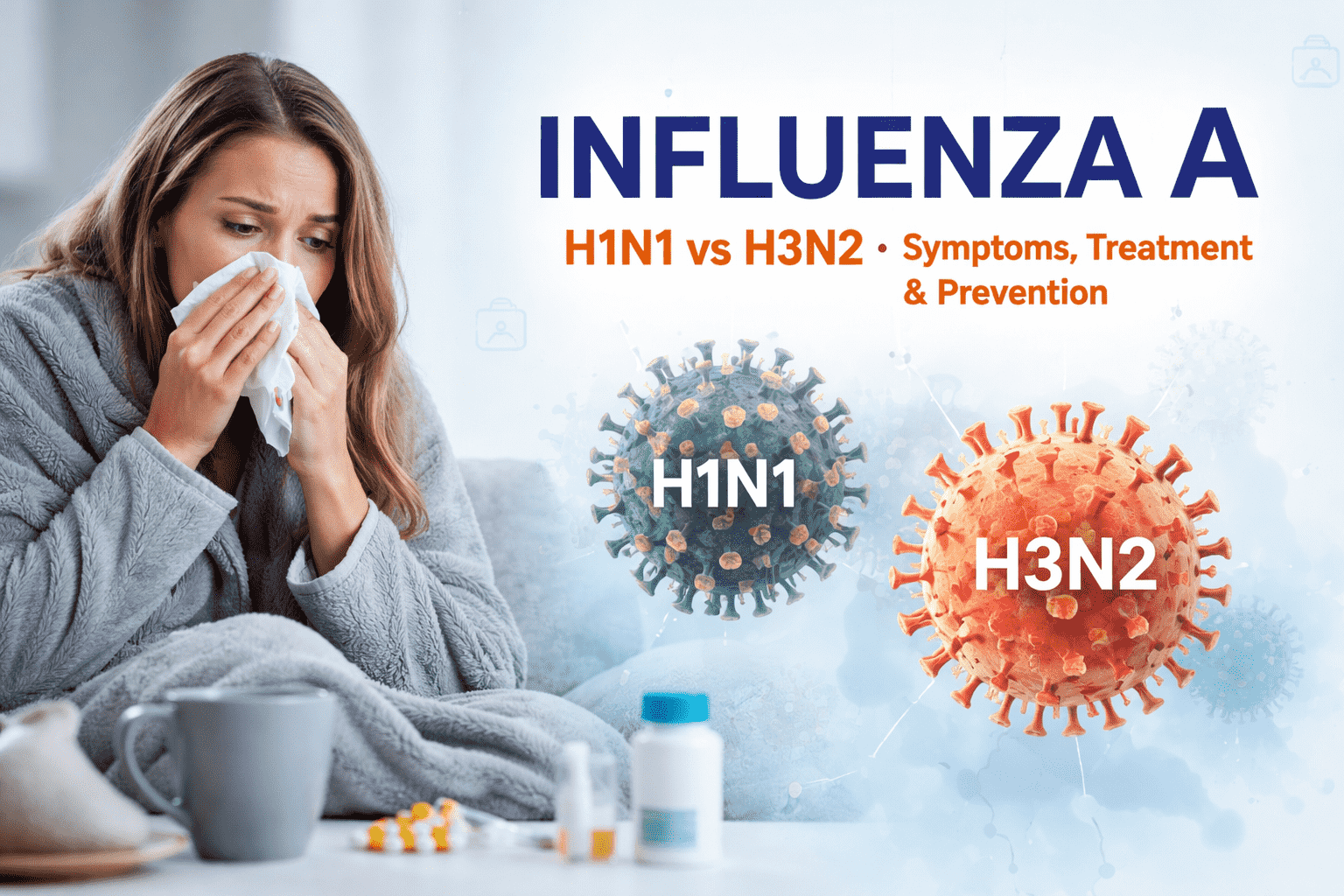
Influenza A Explained: H1N1 vs H3N2, Symptoms, Treatment & Prevention (USA)
Influenza A is one of the main reasons “flu season” can feel intense—because it spreads efficiently and changes over time. However, most people don’t need to memorize strain names to protect themselves. What matters is knowing the symptoms, acting early (especially if you’re high-risk), and understanding why H1N1 and H3N2 keeps showing up in seasonal outbreaks.
Table of Contents
FAQs
Influenza A FAQs
Please feel free to Send a Message or call us if your related question is not included here. we are happy to serve you.
Influenza A is a type of flu virus that causes seasonal outbreaks. It has subtypes like H1N1 and H3N2, which change over time.
Not always. Both Influenza A and B can be severe. Severity depends more on your risk factors, the strain circulating, and how quickly you get care, not just the letter.
It’s highly contagious. People can spread it about 1 day before symptoms and for around 5–7 days after getting sick (often longer in children).
Influenza A can be mild to severe. Most people recover, but it can cause serious complications—especially in older adults, young children, pregnant people, and those with chronic conditions.
Both can cause severe illness. Severity depends on your health risks, timing of treatment, and how widely a strain is circulating—not just the letter.
You can see the difference between influenza A and influenza B.
They describe the H and N surface proteins used to subtype influenza A viruses.
Yes—CDC notes antivirals can reduce symptoms and shorten illness, with greatest benefit when started early (within 1–2 days).
What Is Influenza A?
Influenza A is a type of Influenza virus that causes seasonal flu epidemics in humans (along with influenza B). In the U.S., influenza A is often a major driver of high flu activity.
Also, The type A of influenza viruses are found in many animals (especially birds), which is one reason they can diversify over time.
Influenza A Subtypes (H1N1 vs H3N2): What the Letters Mean
This A Type is divided into subtypes based on two proteins on the virus surface:
- H = hemagglutinin
- N = neuraminidase
That’s why you hear names like Influenza A (H1N1) and Influenza A (H3N2). Globally, the WHO has noted that A(H1N1) and A(H3N2) are among the influenza A subtypes currently circulating in humans.
Why this matters: Influenza A has many possible subtype combinations in nature, and it can “reassort” (mix genetic material) in ways that help it evolve.
Influenza A Symptoms
Symptoms often start suddenly and can feel stronger than a typical cold.
Common influenza (flu) symptoms include:
- Fever or chills
- Cough
- Sore throat
- Runny or stuffy nose
- Body aches
- Headache
- Fatigue
Tip: If the illness hits fast with fever + aches + fatigue, Influenza A becomes more likely (though testing is the only way to confirm type).
How Flu A Spreads and How Long It’s Contagious
Influenza (including Influenza A) spreads mainly through respiratory droplets when someone coughs, sneezes, or talks.
Contagious timeline (simple):
Antiviral guidance and public health resources commonly describe flu being most contagious early in the illness, and people can spread flu before they feel fully sick.
Influenza A vs Influenza B (Quick Difference)
Type A and B both cause seasonal outbreaks in humans.
The biggest practical differences:
- Influenza A is divided into H/N subtypes (like H1N1, H3N2).
- Influenza B is not divided into H/N subtypes (it’s discussed by lineages instead).
Flu A Diagnosis (Testing)
Clinicians diagnose Influenza A based on symptoms, timing, exposure risk, and—when helpful—testing. Testing can confirm influenza, and some surveillance reports subtype viruses (like A(H1N1) or A(H3N2)).
Important: CDC guidance for antivirals emphasizes that when treatment is indicated, clinicians should not delay treatment decisions to wait for lab confirmation.
Who Is at Higher Risk for Flu Complications?
CDC lists several groups at increased risk for serious flu complications, including:
- Adults 65 years and older
- Children younger than 5
- Pregnant people
- People with chronic conditions (like asthma, diabetes, heart disease)
- People with BMI ≥40
If you’re in a high-risk group, early medical guidance is worth it.
Treatment (Antivirals + Home Care)
Influenza A antiviral treatment (best started early)
CDC states that flu antiviral drugs are prescription medicines that can lessen symptoms and shorten illness, and they work best when started within 1–2 days after symptoms begin.
CDC also highlights prompt treatment for people at higher risk of serious complications or with severe/progressive illness.
Home care that supports recovery
If symptoms are mild and you’re not high-risk:
- Rest and prioritize sleep
- Drink fluids regularly
- Use OTC symptom relief carefully (avoid doubling ingredients)
- Stay home during the worst days to reduce spread
Influenza A Complications and High-Risk Groups
Flu can become serious, especially for people in higher-risk groups. CDC highlights prompt antiviral treatment for those at increased risk of serious flu complications.
Higher-risk groups commonly include older adults, young children, pregnant people, and individuals with chronic conditions (like asthma, diabetes, heart disease).
Influenza A Prevention
Influenza A prevention is still mainly flu prevention:
- Flu vaccination is broadly recommended and updated seasonally.
- Reduce exposure during high activity: hand hygiene, avoid close contact when sick, and improve indoor airflow.
Super Flu and Flu Type A (What It Really Means)
Super flu is not an official influenza type. It’s a media phrase often used when flu activity spikes or a strain spreads quickly.
Sometimes the headlines reference Influenza A(H3N2) because surveillance reports may show it dominating in a given period.
This article was reviewed and written with insights from the medical team at MindShape Clinic in the USA — experienced healthcare professionals specializing in cancer treatment, mental health, and patient wellness. Learn more about our board-certified doctors and treatment experts who contribute to our educational blogs and patient support programs.
Recent Blogs
Learn more about Virtual Healthcare and Treatments




Why You Can Rely on Us?
At Mindshape Clinic, we are committed to providing clear and trustworthy health information that you can rely on.
Reliable Information – Every article is based on credible sources.
Expert Review – Content is carefully checked before publishing.
Up to Date – We keep information current with the latest insights.
Clarity First – Our goal is to make knowledge simple and accessible.