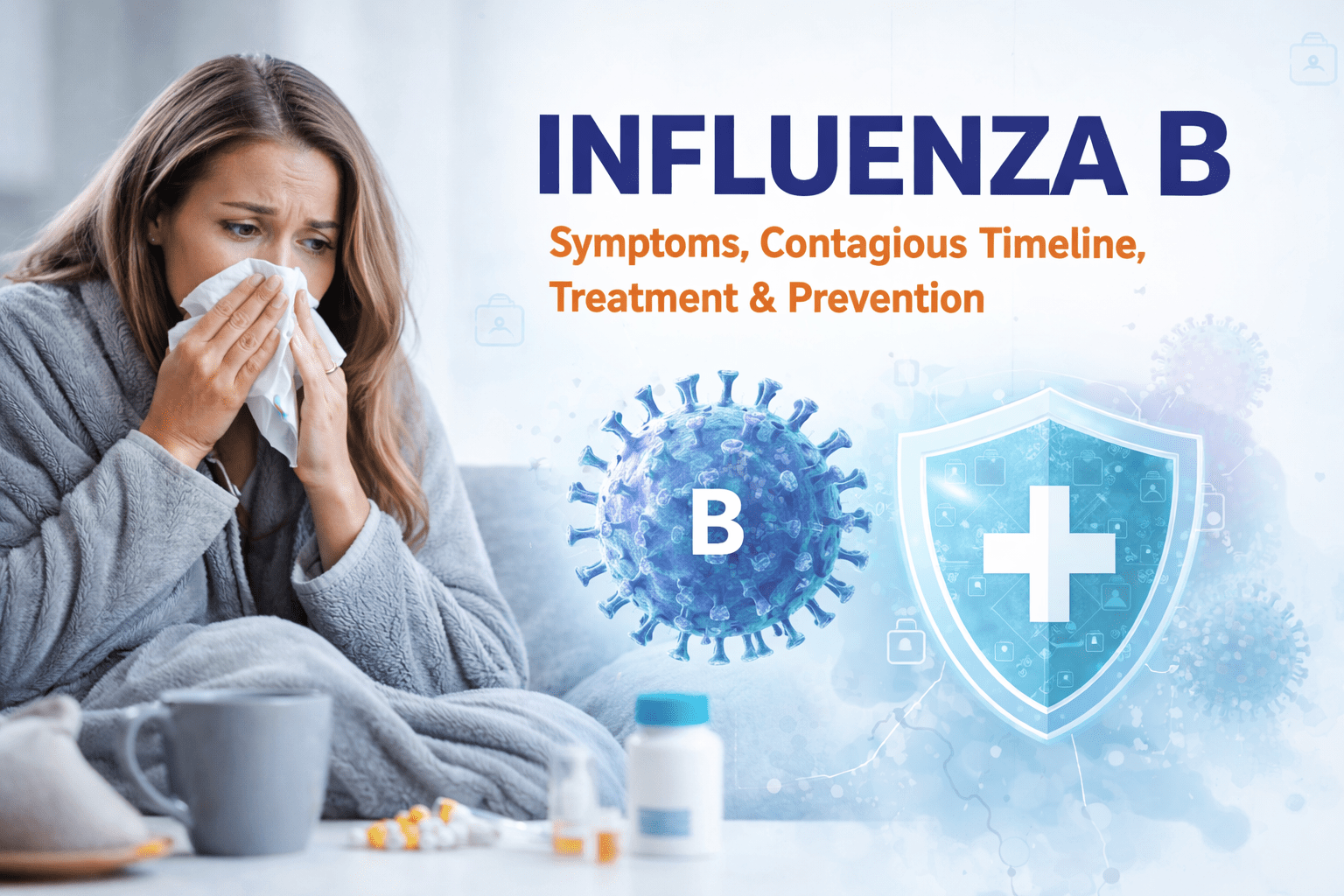
Influenza B
Read Time: 5min
Written By

Dr. Hassan Khan
Internist
Influenza B Explained: Symptoms, Contagious Period, Treatment & Prevention
Influenza B is a major cause of seasonal flu illness in the U.S.—and it can feel severe, especially when fever, aches, and exhaustion start suddenly. However, people often assume “Type B” means “milder,” which isn’t always true.
Table of Contents
FAQs
Influenza B FAQs
Please feel free to Send a Message or call us if your related question is not included here. we are happy to serve you.
Influenza B can be mild or severe. Most people recover, but complications are more likely in high-risk groups (older adults, young children, pregnant women, chronic conditions).
Not necessarily. Both Influenza A and B cause seasonal flu epidemics and can lead to severe illness.
Influenza B is highly contagious. People can spread flu about 1 day before symptoms and for about 5–7 days after becoming sick (sometimes longer in children).
Yes. CDC notes antivirals can lessen symptoms and shorten illness, with greatest benefit when started early (especially within 48 hours).
“Super flu” isn’t an official flu type. It’s a public/media phrase used during intense seasons.
What Is Influenza B?
Influenza B is one of the two main influenza virus types that cause seasonal flu epidemics in humans (Influenza A and Influenza B).
In other words, Influenza B is not rare—and it is a real reason people get very sick during flu season.
Influenza B Symptoms (Adults vs Kids)
Flu symptoms often come on suddenly.
Symptoms in adults
Many adults with the B type of flu experience:
- Fever or chills
- Cough
- Sore throat
- Runny or stuffy nose
- Body aches
- Headache
- Fatigue
Symptoms in children
Children can have the same respiratory symptoms. In addition, vomiting and diarrhea can occur and are more common in children than adults.
Practical tip: If symptoms feel intense and “whole-body,” flu becomes more likely than a cold.
Influenza flu B vs Influenza flu A (What’s the Difference?)
Both Influenza A and Influenza B cause seasonal outbreaks in people.
Still, there are a few helpful differences:
Influenza B does not use “H1N1/H3N2” subtype labels
Those H/N subtype names are used for Influenza A.
So, if you hear H1N1 or H3N2, you’re hearing about Influenza A—not B.
This flu type B is human-focused, but can still be severe
Influenza (flu) B mainly circulates in humans and still causes seasonal epidemics.
Therefore, it can absolutely lead to complications, especially in high-risk groups.
Symptoms overlap—testing often matters.
You generally can’t tell A vs B reliably by symptoms alone. As a result, testing is often needed when the result changes treatment decisions.
How Influenza flu B Spreads (and How Long It’s Contagious)
Influenza spreads mainly through respiratory droplets when someone coughs, sneezes, or talks.
Influenza B contagious period (simple timeline):
People can spread flu before they feel fully sick, including about 1 day before symptoms.
Many people remain contagious for about 5–7 days after becoming sick.
Children and people with weakened immune systems may spread it longer.
Flu B Diagnosis (Testing)
Clinicians often diagnose flu based on symptom pattern, timing, and local flu activity. However, testing can confirm flu and help guide decisions.
clinical evaluation
First, a clinician checks:
- When symptoms started
- Severity and red flags
- Risk factors for complications
- Exposure to sick contacts
Rapid tests and lab testing
Rapid tests can detect influenza. Yet, when antiviral treatment is indicated, CDC guidance emphasizes that decisions should not wait for lab confirmation.
Flu A Diagnosis (Testing)
Clinicians diagnose Influenza A based on symptoms, timing, exposure risk, and—when helpful—testing. Testing can confirm influenza, and some surveillance reports subtype viruses (like A(H1N1) or A(H3N2)).
Important: CDC guidance for antivirals emphasizes that when treatment is indicated, clinicians should not delay treatment decisions to wait for lab confirmation.
Influenza B Treatment (Antivirals + Home Care)
Antiviral treatment (best started early)
CDC notes that influenza antiviral drugs are prescription medicines that can lessen symptoms and shorten the time you are sick. They work best when started within 1–2 days (about 48 hours) after symptoms begin.
Additionally, CDC recommends prompt antiviral treatment for people with suspected or confirmed flu who are at increased risk of serious complications.
Plain-language takeaway: If you’re high-risk, or symptoms are severe or worsening, contact a clinician early.
Home care that actually helps
If symptoms are mild and you’re not high-risk, supportive care is often enough:
- Rest (recovery is faster when you stop pushing)
- Fluids (water, broth, oral rehydration)
- Fever relief as needed (follow label directions)
- Humidifier/steam for congestion
- Stay home during the worst days to protect others
Treatments that do NOT help
- Antibiotics (unless a clinician diagnoses a bacterial complication)
- Doubling multi-symptom cold/flu meds with the same ingredients
- “Powering through” work/school while feverish (it spreads infection and delays recovery)
Who Is High-Risk for Influenza B Complications?
Most people recover. Still, some groups have higher risk of serious flu complications. CDC lists people at increased risk, including:
- Adults 65 years and older
- Young children (especially under 2)
- Pregnant people
- People with chronic conditions (asthma, diabetes, heart disease, etc.)
Also, if you are high-risk, early antiviral treatment may be recommended
When to Seek Urgent or Emergency Care for Influenza B
Seek urgent care if symptoms worsen quickly, you cannot keep fluids down, or you are high-risk.
Seek emergency care if you have:
- Trouble breathing or shortness of breath
- Chest pain/pressure
- Confusion, severe weakness, or fainting
- Signs of dehydration
- Symptoms that improve and then return worse
Influenza B Prevention (Vaccine + Practical Steps)
Influenza B vaccine protection
Both CDC and WHO describe that Influenza A and B cause seasonal epidemics, and vaccination is a key prevention strategy.
Practical habits that reduce Influenza B spread
In addition to vaccination:
- Wash hands often
- Avoid close contact when sick
- Improve indoor airflow when possible
- Stay home when feverish and symptomatic
Influenza B First 24-Hour Checklist (Do This Early)
Use this checklist to act quickly and safely:
- Mark the symptom start time (important for antivirals).
- Check your risk level (pregnancy, asthma, diabetes, 65+, etc.).
- Hydrate and rest (set a simple fluids goal).
- Limit contact (you can be contagious before you feel fully sick).
- Contact a clinician early if you’re high-risk or worsening (antivirals help most when started early).
This article was reviewed and written with insights from the medical team at MindShape Clinic in the USA — experienced healthcare professionals specializing in cancer treatment, mental health, and patient wellness. Learn more about our board-certified doctors and treatment experts who contribute to our educational blogs and patient support programs.
Recent Blogs
Learn more about Virtual Healthcare and Treatments
Why You Can Rely on Us?
At Mindshape Clinic, we are committed to providing clear and trustworthy health information that you can rely on.
Reliable Information – Every article is based on credible sources.
Expert Review – Content is carefully checked before publishing.
Up to Date – We keep information current with the latest insights.
Clarity First – Our goal is to make knowledge simple and accessible.