
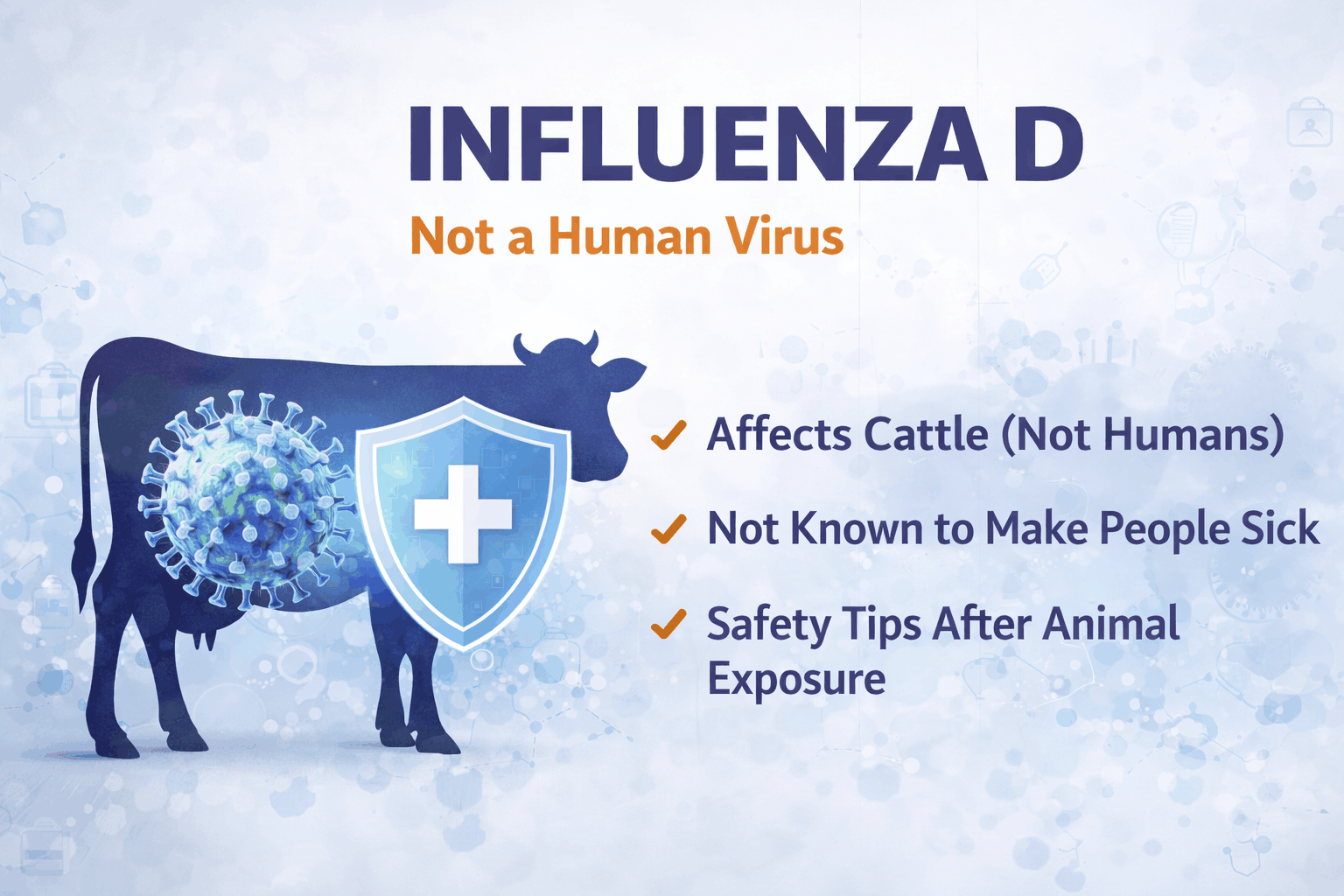
Influenza D
Read Time: 3min
Written By

Dr. Hassan Khan
Internist
Influenza D (Flu) Explained: Causes, Symptoms, and Treatment (USA)
You may have heard there are “four types of flu.” That’s true—A, B, C, and D. However, Influenza D primarily affects cattle and is not known to cause illness in people, according to CDC and WHO.
Table of Contents
FAQs
Influenza D FAQs
Please feel free to Send a Message or call us if your related question is not included here. we are happy to serve you.
Influenza D is a flu virus type, but it primarily affects cattle and is not known to cause illness in people.
For most people, no. If you work with cattle, follow basic protective steps and treat any respiratory symptoms seriously.
Seasonal flu vaccines target Influenza A and B in humans, not Influenza D.
For people, influenza D is not considered a serious flu threat because it primarily affects cattle and is not known to cause illness in humans. For cattle, it can contribute to respiratory disease and should be managed with veterinary guidance.
Current evidence suggests influenza D mainly infects animals. Some people with frequent cattle exposure may show antibodies, but it’s not confirmed as a cause of human illness. If you feel sick after animal exposure, get checked for common respiratory viruses like Influenza A / Influenza B.
Influenza D Causes
Flu D is caused by the Influenza D virus, a flu virus type found mainly in cattle (and sometimes other animals)
How Flu D spreads (in animals)
Influenza D appears to spread among animals through respiratory secretions (similar to other flu viruses), especially when animals are housed close together. Cattle are considered a key reservoir.
Can Flu D infect humans?
CDC and WHO state Flu D is not known to infect or cause illness in people. Some studies have found antibodies in people with frequent cattle exposure, which suggests that exposure may occur; however, this does not confirm illness or a proven human infection.
For most of us, Flu D isn’t seen as a typical flu that affects humans. However, if you work closely with cattle, it’s always a good idea to take basic protective measures. To keep everything clear, here are the types of influenza viruses that affect humans:
– Influenza A
– Influenza B
– Influenza C
– Super Flu
Remember to stay informed and protect yourself, especially if you’re around animals regularly!
What are the symptoms of flu D?
Because Flu type D is not known to cause illness in people, there isn’t a standard “Influenza D symptom list” for humans.
Influenza D symptoms in cattle
- In cattle, Influenza D has been associated with respiratory disease, which can include:
- Cough
- Nasal discharge
- Fever
- Breathing difficulty (in more significant cases)
What if a cattle-exposed person gets flu-like symptoms?
If you work with cattle and develop fever, cough, sore throat, body aches, or shortness of breath, treat it like any respiratory illness:
- Stay home (or away from vulnerable people)
- Consider testing for common causes like Influenza A/B or COVID-19
- Seek medical advice if symptoms are severe or worsening
Influenza D Treatment
There is no routine human treatment plan for Influenza D because it is not known to cause illness in people.
Influenza D treatment in animals
For animals, management is typically guided by a veterinarian and may include:
- Supportive care (hydration, rest, reducing stress)
- Herd management to reduce spread (separating sick animals, improving ventilation)
If you’re sick after animal exposure (what to do)
If you have symptoms after cattle exposure, the most useful approach is:
- Get evaluated early (especially if you’re high-risk)
- Test for common respiratory viruses (Influenza A/B are the main human flu types)
- Follow clinician guidance—antivirals are used for seasonal flu (A/B) when appropriate, especially early in illness.
Influenza D Prevention (For Cattle Workers)
Even though it’s not known to cause illness in humans, prevention is good hygiene and good workplace practice:
Simple prevention steps
- Wear a well-fitting mask if working around coughing animals
- Wash hands after handling animals or equipment
- Avoid touching your face during work
- Change clothes/shoes after farm work
- Improve airflow in enclosed barns when possible
- Isolate visibly ill animals when feasible
This article was reviewed and written with insights from the medical team at MindShape Clinic in the USA — experienced healthcare professionals specializing in cancer treatment, mental health, and patient wellness. Learn more about our board-certified doctors and treatment experts who contribute to our educational blogs and patient support programs.
Recent Blogs
Learn more about Virtual Healthcare and Treatments






Why You Can Rely on Us?
At Mindshape Clinic, we are committed to providing clear and trustworthy health information that you can rely on.
Reliable Information – Every article is based on credible sources.
Expert Review – Content is carefully checked before publishing.
Up to Date – We keep information current with the latest insights.
Clarity First – Our goal is to make knowledge simple and accessible.