Sleep Apnea VA Disability
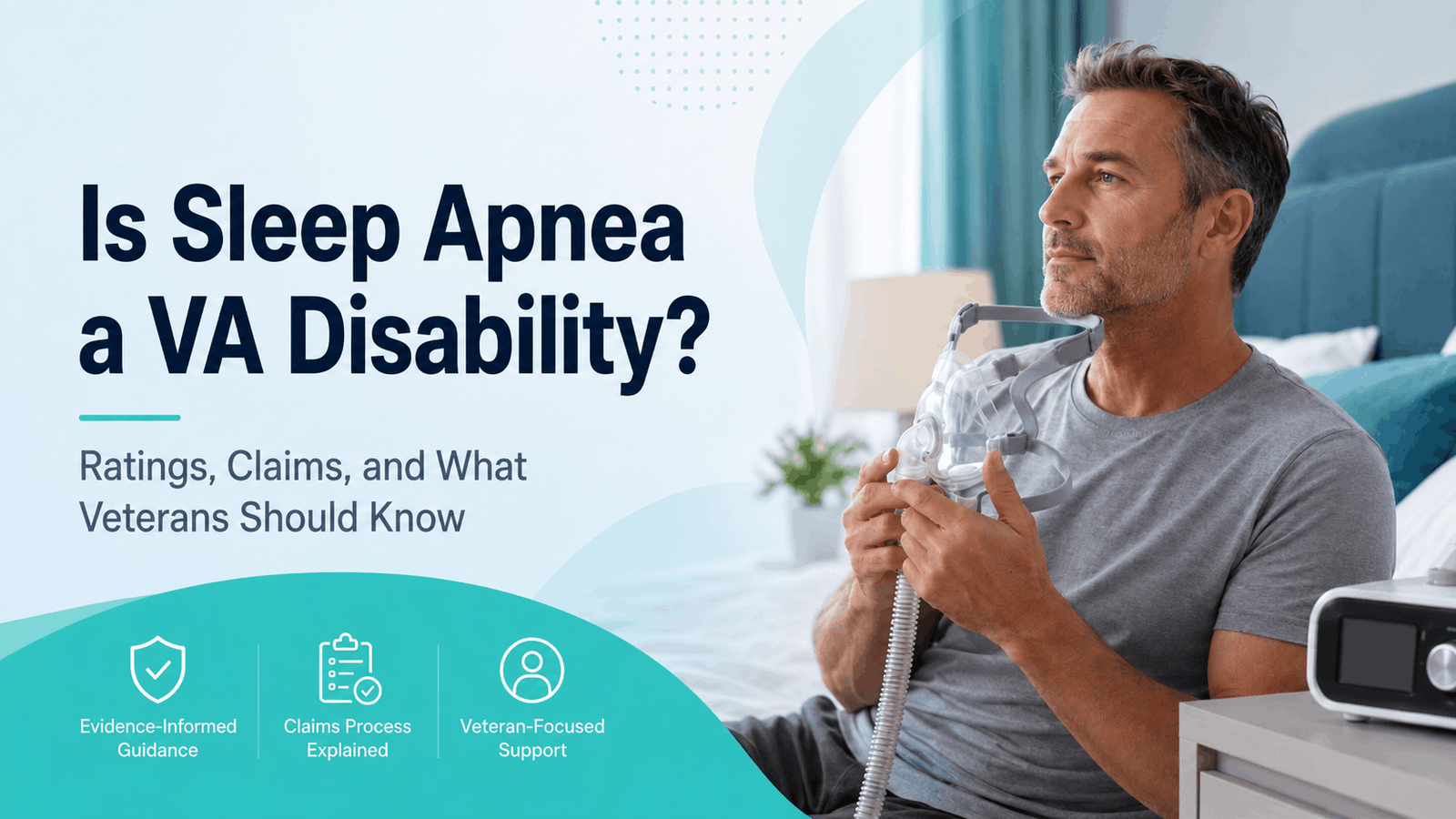
Is Sleep Apnea a VA Disability? Ratings, Claims, and What Veterans Should Know
Written by:

Mindshape Content Team
Medically Reviewed by:

Sleep apnea is one of the most commonly compensated conditions in the VA disability system, and a lot of veterans don’t realize it applies to them until years after they’ve left service.
If you were exposed to noise, dust, or stress that disrupted your sleep, gained weight due to an injury that limited exercise, or developed anxiety, depression, or PTSD that’s now affecting how you breathe at night, sleep apnea may be more connected to your service than it looks at first glance.
How the VA Rates Sleep Apnea
The VA rates sleep apnea syndromes under 38 CFR § 4.97, Diagnostic Code 6847. The rating depends on how the condition affects you functionally, not just on your diagnosis:
- 0 percent: A documented diagnosis with no significant symptoms
- 0 percent: Persistent daytime hypersomnolence (excessive sleepiness) documented by your provider
- 50 percent: Requires the use of a breathing assistance device, such as a CPAP machine, during sleep
- 100 percent: Chronic respiratory failure, cor pulmonale, or a required tracheostomy
In practice, most veterans who are prescribed and using CPAP are rated at 50 percent, which is why a documented, current prescription matters so much for this claim specifically — more than almost any other condition on the ratings schedule, sleep apnea claims hinge on whether you can show you actually need and use a device.
Direct Service Connection vs. Secondary Service Connection
There are two main paths to a sleep apnea rating, and a lot of veterans only know about the first.
Direct Service Connection
This applies when sleep apnea developed during service or can be directly tied to something that happened in service — a documented sleep study while enlisted, symptoms noted in service medical records, or a clear injury (like a facial or nasal injury) that changed your airway anatomy.
Secondary Service Connection
This applies when sleep apnea developed as a result of a condition that’s already service-connected. It’s a more common path than most veterans expect, because sleep apnea has documented, legitimate medical links to several conditions the VA frequently rates:
- PTSD, anxiety, or depression — disrupted sleep architecture and certain medications can worsen airway collapse
- Weight gain from a service-connected orthopedic injury that limited your ability to exercise
- GERD (acid reflux) — there’s a documented bidirectional relationship between reflux and airway obstruction during sleep
A secondary claim requires its own evidence connecting the two conditions, typically through a medical opinion (a “nexus letter”) — your VSO or an accredited claims agent can guide you on how that’s obtained and what it needs to say.
What Evidence Strengthens a Sleep Apnea Claim
- A current, formal diagnosis from a sleep study — either a home sleep apnea test (HSAT) or an in-lab polysomnography (PSG)
- Documentation of your AHI (apnea-hypopnea index) and severity classification
- A prescription for and consistent use of CPAP, BiPAP, or another breathing device, if applicable
- Service treatment records or buddy statements describing symptoms that began in service, for direct claims
- A nexus letter linking the condition to an already-service-connected condition, for secondary claims
The VA periodically re-evaluates sleep apnea ratings, so keeping your diagnosis and treatment records current — not just filing once and forgetting about it — protects the rating you’ve been granted.
Getting Diagnosed Is the Part Most Claims Get Stuck On
Every path above starts in the same place: a current, documented diagnosis. Veterans without an existing diagnosis often stall out here, either because they assume they need an in-person referral or because a sleep lab appointment is months away. Neither is actually required to get started.
MindShape Clinic can evaluate your symptoms over a video visit and order a home sleep apnea test directly — no referral, no waitlist — and provide the ongoing documented care (CPAP management, follow-up visits, updated AHI data) that a claim, or a re-evaluation, depends on.
FAQs
Most common Questions
Does a home sleep apnea test count as valid evidence for a VA claim?
Generally, yes — a home sleep apnea test administered and interpreted by a licensed provider is a standard diagnostic tool and produces the same AHI data an in-lab study would. What matters most is that the diagnosis is documented and current, not which specific test produced it.
Can I claim sleep apnea as secondary to a mental health condition?
It’s a recognized path for many veterans, since sleep fragmentation and certain psychiatric medications can worsen airway collapse. It requires medical evidence connecting the two conditions specifically for your case — a VSO or accredited representative can help you understand what that evidence needs to look like.
How often does the VA re-evaluate sleep apnea ratings?
Re-evaluations vary by case, but the VA can request updated evidence at any point, particularly if your original rating didn’t specify it as permanent. Staying current with your CPAP compliance data and follow-up visits is the simplest way to protect an existing rating.
Do I need to be actively enlisted when diagnosed for a direct claim?
No — you need evidence connecting the current diagnosis to your time in service, which can include service medical records, lay statements, or a nexus opinion, even if the formal diagnosis came after discharge.
This article is for informational and educational purposes only and is not a substitute for professional medical advice, diagnosis, or treatment. If you are experiencing a medical emergency or a mental health crisis, please seek immediate care from emergency services or a local crisis line. This content has been written and reviewed by the Medical Team at mindshape.care. Read our full Medical Disclaimer.
References
View Clinical Sources & References
The following authoritative clinical sources support the medical information in this article.
- Electronic Code of Federal Regulations. 38 CFR § 4.97 — Schedule of Ratings, Respiratory System, Diagnostic Code 6847 . Current regulation text. Accessed July 18, 2026.
- U.S. Department of Veterans Affairs. VA Disability Compensation . Official program overview. Accessed July 18, 2026.
- U.S. Department of Veterans Affairs. How to File a Claim for Disability Compensation . Official filing guidance. Accessed July 18, 2026.
Recent Blogs
Explore More Obstructive Sleep Apnea Guides

Why You Can Rely on Us?
At Mindshape Clinic, we are committed to providing clear and trustworthy health information that you can rely on.
Reliable Information – Every article is based on credible sources.
Expert Review – Content is carefully checked before publishing.
Up to Date – We keep information current with the latest insights.
Clarity First – Our goal is to make knowledge simple and accessible.