Low Testosterone
Read Time: 8min
Written By

Dr. Hassan Khan
Internist
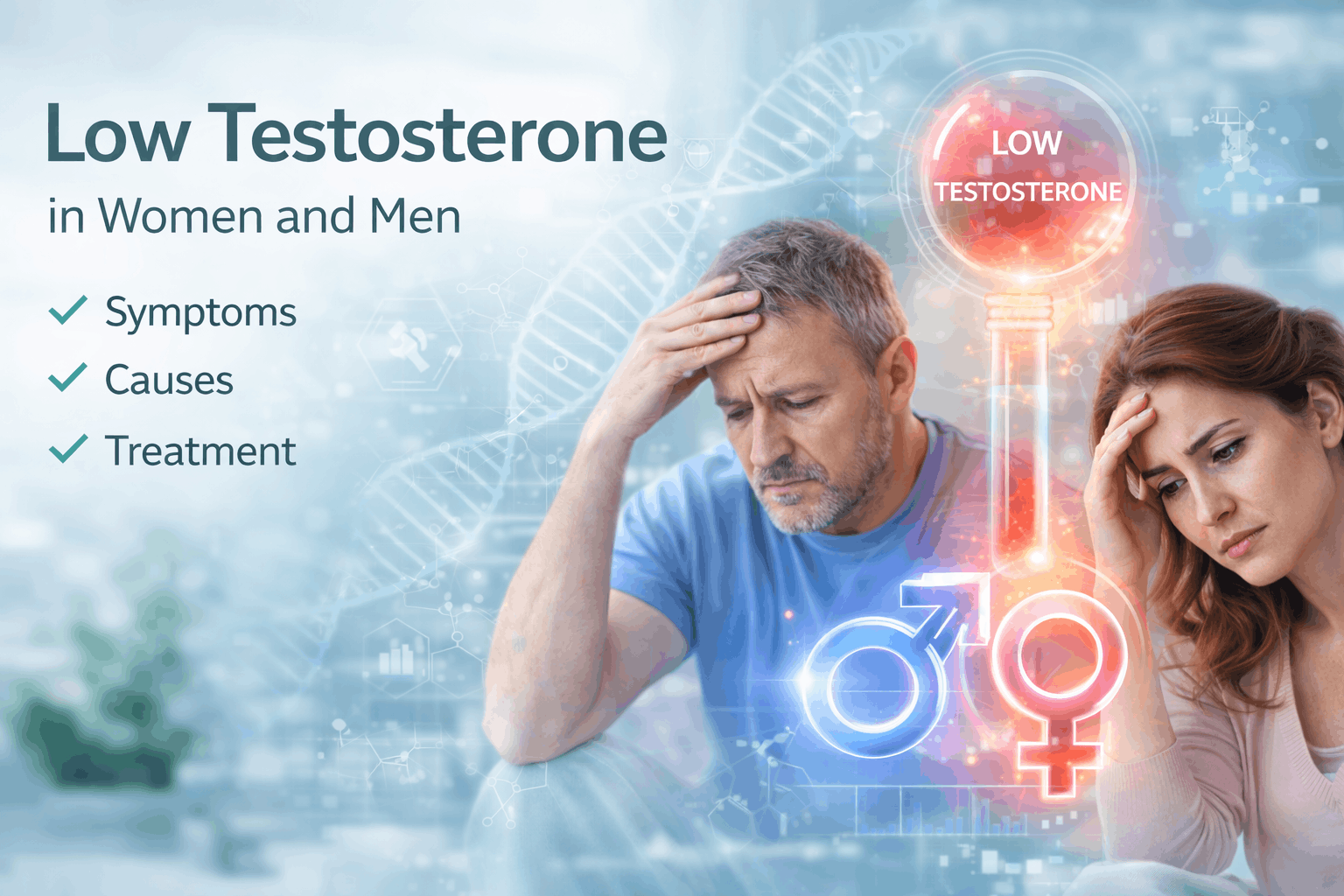
Low Testosterone in Women and Men: Symptoms and Treatment
Testosterone is often talked about as a “male hormone,” but the truth is more complex. Both men and women need healthy testosterone levels for energy, mood, muscle strength, sexual health, and overall well-being. When testosterone drops too low, it can affect far more than you might expect.
Table of Contents
FAQs
FAQs About Low Testosterone
Please feel free to Send a Message or call us if your related question is not included here. we are happy to serve you.
Yes. Women also need testosterone, and low levels may affect libido, energy, mood, muscle tone, and overall well-being.
Yes. Long-term stress can affect hormone balance and may contribute to lower testosterone levels over time.
Treatment may include lifestyle changes, better sleep, weight management, stress reduction, treatment of underlying conditions, and hormone therapy in some cases.
It can contribute to changes in body composition, including reduced muscle mass and increased body fat, especially when combined with poor sleep, stress, or low activity.
You should consider evaluation if you have ongoing symptoms such as fatigue, low libido, poor motivation, reduced strength, or mood changes that are affecting daily life.
Yes, young males can have low testosterone. It is less common than in older men, but it can happen. Causes may include problems affecting the testicles, the pituitary gland, chronic illness, obesity, certain medications, or other hormone-related conditions.
There is not one single number that always means “dangerously low,” because symptoms and overall health matter too. For diagnosis, the American Urological Association recommends using a total testosterone level below 300 ng/dL as a reasonable cutoff for low testosterone, and the Cleveland Clinic notes that testing is usually done with two morning blood samples because levels change during the day. If someone has very low levels along with serious symptoms, a doctor should evaluate it promptly
Treatment for low testosterone in young males depends on what is causing it. If a medical condition is responsible, that problem may need to be treated first. Some young men may benefit from testosterone therapy, but that decision should be made carefully with a qualified clinician because the cause, symptoms, fertility goals, and long-term monitoring all matter. Mayo Clinic notes that testosterone replacement can treat some types of male hypogonadism, but evaluation should come first.
Many people with low testosterone do not realize what is happening at first. They may blame stress, poor sleep, aging, or a busy lifestyle. Over time, though, the symptoms can become harder to ignore. Low energy, poor focus, weight changes, lower libido, and reduced motivation are all common concerns.
In this guide, you will learn what low testosterone is, what symptoms to look for, what causes it in women and men, and what treatment options may help.
What Is Low Testosterone?
Low testosterone happens when the body does not produce enough testosterone to support normal physical, emotional, and sexual health.
Testosterone is a hormone that plays an important role in:
- Energy levels
- Muscle mass
- Bone strength
- Sex drive
- Mood
- Motivation
- Mental clarity
- Reproductive health
While men naturally have higher testosterone levels than women, both sexes rely on this hormone in different ways. When levels fall below what is healthy for your body, symptoms may start to appear.
Why Testosterone Matters in Both Men and Women
Many people assume testosterone only matters for men, but women also need testosterone for healthy body function.
In men, testosterone supports:
- Libido
- Muscle development
- Sperm production
- Body composition
- Mood and confidence
In women, testosterone supports:
- Sexual desire
- Energy
- Muscle tone
- Mental sharpness
- Overall hormone balance
This is why low testosterone in women and men can both lead to noticeable symptoms, even though the signs may not always look the same.
Symptoms of Low Testosterone
The symptoms of low testosterone can build gradually. Some people notice just one or two changes at first, while others feel like their whole body is off balance.
Common symptoms of low testosterone may include:
- Ongoing fatigue
- Low sex drive
- Poor concentration
- Brain fog
- Reduced motivation
- Mood changes
- Irritability
- Low mood
- Trouble building or maintaining muscle
- Increased body fat
- Weaker physical performance
- Poor sleep
- Reduced stamina
Because these symptoms can overlap with stress, thyroid issues, poor sleep, or depression, it is important not to self-diagnose.
Symptoms in females
Thyroid disease is more common in women. Because hormones interact, symptoms can show up in reproductive health.
Common thyroid symptoms in females may include:
- Irregular or heavy periods
- Fatigue and brain fog
- Hair thinning or dryness
- Weight changes
- Mood changes
- Fertility concerns in some cases
If symptoms shift after pregnancy or during major hormonal changes, it’s smart to ask about thyroid labs.
Symptoms of Low Testosterone in Men
In men, low testosterone often affects physical and sexual health in a more obvious way.
Common signs in men may include:
- Reduced libido
- Erectile difficulties
- Lower energy
- Loss of muscle mass
- Increased belly fat
- Poor endurance
- Low confidence
- Irritability
- Decreased motivation
- Reduced facial or body hair in some cases
Some men also notice that workouts do not feel the same as before or that recovery takes longer than usual.
Symptoms of Low Testosterone in Women
In women, low testosterone can be more easily overlooked because the conversation around testosterone is usually centered on men. However, women can also experience real symptoms when testosterone drops too low.
Common signs in women may include:
- Low libido
- Ongoing fatigue
- Reduced motivation
- Poor concentration
- Lower muscle tone
- Mood changes
- Feeling mentally flat
- Reduced sense of well-being
- Sleep issues
Because hormone health in women often involves estrogen, progesterone, thyroid hormones, and cortisol too, symptoms may overlap with other hormonal imbalances.
What Causes Low Testosterone?
There is not always one clear cause. In many cases, low testosterone develops because of age, stress, medical issues, or broader hormone imbalance.
Some common causes include:
- Aging
- Chronic stress
- Obesity
- Poor sleep
- Diabetes or insulin resistance
- Pituitary disorders
- Certain medications
- Chronic illness
- Hormonal changes in women
- Testicular problems in men
The cause matters because treatment should be based on the full picture, not just one lab number.
Does Age Cause Low Testosterone?
Age is one of the most common reasons testosterone levels decline.
In men, testosterone levels often decrease gradually with age. In women, testosterone can also decline over time, especially during and after menopause. That said, low testosterone is not always “just aging.” When symptoms are significant, it is worth looking deeper to see whether other factors are contributing.
Can Stress Lower Testosterone?
Yes, chronic stress can affect testosterone levels.
When the body stays in a prolonged stress state, it produces more stress hormones like cortisol. Over time, this can interfere with hormone balance, sleep quality, energy regulation, and sexual health. Stress may not be the only reason for low testosterone, but it can definitely make symptoms worse.
Can Poor Sleep Affect Testosterone?
Yes. Sleep plays a major role in hormone production and recovery.
People who sleep poorly or do not get enough quality rest may notice:
- Lower energy
- Poor recovery
- Mood changes
- Reduced libido
- Hormone disruption
If your sleep is consistently poor, it may affect how your body regulates testosterone and other important hormones.
Low Testosterone and Weight Gain
Many people with low testosterone notice changes in body composition. You may find it harder to maintain muscle, easier to gain fat, or more difficult to lose weight even when your habits have not changed much.
This can happen because testosterone supports muscle health, metabolism, and body composition. When levels drop, the body may not respond the same way to diet and exercise as it once did.
Can Low Testosterone Affect Mood?
Yes. Low testosterone can affect emotional health as well as physical health.
Some people with low testosterone feel:
- More irritable
- Less motivated
- Mentally drained
- Emotionally flat
- Less confident
- More anxious or down than usual
Hormones and mental well-being are closely connected, so it is not unusual for low testosterone to affect both.
How Low Testosterone Is Diagnosed
Diagnosis starts with symptoms, not just lab results.
A healthcare provider may look at:
- Your symptoms
- Medical history
- Sleep habits
- Stress levels
- Body composition
- Other hormone-related concerns
- Blood test results
Testing is often done in the morning for men, since testosterone levels naturally vary throughout the day. In women, hormone testing may be interpreted along with other hormone patterns and symptoms.
What Is Considered a Healthy Testosterone Level?
A healthy testosterone level can vary depending on age, sex, health status, and the lab being used.
This is why a number alone does not tell the full story. Two people may have similar lab results but feel very different. The right interpretation depends on symptoms, overall health, and whether there are other hormone issues involved.
Treatment for Low Testosterone
Treatment for low testosterone depends on the cause, the severity of symptoms, and your overall health goals.
Possible treatment approaches may include:
- Improving sleep
- Reducing chronic stress
- Increasing physical activity
- Weight management support
- Nutrition changes
- Medication review
- Hormone therapy in some cases
- Treatment of related health conditions
The best treatment plan is always personalized.
Lifestyle Changes That May Help Low Testosterone
In some people, lifestyle improvements can make a meaningful difference.
Helpful changes may include:
- Sleeping on a regular schedule
- Strength training consistently
- Reducing excess body fat
- Managing chronic stress
- Eating enough protein
- Limiting heavy alcohol use
- Addressing sleep apnea if present
- Improving blood sugar control
These changes support hormone health in a broader, more sustainable way.
Medical Treatment for Low Testosterone
Some individuals may benefit from medical treatment when symptoms are severe, and testing confirms a hormonal disorder.
Treatment may involve testosterone replacement therapy in appropriate cases, but that decision should always be made with a qualified healthcare professional. Not everyone with symptoms needs hormone therapy, and treatment should be based on safety, symptoms, goals, and proper monitoring.
Is Testosterone Therapy Safe?
Testosterone therapy can be helpful for some people, but it is not something to start casually or without supervision.
Safe treatment depends on:
- Accurate diagnosis
- Appropriate dosing
- Ongoing monitoring
- Regular follow-up
- Consideration of other health risks
That is why it is important to work with a clinician who understands hormone health and can evaluate whether treatment is actually appropriate.
Can Women Be Treated for Low Testosterone?
Yes, but treatment decisions in women should be especially individualized.
Women can experience symptoms related to low testosterone, but those symptoms may overlap with estrogen changes, progesterone imbalance, thyroid issues, and stress-related hormone shifts. Because of that, care should be thoughtful and based on the full hormonal picture.
When to See a Doctor for Low Testosterone
You should consider a medical evaluation if you have symptoms such as:
- Persistent fatigue
- Low libido
- Reduced motivation
- Trouble concentrating
- Loss of muscle strength
- Unexplained mood changes
- Poor recovery
- Worsening sexual health symptoms
These symptoms do not always mean low testosterone, but they do deserve attention if they are affecting your quality of life.
How MindShape Care Supports Hormonal Health
At MindShape Care, we understand that hormone-related symptoms can affect the way you think, feel, sleep, and function every day. When testosterone levels are low, it can impact energy, confidence, physical strength, and overall well-being.
Our care approach focuses on the bigger picture, including symptoms, sleep, stress, metabolism, and full hormone health. If you are dealing with symptoms of low testosterone, getting the right evaluation can help you understand what is going on and what steps may help.
You can also explore our related hormone guides on adrenal imbalance, thyroid disorders, estrogen and progesterone imbalance, and insulin resistance.
A caring note from MindShape Care
This article is for education only and is not a diagnosis. If your symptoms feel severe, urgent, or unsafe, please seek immediate emergency or crisis support.
This article was reviewed and written with insights from the medical team at MindShape Clinic in the USA — experienced healthcare professionals specializing in cancer treatment, mental health, and patient wellness. Learn more about our board-certified doctors and treatment experts who contribute to our educational blogs and patient support programs.
Recent Blogs
Learn more about Virtual Healthcare and Treatments





Why You Can Rely on Us?
At Mindshape Clinic, we are committed to providing clear and trustworthy health information that you can rely on.
Reliable Information – Every article is based on credible sources.
Expert Review – Content is carefully checked before publishing.
Up to Date – We keep information current with the latest insights.
Clarity First – Our goal is to make knowledge simple and accessible.