Nutritionist vs Dietitian vs Physician
Nutritionist vs Dietitian vs Physician: Who Should Manage Your Nutrition?
Written by:

Mindshape Content Team
Medically Reviewed by:

When people search for nutritionist vs dietitian, they are usually trying to answer one important question: Who should I trust with my nutrition, diet plan, and health goals?
The answer depends on your situation.
If you want general healthy eating guidance, a qualified nutritionist may be helpful. If you need a structured nutrition plan for a medical condition, a registered dietitian is often the better choice. If your nutrition concerns are connected to diabetes, weight, hormones, cholesterol, blood pressure, medications, lab results, kidney health, or multiple chronic conditions, a physician may need to guide your care.
Nutrition is not just about eating less, cutting carbs, or following the latest diet trend. For many people, nutrition is connected to real medical issues such as blood sugar, blood pressure, cholesterol, kidney function, sleep, hormones, weight, and long-term health risks.
That is why understanding the difference between a nutritionist, a dietitian, and a physician matters.
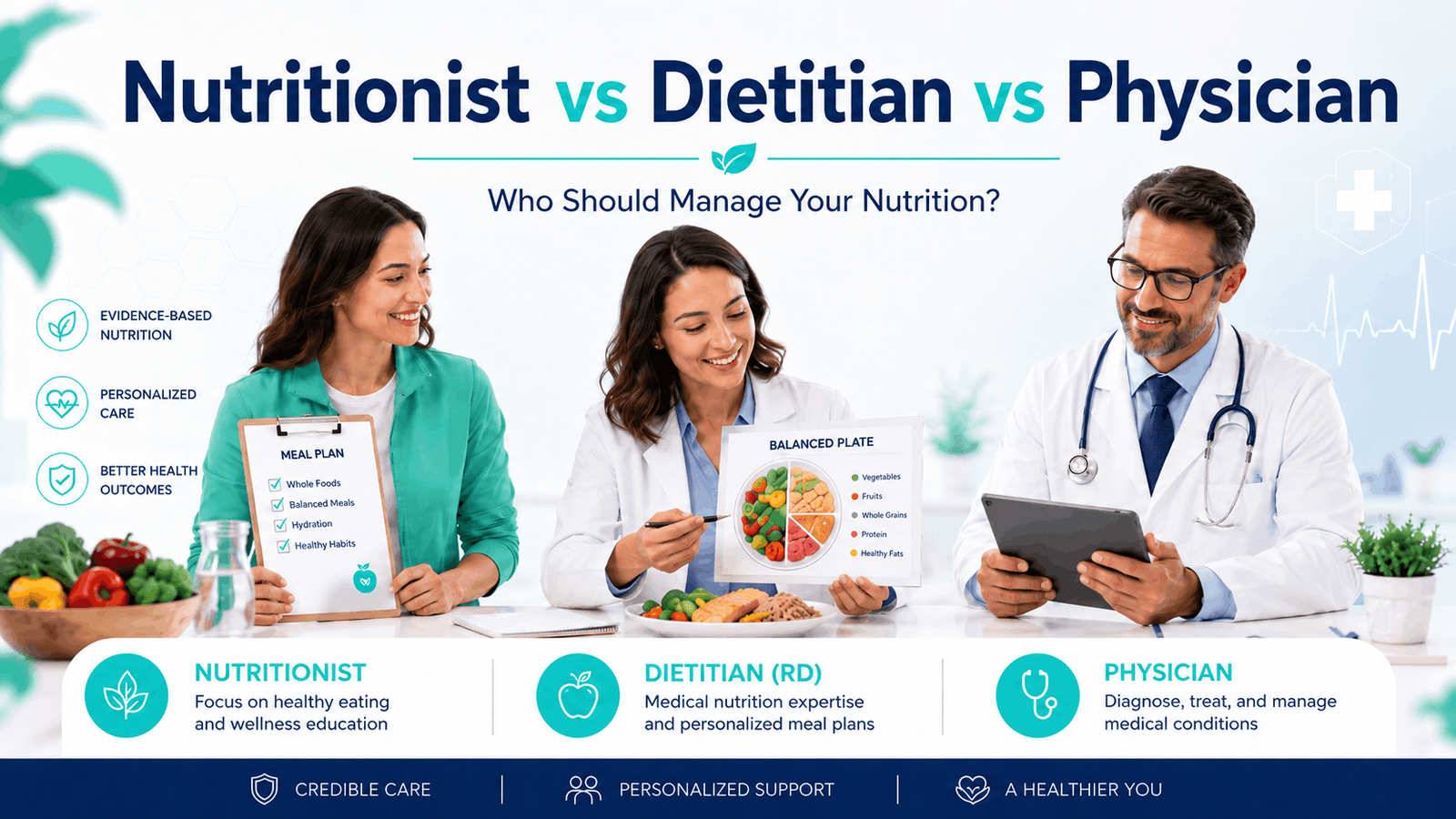
Nutritionist vs Dietitian vs Physician
Here is the simple and quick answer:
| Your Situation | Best Professional to Start With |
|---|---|
| You want general healthy eating advice | Qualified nutritionist |
| You need a personalized meal plan | Registered dietitian or qualified nutrition professional |
| You have diabetes, high blood pressure, high cholesterol, kidney disease, PCOS, obesity, or other medical concerns | Physician-led care with a dietitian or nutrition support |
| You need lab results, medications, or symptoms reviewed | Physician |
| You need medical nutrition therapy | Registered dietitian or qualified nutrition professional |
| You are unsure why you are gaining weight, losing weight, or feeling unwell | Physician first |
For many patients, the best care is not about choosing only one professional. The strongest approach is often a team-based model where a physician manages the medical picture and a dietitian or qualified nutrition professional helps with practical nutrition planning.
Nutritionist vs Dietitian: What Is the Difference?
The main difference between a nutritionist and a dietitian is training, regulation, and scope of practice.
A dietitian, especially a Registered Dietitian or Registered Dietitian Nutritionist, has formal education, supervised training, national exam requirements, and continuing education. Dietitians are trained to provide evidence-based nutrition care and may work in hospitals, clinics, private practice, long-term care, and other healthcare settings.
A nutritionist is a broader title. Some nutritionists are highly educated and qualified, but the title is not always regulated the same way in every state. This means a nutritionist’s training can vary. Some may have advanced credentials, while others may provide only general wellness coaching.
A simple way to remember it is:
All registered dietitians are nutrition experts, but not all nutritionists are registered dietitians. That does not mean nutritionists are automatically unqualified. It means patients should check credentials carefully, especially when nutrition advice is related to a medical condition.
What Does a Nutritionist Do?
A nutritionist usually helps people improve food choices, eating habits, and lifestyle routines. Nutritionists may work in wellness, fitness, coaching, public health, corporate wellness, or general health education.
A nutritionist may help with:
- General healthy eating
- Basic meal ideas
- Grocery planning
- Portion awareness
- Fitness nutrition
- Lifestyle habits
- Weight-related behavior changes
- Wellness education
A qualified nutritionist can be helpful if your goals are general. For example, you may want to eat more balanced meals, reduce processed foods, improve energy, plan healthier snacks, or build a more consistent routine.
However, if you have a medical condition, you should be more careful. Nutrition advice for diabetes, kidney disease, high blood pressure, high cholesterol, obesity, PCOS, pregnancy, digestive disorders, or eating disorders should be handled by a properly qualified healthcare professional.
What Does a Dietitian Do?
A dietitian provides evidence-based nutrition care. Registered Dietitians and Registered Dietitian Nutritionists are trained to assess nutrition needs, create individualized plans, and support patients with condition-specific food guidance.
A dietitian may help with:
- Diabetes nutrition
- Weight management
- Kidney disease nutrition
- Heart-healthy eating
- High cholesterol nutrition
- Blood pressure nutrition support
- PCOS nutrition
- Digestive health concerns
- Food allergies or intolerances
- Pregnancy nutrition
- Medical nutrition therapy
- Nutrition support during illness or recovery
A dietitian does more than give a list of “good foods” and “bad foods.” A good dietitian looks at your health history, lifestyle, food preferences, culture, schedule, budget, symptoms, and goals.
This matters because a nutrition plan should be realistic. A plan that looks perfect on paper will not work if it does not fit your daily life.
What Is Medical Nutrition Therapy?
Medical Nutrition Therapy, often called MNT, is nutrition care used as part of managing certain health conditions. It is more clinical than general diet advice.
Medical nutrition therapy may include:
- Nutrition assessment
- Review of eating patterns
- Condition-specific food guidance
- Personalized nutrition goals
- Meal planning support
- Monitoring and follow-up
- Coordination with medical care
MNT may be used for conditions such as diabetes, chronic kidney disease, heart disease risk, obesity, high cholesterol, and other nutrition-related concerns.
This is one reason the nutritionist vs dietitian difference is important. A generic diet plan may not be appropriate for someone with a medical condition. For example, a high-protein diet may not be right for every patient with kidney disease. A low-carb diet may not be safe or necessary for every patient with diabetes. A weight loss plan may need to consider medications, hormones, sleep, blood pressure, and lab results.
Medical nutrition should be personalized, not copied from the internet.
What Does a Physician Do in Nutrition Management?
A physician manages the medical side of nutrition-related health concerns.
A physician, such as an internal medicine doctor, can evaluate symptoms, review lab results, diagnose conditions, manage medications, and guide treatment for chronic health problems.
A physician may help with:
- Diagnosing medical conditions
- Reviewing blood work and lab results
- Managing medications
- Evaluating weight gain or weight loss
- Managing diabetes, hypertension, cholesterol, thyroid concerns, obesity, or hormonal issues
- Identifying when symptoms may need medical testing
- Coordinating care with dietitians or nutrition professionals
- Monitoring progress over time
A physician does not always replace a dietitian. Their roles are different. The physician looks at the full medical picture. The dietitian or qualified nutrition professional helps turn that medical plan into practical eating habits.
For example, a patient with diabetes may need support with food choices, but they may also need A1C monitoring, medication adjustment, kidney function review, cholesterol management, blood pressure care, and weight-related risk management. A physician can oversee the medical care while nutrition support helps the patient build a realistic daily routine.
Nutritionist vs Dietitian vs Physician: Main Differences
| Professional | Main Role | Best For |
|---|---|---|
| Nutritionist | General nutrition and wellness guidance | Healthy eating, lifestyle habits, and basic meal guidance |
| Dietitian / RD / RDN | Evidence-based nutrition planning and medical nutrition therapy | Diabetes, kidney disease, cholesterol, blood pressure, PCOS, obesity, and digestive concerns |
| Physician / Internist | Diagnosis, labs, medications, and chronic disease management | Complex health concerns, symptoms, medications, abnormal labs, and multiple conditions |
The best choice depends on your health needs. If your goal is general wellness, a qualified nutritionist may be enough. If you need a medical diet plan, a registered dietitian is often a stronger option. If your nutrition concerns are connected to a diagnosed condition, medications, symptoms, or lab results, physician-led care may be the safest starting point.
When Should You See a Nutritionist?
You may consider seeing a nutritionist if you are generally healthy and want help improving your daily habits.
A nutritionist may be helpful if you want to:
- Eat healthier meals
- Build a better grocery routine
- Understand basic nutrition
- Improve portion control
- Support fitness goals
- Reduce frequent snacking
- Create a more balanced lifestyle
- Learn simple meal ideas
Before choosing a nutritionist, check their education, certifications, experience, and whether they are licensed or regulated in your state if required.
Be cautious if someone promises fast weight loss, guaranteed disease reversal, detox cures, extreme restriction, or tells you to stop prescribed medications. Safe nutrition guidance should be practical, evidence-informed, and realistic.
When Should You See a Dietitian?
A dietitian may be the better choice when your nutrition needs are more specific, structured, or medical.
You may benefit from seeing a dietitian if you have:
- Diabetes or prediabetes
- Chronic kidney disease
- Hypertension
- High cholesterol
- Heart disease risk
- PCOS
- Obesity or weight-related health concerns
- Digestive problems
- Food allergies
- Pregnancy-related nutrition needs
- Eating disorder history
- A medical condition that requires food changes
A dietitian can help translate medical advice into daily meals. This is important because many people know they should “eat better,” but they do not know how to do it in a way that fits their real life.
A dietitian can help you understand what to eat, what to limit, how to plan meals, and how to stay consistent without relying on extreme diets.
When Should a Physician Manage Your Nutrition?
A physician should be involved when nutrition is connected to medical symptoms, chronic disease, medications, abnormal labs, or multiple health concerns.
Physician-led nutrition management may be especially helpful if you have:
- Diabetes
- Obesity
- High blood pressure
- High cholesterol
- Chronic kidney disease
- PCOS
- Hormonal concerns
- Low testosterone
- Fatty liver
- Sleep apnea linked with weight
- Unexplained weight gain
- Unexplained weight loss
- Medication-related appetite or weight changes
- Multiple health conditions at the same time
In these cases, the goal is not simply to “eat healthier.” The goal is to create a nutrition plan that fits your medical history, lab results, treatment plan, medications, and long-term health goals.
For example, a patient with kidney disease may need a nutrition plan that considers kidney function and lab values. A patient with diabetes may need a plan that considers blood sugar patterns, medication timing, and meal consistency. A patient with obesity may need support with nutrition, sleep, hormones, physical activity, medications, and metabolic risk.
That is where physician-led nutrition management can be valuable.
Is a Dietitian Better Than a Nutritionist?
- For medical nutrition needs, a dietitian is usually the better choice.
- For general wellness, a qualified nutritionist may be helpful.
If your needs are simple, a qualified nutritionist may help. If your needs are medical, a registered dietitian, licensed nutrition professional, or physician-led care is usually more appropriate.
Is a Physician Better Than a Dietitian?
A physician and a dietitian do different jobs.
A physician is trained to diagnose conditions, review labs, manage medications, and oversee medical treatment. But a dietitian is trained to provide detailed nutrition assessment, food guidance, and meal planning support. One is not always “better” than the other. They are most effective when used correctly.
For many patients, the best approach is:
- The physician evaluates the medical condition.
- The physician reviews labs and medications.
- The dietitian or qualified nutrition professional supports the eating plan.
- The care plan is adjusted based on progress, symptoms, and health goals.
This team-based approach is especially useful for patients with overlapping conditions such as diabetes, weight gain, hypertension, cholesterol concerns, PCOS, kidney disease, sleep apnea, or hormonal changes.
The Best Choice: Nutritionist, Dietitian, or Physician?
Here is the simplest way to decide:
Choose a nutritionist if you want general healthy eating support and do not have complex medical needs.
Choose a dietitian if you need structured meal planning, condition-specific nutrition guidance, or medical nutrition therapy.
Choose physician-led nutrition management if your nutrition concerns are connected to diabetes, obesity, blood pressure, cholesterol, kidney health, PCOS, hormones, medications, abnormal labs, or multiple health conditions.
For many people, the best care is a combination. A physician can manage the medical side of your health, while a dietitian or qualified nutrition professional can help with the daily nutrition plan.
FAQs
Most common Questions
Please feel free to Send a Message or call us if your related question is not included here. we are happy to serve you.
Can a nutritionist give meal plans?
Some nutritionists can provide meal guidance, depending on their training and state rules. For medical conditions, it is safer to work with a registered dietitian, qualified licensed nutrition professional, or physician-led care team.
When should I see a physician for nutrition?
You should involve a physician if your nutrition concerns are connected to diabetes, obesity, high blood pressure, cholesterol, kidney disease, hormones, medications, abnormal labs, unexplained symptoms, or multiple health conditions.
Who provides medical nutrition therapy?
Medical nutrition therapy is commonly provided by registered dietitians or qualified nutrition professionals. A physician may refer, diagnose, manage medications, review labs, and coordinate the broader care plan.
Should I choose a physician or dietitian for weight loss?
If your goal is simple lifestyle weight loss, a dietitian may help. If weight is connected to obesity, diabetes, medications, hormones, sleep apnea, high blood pressure, cholesterol, or metabolic health, physician-led care may be more appropriate.
Is online nutrition care effective?
Online nutrition care can be helpful when it is personalized and medically appropriate. It should consider your health history, symptoms, goals, medications, lifestyle, and follow-up needs.
Get a personalized physician-led Nutrition Plan
A good nutrition plan should not feel random, extreme, or copied from the internet. It should be realistic, personalized, medically appropriate, and built around long-term health.
At MindShape Clinic, nutrition care is physician-led and personalized to your health history, goals, lifestyle, and medical needs. If you need support with weight, diabetes, PCOS, blood pressure, cholesterol, kidney health, or other nutrition-related concerns, online nutrition management can help you build a safer and more realistic plan.
A caring note from MindShape Care
This article is for education only and is not a diagnosis. If your symptoms feel severe, urgent, or unsafe, please seek immediate emergency or crisis support.
This article was reviewed and written with insights from the Medical team at Medically reviewed by licensed clinicians at mindhsape.care.in the USA — experienced healthcare professionals specializing in anxiety, depression, chronic kidney disease, all types of diabetes, hair loss, hormonal health, hyperlipidemia, hypertension, low testosterone, nutrition management, obesity, obstructive sleep apnea, PCOS, and infertility, and patient wellness. Learn more about our board-certified doctors and treatment experts who contribute to our educational blogs and patient support programs.
Recent Blogs
Learn more about Virtual Healthcare and Treatments




Why You Can Rely on Us?
At Mindshape Clinic, we are committed to providing clear and trustworthy health information that you can rely on.
Reliable Information – Every article is based on credible sources.
Expert Review – Content is carefully checked before publishing.
Up to Date – We keep information current with the latest insights.
Clarity First – Our goal is to make knowledge simple and accessible.