PCOS Belly
Written by:

Medically Reviewed by:

PCOS Belly: What It Looks Like, Why It Happens, and How to Reduce It
PCOS belly is one of the most frustrating symptoms many women experience with polycystic ovary syndrome. You may be eating better, walking more, or trying different diets, but your stomach still feels round, bloated, heavy, or difficult to reduce.
The truth is that PCOS belly is not simply about eating too much or not exercising enough. It is often connected to hormones, insulin resistance, inflammation, stress, sleep, and the way your body stores fat around the waist.
2026 medical update: PCOS is now also being referred to as PMOS — Polyendocrine Metabolic Ovarian Syndrome — after a global naming update. For this article, we will mostly use the term PCOS belly because that is still the phrase most people search online. However, you may also see doctors and health websites use the newer term PMOS belly.
What Is PCOS Belly?
PCOS belly refers to abdominal weight gain, bloating, or a rounder midsection that can happen with PCOS. It is often linked to insulin resistance, high androgen levels, inflammation, stress hormones, and visceral fat around the organs.
Some women with PCOS belly notice a firmer, rounder stomach. Others feel bloated after eating or see weight collect mainly around the waist instead of the hips and thighs. The best way to reduce PCOS belly is to support insulin sensitivity, balance hormones, improve nutrition, move regularly, sleep better, and get medical guidance when needed.
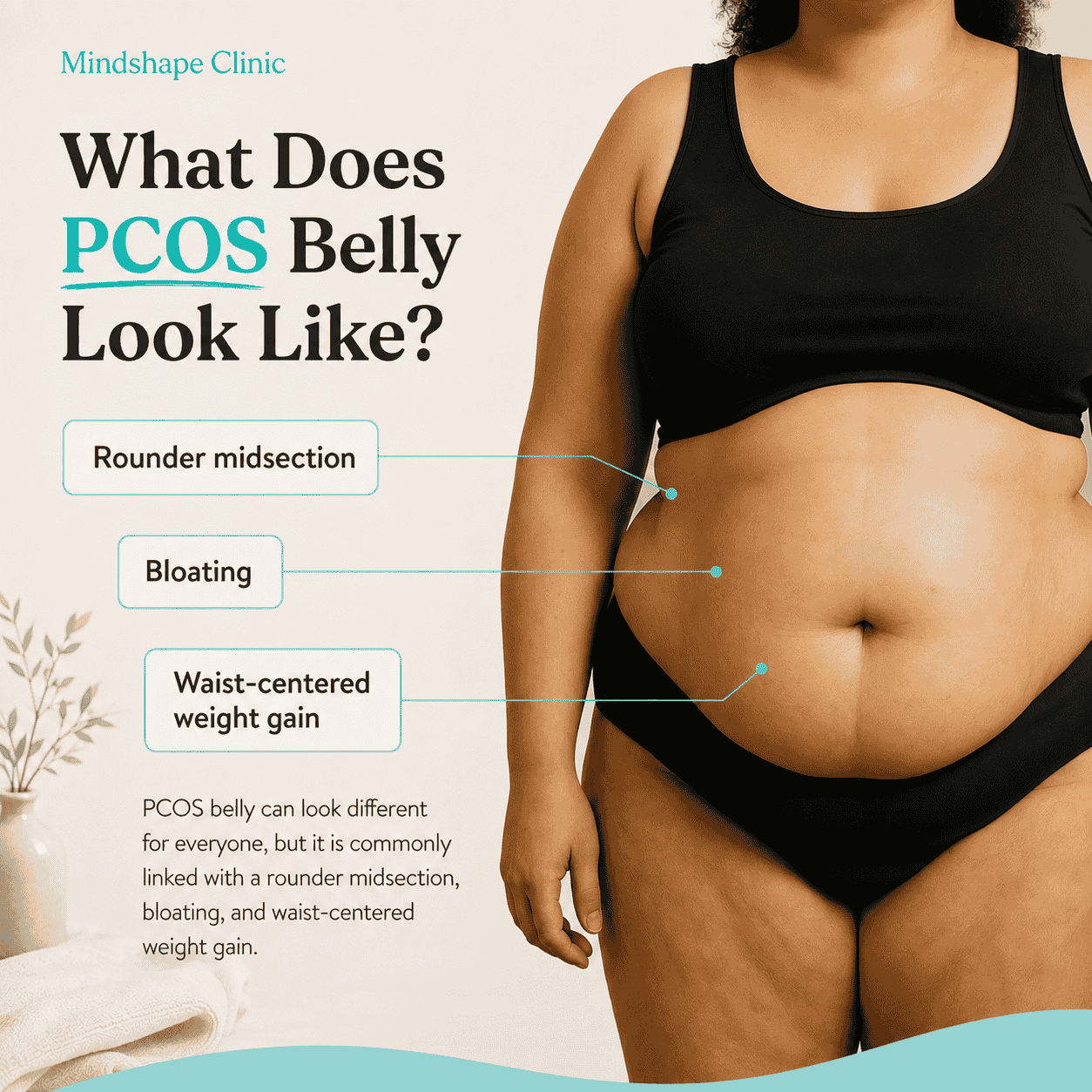
What Does PCOS Belly Look Like?
PCOS belly often looks like a rounder or more protruding midsection. Some people describe it as an “apple-shaped” body, where weight collects around the stomach instead of the hips, thighs, or buttocks.
PCOS belly may look different from person to person. For some women, it feels soft and pinchable. For others, it feels firm or tight. A firmer, rounder abdomen may be linked with deeper visceral fat, which sits around organs such as the liver, pancreas, and intestines. Cleveland Clinic notes that a person can have a healthy BMI and still carry more fat around the midsection with PCOS or PMOS.
Common signs of PCOS belly may include:
- Weight gain mainly around the waist
- A rounder or firmer stomach
- Bloating that becomes worse after meals
- Trouble losing belly fat despite dieting
- Cravings for sugar or refined carbohydrates
- Afternoon energy crashes
- Irregular periods, acne, or unwanted hair growth, along with belly weight
PCOS Belly Fat vs Bloating: What Is the Difference?
Not every round stomach is caused by fat. Many women with PCOS also deal with bloating, water retention, constipation, or digestive discomfort. Understanding the difference can help you choose the right solution.
PCOS Belly Fat
PCOS belly fat usually changes slowly over weeks or months. It may stay present throughout the day and may not disappear after using the bathroom or avoiding certain foods. This type of belly change is often linked with insulin resistance, hormonal imbalance, and visceral fat.
PCOS Bloating
PCOS bloating can change quickly. Your stomach may feel flatter in the morning and then become swollen, tight, or uncomfortable after meals. Bloating may also become worse around your period or with certain foods.
Hormonal Bloating
Hormonal bloating may happen when estrogen and progesterone shift during the menstrual cycle. It may feel like water retention, heaviness, or lower belly swelling.
Digestive Bloating
Digestive bloating may happen after eating, especially if you have constipation, gas, food sensitivities, or gut health issues. If your belly expands quickly during the day, bloating may be part of the problem.
Why Does PCOS Cause Belly Fat?
PCOS belly usually happens because several body systems are working together. The main drivers are insulin resistance, high androgen levels, inflammation, stress, sleep problems, and sometimes weight gain.
This is why simple calorie restriction does not always work well for PCOS. Calories still matter, but hormones influence hunger, cravings, blood sugar, energy levels, and where your body stores fat.
Insulin Resistance and PCOS Belly
One of the biggest reasons behind PCOS belly is Insulin resistance. Insulin is a hormone that helps move sugar from your blood into your cells for energy. When your cells become resistant to insulin, your body has to make more insulin to do the same job.
Higher insulin levels can increase hunger, cravings, and fat storage. For many women with PCOS, this fat is more likely to collect around the belly. Visceral fat can also worsen insulin resistance, creating a cycle that makes weight loss harder.
This does not mean PCOS belly is your fault. It means your body may need a more targeted plan that supports blood sugar, hormones, and metabolism. Learn more about weight loss with PCOS and how Insulin resistance may affect it.
High Androgens and Belly Weight Gain
Androgens are hormones such as testosterone. Women naturally have some androgens, but PCOS can cause higher levels. High androgen levels may contribute to acne, unwanted facial hair, scalp hair thinning, irregular periods, and changes in body fat storage.
In some women, higher androgens can encourage fat to collect around the waist. This is why PCOS belly often comes with other symptoms such as chin hair, acne, oily skin, or irregular cycles.
How to Reduce PCOS Belly Safely?
The goal is to improve the root causes that may be driving abdominal weight gain or bloating.
A better PCOS belly plan usually includes:
- Blood sugar-friendly meals
- Enough protein and fiber
- Strength training
- Regular walking
- Better sleep
- Stress management
- Medical support
Best Diet for PCOS Belly
The best diet for PCOS belly is not a crash diet. It is a balanced eating pattern that helps control blood sugar, reduce cravings, support hormones, and keep you full.
Many women with PCOS do better when meals include protein, fiber, healthy fats, and slower-digesting carbohydrates. The NHS also notes that in women with excess weight, losing even 5% of body weight can significantly improve PCOS symptoms.
Make Your Daily Meal Like This
A simple PCOS-friendly plate may include:
- Half plate: non-starchy vegetables
- One quarter plate: protein
- One-quarter plate: high-fiber carbohydrates
- Small portion: healthy fats
Examples of protein include eggs, chicken, fish, Greek yogurt, tofu, lentils, beans, and lean meat. Examples of high-fiber carbohydrates include oats, quinoa, beans, lentils, berries, sweet potatoes, and brown rice.
Best Exercise for PCOS Belly
Exercise can help with PCOS belly, but it does not need to be extreme. The best exercise is the one you can do consistently.
Best Exercise for PCOS Belly
Exercise can help with PCOS belly, but it does not need to be extreme. The best exercise is the one you can do consistently.
- Walking
- Strength Training
- Gentle Cardio
Can Supplements Help PCOS Belly?
Some supplements may support PCOS symptoms, but they are not magic solutions. They should not replace medical care, healthy eating, exercise, or sleep.
Common supplements discussed for PCOS include:
- Inositol
- Vitamin D
- Magnesium
- Omega-3
- N-Acetyl Cysteine (NAC)
- Berberine
However, evidence and safety can vary. The 2023 PCOS Guideline says inositol may be considered based on individual preference, but it also notes limited clinical benefits for some outcomes and does not recommend one specific type or dose because of limited evidence quality.
Speak with a healthcare provider before taking supplements, especially if you are pregnant, trying to conceive, breastfeeding, diabetic, taking medication, or have kidney, liver, heart, or hormone-related conditions.
When Should You See a Doctor?
See a healthcare provider if PCOS belly comes with:
- Irregular or missed periods
- Acne or unwanted hair growth
- Hair thinning
- Sudden weight gain
- Dark skin patches on the neck or underarms
- Strong cravings or fatigue after meals
- Trouble getting pregnant
- Severe bloating or pelvic pain
A clinician can help check whether your symptoms are related to PCOS, insulin resistance, thyroid problems, digestive issues, medication side effects, or another condition.
How Mindshape Clinic Helps With PCOS Belly
Mindshape Clinic helps patients understand PCOS belly by looking at the full picture, not just weight. Their care may include reviewing symptoms, cycle history, eating patterns, cravings, weight changes, insulin resistance risk, sleep, stress, medical history, and lab needs.
Mindshape Clinic can help by:
- Reviewing your PCOS symptoms
- Checking possible insulin resistance
- Helping you understand belly fat vs bloating
- Creating a realistic nutrition plan
- Supporting safe movement goals
- Discussing medication options when appropriate
- Supporting long-term hormone and metabolic health
PCOS belly is not the same for every woman. A personalized plan can help you understand what is happening in your body and what steps are safest for you.
FAQs
PCOS Belly FAQs
Why does PCOS cause belly fat?
Yes. While medications like metformin or GLP-1 agonists can be helpful tools for some women, lifestyle modification—including a low-glycemic diet, regular exercise, stress management, and targeted supplementation—remains the foundation of weight loss with PCOS. Many women achieve significant improvements through these changes alone. Always discuss medication options with your healthcare provider.
Can lean women have PCOS belly?
Yes. Lean women can have PCOS belly, bloating, insulin resistance, irregular periods, acne, or unwanted hair growth.
How do I reduce PCOS belly naturally?
Natural steps include balanced meals, protein, fiber, walking, strength training, better sleep, stress management, and limiting sugary or highly processed foods.
What foods help PCOS belly?
Helpful foods include eggs, fish, chicken, Greek yogurt, tofu, beans, lentils, vegetables, berries, oats, quinoa, nuts, seeds, olive oil, and avocado.
Does walking help PCOS belly?
Yes, daily 5 to 10 minutes of walking may help support blood sugar control, digestion, stress reduction, and weight management. A short walk after meals is a simple starting point.
Ready to Get Help With PCOS Belly?
PCOS belly can feel discouraging, especially when you are trying your best and still not seeing results. But your body is not broken. PCOS belly is often connected to hormones, insulin resistance, digestion, sleep, stress, and metabolism.
At Mindshape Clinic, you can get personalized support instead of guessing. A clinician-led plan can help you understand your symptoms and take safer steps toward better hormonal and metabolic health.
Book an appointment with Mindshape Clinic today and start your personalized PCOS care plan.
A caring note from MindShape Care
This article is for informational and educational purposes only and is not a substitute for professional medical advice, diagnosis, or treatment. If you are experiencing a medical emergency or a mental health crisis, please seek immediate care from emergency services or a local crisis line. This content has been written and reviewed by the Medical Team at mindshape.care. Read our full Medical Disclaimer.
Recent Blogs
Learn more about Virtual Healthcare and Treatments


Why You Can Rely on Us?
At Mindshape Clinic, we are committed to providing clear and trustworthy health information that you can rely on.
Reliable Information – Every article is based on credible sources.
Expert Review – Content is carefully checked before publishing.
Up to Date – We keep information current with the latest insights.
Clarity First – Our goal is to make knowledge simple and accessible.