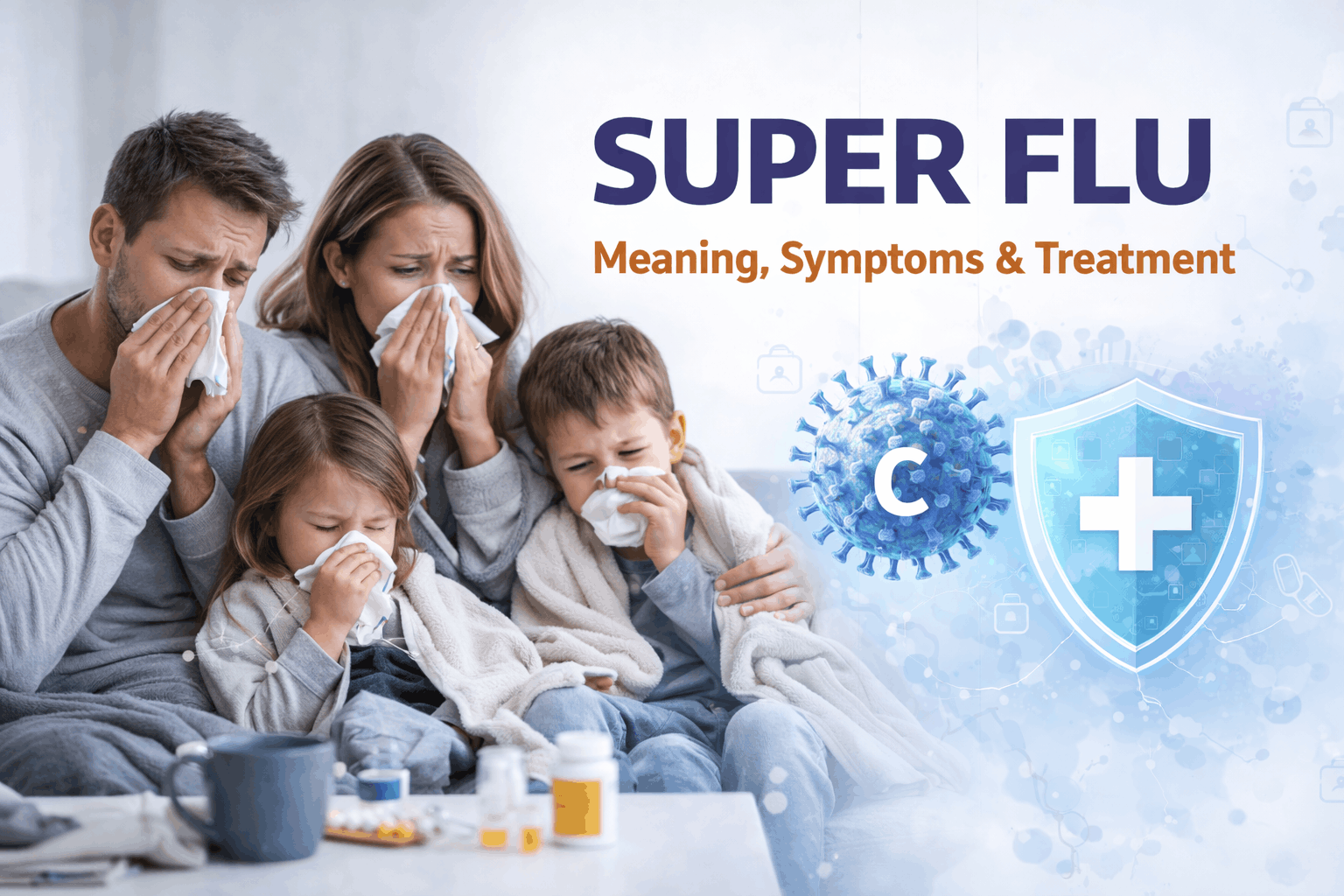
Super Flu
Read Time: 6min
Written By

Dr. Hassan Khan
Internist
Super Flu Explained (USA): Meaning, Symptoms, Treatment, and Prevention
You’ve probably seen headlines like “super flu” and wondered if it’s a new virus—or something worse than regular influenza. The truth is simpler: “super flu” isn’t a medical diagnosis, but it can describe a flu season that hits harder because of strain mix, timing, or low immunity in the community. This guide explains what “super flu” really means, what symptoms to watch for, how long the flu is contagious, what treatment works best (especially in the first 48 hours), and how to protect yourself and your family.
Table of Contents
FAQs
Super Flu FAQs
Please feel free to Send a Message or call us if your related question is not included here. we are happy to serve you.
Super flu is a non-medical term used for an intense flu wave. It usually still means Influenza A or Influenza B.
“Super flu” usually just means regular influenza hitting hard, so the symptoms are the same as flu—often sudden and intense:
- Fever and/or chills
- Severe fatigue (feeling wiped out)
- Body aches and muscle pain
- Headache
- Dry cough
- Sore throat
- Runny or stuffy nose
- Chest discomfort from coughing (not always)
In children, you may also see vomiting or diarrhea.
If there’s trouble breathing, chest pain, confusion, dehydration, or symptoms that get better then worsen, seek urgent care.
There isn’t a separate “super flu shot.” “Super flu” isn’t an official virus type, so there’s no special vaccine just for it. It’s still covered under seasonal flu vaccination.
Yes—because “super flu” usually means seasonal influenza A or B circulating intensely. The flu vaccine is designed to protect against the season’s main A and B strains, although protection can vary by year.
For most people, flu symptoms improve in 3–7 days, but fatigue and cough can last 1–2 weeks. If symptoms are severe or worsening, seek care—especially if you’re high-risk.
Senior flu vaccines are made for adults 65+ and are designed to produce a stronger immune response (often higher-dose or adjuvanted). Regular flu shots are standard-dose for most other age groups.
What Is Super Flu?
Super flu is a popular term, not an official medical label. In most cases, it refers to a flu wave that feels more intense because many people get sick at once, symptoms are stronger, or cases rise quickly. In other words, it’s still influenza—usually Influenza A or Influenza B—just circulating under conditions that make it feel “extra” in the real world.
Super Flu Causes (Why Some Flu Seasons Hit Harder)
A “super flu” season is usually caused by one or more of these factors working together:
Super flu Cause #1 — A dominant flu strain spreads fast
Some seasons are driven mainly by one strain (often Influenza A). If that strain spreads quickly, many people can get sick in a short time.
Cause #2 — Lower community immunity
If fewer people have immunity—because of low prior exposure, low vaccination rates, or immunity “gaps”—more people get infected, and symptoms may feel more widespread.
Cause #3 — Flu peaks earlier or overlaps with other viruses
When influenza peaks early or overlaps with other respiratory viruses, clinics get crowded, and people feel like “everything is going around.”
Cause #4 — Delayed treatment
When people wait several days before seeking care, they may miss the ideal window for antivirals. That can make illness feel longer and harsher—especially for high-risk groups.
Super Flu Symptoms
Super flu symptoms are flu symptoms—they can feel intense and start suddenly.
Flu symptoms in adults
Common symptoms include:
- Fever or chills
- Cough
- Sore throat
- Runny or stuffy nose
- Body aches
- Headache
- Significant fatigue
Flu symptoms in children
Kids can have similar symptoms. Some children may also have stomach symptoms like vomiting or diarrhea.
Quick tip: If symptoms come on fast with fever + aches + fatigue, it’s more consistent with influenza than a mild cold.
How Super Flu Spreads (and How Long the Flu Is Contagious)
Even when people call it “super flu,” it spreads the same way as influenza:
How the super flu spreads
Influenza spreads mainly through respiratory droplets when someone coughs, sneezes, or talks. It can also spread through close contact and contaminated surfaces.
How long is the flu is contagious
Most people can spread flu about 1 day before symptoms start and for around 5–7 days after becoming sick. Children may be contagious longer.
Practical takeaway: Stay home during the worst days and avoid close contact with high-risk people.
Super Flu vs Cold vs “Stomach Flu”
People often mix these up, so here’s a quick, clean explanation:
- Super flu (influenza): sudden onset, fever/chills, strong aches, deep fatigue
- Common cold: slower onset, milder symptoms, more sneezing/congestion
- Stomach flu: usually gastroenteritis (not influenza), mainly vomiting/diarrhea
Diagnosis (Testing)
You can’t confirm “super flu” by symptoms alone—because it’s not a diagnosis. Clinicians diagnose influenza using:
- Symptom pattern and timing
- Local flu activity
- Rapid tests or lab testing when it changes decisions (treatment, isolation, work/school needs)
If you’re high-risk or symptoms are severe, testing and early guidance matter more.
Super Flu Treatment (Antivirals + Home Care)
Antivirals (best within 48 hours)
Antiviral medications can reduce symptom severity and shorten the duration of illness when started early—ideally within 48 hours of symptom onset. They’re especially important for:
- High-risk patients
- Severe or worsening illness
- People with chronic conditions
Home care that actually helps
If symptoms are mild and you’re not high-risk, supportive care often works well:
- Rest and sleep
- Fluids (water, broth, oral rehydration if needed)
- Fever/aches relief (follow label directions)
- Humidifier/steam for congestion
- Stay home to reduce the spread
Treatments to avoid
- Antibiotics (unless a clinician diagnoses a bacterial complication)
- Doubling multi-symptom products with the same active ingredients
- Pushing through work/school while feverish
When to Seek Urgent or Emergency Care for Super Flu
Seek urgent care if symptoms worsen quickly, you can’t keep fluids down, or you’re high-risk.
Seek emergency care if you have:
- Trouble breathing or shortness of breath
- Chest pain/pressure
- Confusion, severe weakness, fainting
- Signs of dehydration
- Symptoms that improve, then return suddenly worse
Super Flu Prevention (Vaccine + Practical Steps)
Prevention is the same because “super flu” is still influenza.
Prevention with the flu vaccine
Seasonal flu vaccination remains one of the best tools to lower the risk of infection and severe outcomes.
Prevention habits
In addition:
- Wash your hands often
- Avoid close contact when sick
- Improve indoor airflow
- Mask if you’re ill and must be around others
- Stay home when feverish
This article was reviewed and written with insights from the medical team at MindShape Clinic in the USA — experienced healthcare professionals specializing in cancer treatment, mental health, and patient wellness. Learn more about our board-certified doctors and treatment experts who contribute to our educational blogs and patient support programs.
Recent Blogs
Learn more about Virtual Healthcare and Treatments





Why You Can Rely on Us?
At Mindshape Clinic, we are committed to providing clear and trustworthy health information that you can rely on.
Reliable Information – Every article is based on credible sources.
Expert Review – Content is carefully checked before publishing.
Up to Date – We keep information current with the latest insights.
Clarity First – Our goal is to make knowledge simple and accessible.