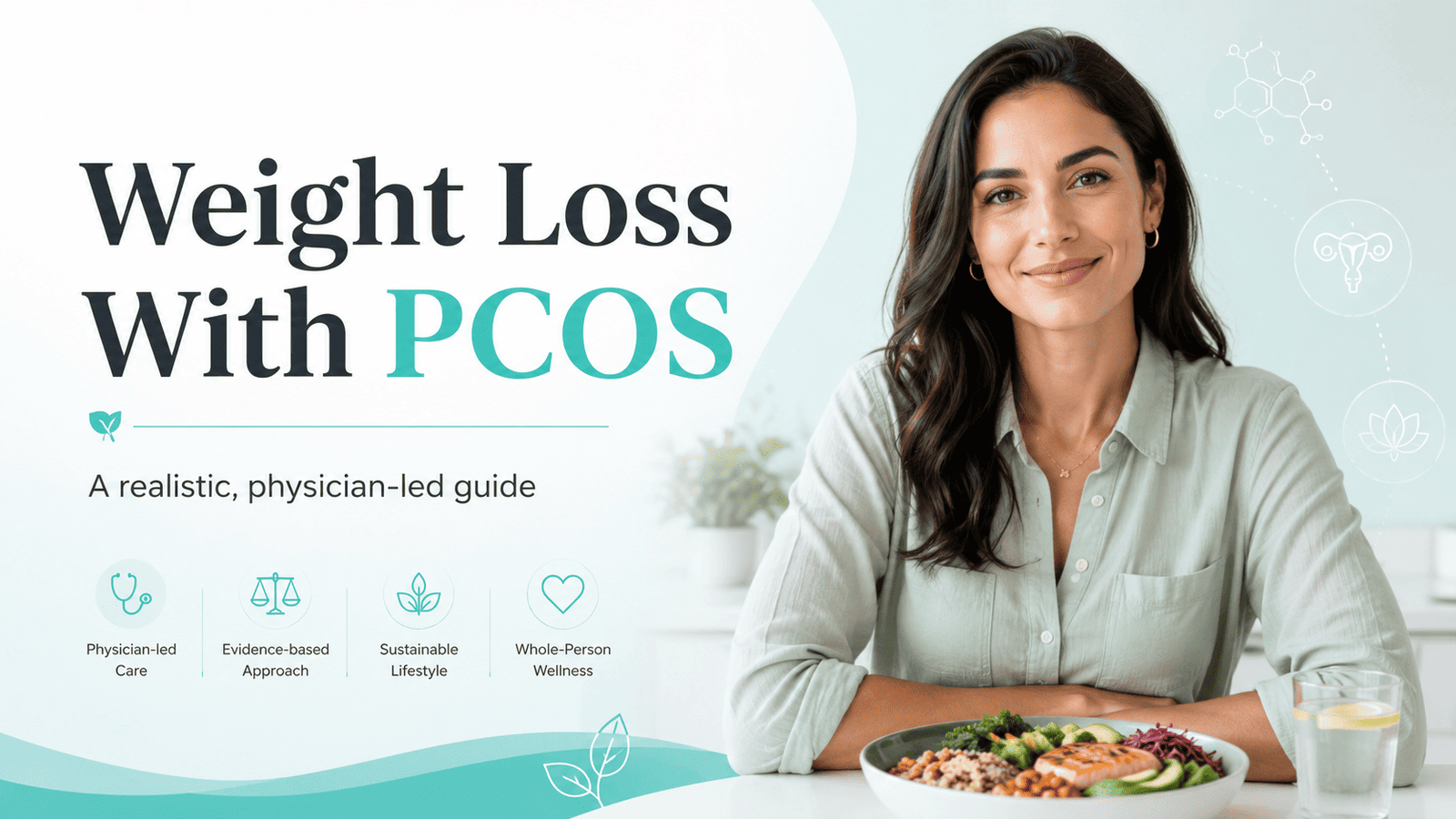
Weight Loss With PCOS
Written by:

Medically Reviewed by:

How to weight loss with PCOS: A Physician-Led Guide
Weight loss with PCOS can seem really unfair. You could be eating less than other women, working out regularly, and even passing on dessert, but the scale still doesn’t show much progress—or worse, it doesn’t change at all.
FAQs
Weight Loss With PCOS FAQs
Please feel free to Send a Message or call us if your related question is not included here. we are happy to serve you.
Can I lose weight with PCOS without medication?
Yes. While medications like metformin or GLP-1 agonists can be helpful tools for some women, lifestyle modification—including a low-glycemic diet, regular exercise, stress management, and targeted supplementation—remains the foundation of weight loss with PCOS. Many women achieve significant improvements through these changes alone. Always discuss medication options with your healthcare provider.
How much weight do I need to lose to see improvements in my PCOS symptoms?
Research suggests that even a modest 5% weight loss can lead to meaningful improvements in menstrual regularity, ovulation, insulin sensitivity, and androgen levels. For a woman weighing 200 pounds, that’s just 10 pounds.
Is keto good for PCOS weight loss?
Some small studies suggest that a ketogenic diet may improve insulin resistance, reduce testosterone levels, and promote weight loss in women with PCOS. However, keto can be difficult to sustain long-term and may not be appropriate for everyone. A less restrictive low-glycemic Mediterranean diet is often a more practical and equally effective starting point. Consult a nutrition professional before making dramatic dietary changes.
What is the best exercise for PCOS belly fat?
A combination of strength training (to build muscle and boost resting metabolism) and moderate-intensity cardio (to improve insulin sensitivity and burn fat) is most effective for reducing visceral belly fat. HIIT can also be a time-efficient option.
How quickly can I expect to lose weight with PCOS?
Weight loss with PCOS is often slower than for someone without the condition, and that’s okay. A safe and sustainable rate is 1–2 pounds per week. Focus on non-scale victories too—improved energy, better sleep, more regular cycles, and reduced cravings are all signs that your body is healing.
PCOS has a significant impact on various aspects of health, including hormones, insulin resistance, appetite signals, inflammation, sleep, stress, and even how the body stores fat. According to MedlinePlus, one common symptom of PCOS is weight gain or difficulty losing weight. Additionally, it notes that this condition is linked to insulin resistance, a higher risk of type 2 diabetes, heart disease, sleep apnea, and mental health concerns like depression and anxiety.
2026 medical update: PCOS is now also being referred to as PMOS — Polyendocrine Metabolic Ovarian Syndrome — after a global naming update. However, most patients still search for “PCOS,” so this article uses PCOS to keep the information easy to find.
Why Is It So Hard to Weight loss With PCOS?
PCOS can make weight loss harder because it affects more than calories. Many women with PCOS deal with insulin resistance. This means the body has a harder time using insulin properly. When insulin levels stay higher, some people may experience more cravings, more hunger, and more difficulty losing fat. PCOS can also affect hormones that influence appetite, energy, menstrual cycles, acne, hair growth, and body composition. This is why PCOS weight gain can feel so frustrating.
You may notice:
- More weight around the belly
- Strong cravings for sugar or carbs
- Fatigue after meals
- Difficulty losing weight even with effort
- Weight regain after restrictive diets
- A slower response to basic calorie cutting
This does not mean weight loss is impossible.
PCOS and Insulin Resistance: The Weight Loss Connection
To understand PCOS, insulin resistance, and weight loss, think of insulin like a key. After you eat carbohydrates, your body breaks them down into glucose, or sugar. Insulin helps move that sugar from your blood into your cells. With insulin resistance, the cells do not respond as well to insulin. So the body may make more insulin to get the job done. Higher insulin levels can make fat storage easier and weight loss harder for some women with PCOS. That does not mean carbohydrates are bad.
It means carbohydrates need strategy.
For example, eating a large portion of refined carbs alone may leave you hungry again soon. But pairing a high-fiber carb with protein, vegetables, and healthy fat can support steadier blood sugar and better fullness.
That is the foundation of an insulin-resistant PCOS diet.
What Is the Diet for PCOS Weight Loss?
The diet for PCOS weight loss is not one perfect diet.
The 2023 International Evidence-Based Guideline for PCOS states that no single diet composition has been proven superior for all PCOS outcomes. The guideline supports healthy lifestyle care and individualized nutrition strategies based on patient needs, preferences, and goals. That matters because women with PCOS are not all the same.
Some have insulin resistance. Some have prediabetes. Some have irregular periods. Some have a history of binge eating. Some are taking metformin. Some are considering GLP-1 medications. Some are trying to conceive. Some are overwhelmed and just need a realistic starting point. A good PCOS plan should fit the person, not force the person into a rigid plan.
Low-Glycemic Eating
A low glycemic diet PCOS approach focuses on choosing carbohydrates that are digested more slowly.
Lower-glycemic carbohydrates may include:
- Lentils
- Beans
- Oats
- Quinoa
- Berries
- Apples
- Sweet potatoes
- Plain Greek yogurt
- High-fiber bread or wraps
A low-glycemic approach can be especially useful for women with insulin resistance. But remember, the full meal matters. A carb paired with protein, fiber, and healthy fat usually works better than a carb eaten alone.
Try this formula: Carbohydrate + protein + fiber + healthy fat = steadier energy
High-Protein, High-Fiber Eating
A high-protein cheese, a Tofu diet for PCOS, may help with fullness, cravings, and muscle maintenance.
Protein can come from:
- Eggs
- Chicken
- Turkey
- Fish
- Greek yogurt
- Cottage cheese Tofu
- Tempeh
- Lentils
- Beans
- Protein smoothies when needed
Fiber also matters because it supports digestion, blood sugar balance, cholesterol, gut health, and fullness.
Fiber-rich foods include:
- Vegetables
- Berries
- Beans
- Lentils
- Oats
- Chia seeds
- Flaxseeds
- Avocado
- Whole grains
A simple goal: build most meals around protein + fiber.
Avoid Extreme Dieting
Crash diets may create short-term weight loss, but they are hard to maintain. Very low-calorie diets, detox plans, or extreme carb cutting may increase hunger, cravings, fatigue, and frustration. Some women may feel better with fewer carbohydrates, especially if insulin resistance is significant. But extreme keto or very restrictive plans are not right for everyone. PCOS weight loss should be safe, realistic, and personalized.
If you are considering supplements, metformin, GLP-1 medications, fasting, or major diet changes, talk with a licensed clinician first.
Foods for Weight loss With POCS
Here is a practical food guide for PCOS weight loss.
| Food Group | Examples | Why It May Help |
|---|---|---|
| Lean protein | Eggs, chicken, turkey, fish, tofu, Greek yogurt | Supports fullness and muscle maintenance |
| High-fiber carbs | Oats, beans, lentils, quinoa, berries, sweet potatoes | Supports blood sugar balance and digestion |
| Non-starchy vegetables | Greens, broccoli, peppers, zucchini, cauliflower | Adds volume, nutrients, and fiber |
| Healthy fats | Olive oil, avocado, nuts, seeds | Supports fullness and meal satisfaction |
| Omega-3 foods | Salmon, sardines, chia seeds, flaxseeds | Supports heart and metabolic health |
| Fermented foods | Greek yogurt, kefir, sauerkraut, kimchi | May support gut health |
| Convenient proteins | Protein shakes, cottage cheese, tuna packets | Helpful for busy schedules |
Exercise for PCOS Weight Loss
Strength training for PCOS weight loss can be especially helpful because muscle helps the body use glucose more effectively.
Start small:
- Strength train 2–3 times per week
- Walk 5–10 minutes after meals
- Use resistance bands or light dumbbells
- Try bodyweight squats, wall push-ups, and step-ups
- Add movement gradually instead of forcing intense workouts
The goal is consistency.
What If You Hit a PCOS Weight Loss Plateau?
A PCOS weight loss plateau can feel discouraging, but it does not mean you failed. It usually means your plan needs a closer look.
Start by checking:
- Are you eating enough protein?
- Getting fiber at most meals?
- Skipping meals and overeating later?
- Has your sleep changed?
- Has stress increased?
- Are you strength training consistently?
- Do your workouts need progression?
- Could a medication be affecting weight?
- Do labs need to be reviewed?
This is also a good time to speak with a clinician.
The 2023 PCOS Guideline notes that metformin may be considered for some adults with PCOS for metabolic outcomes, and anti-obesity medications, including GLP-1 receptor agonists, may be considered alongside lifestyle intervention according to general population guidelines. These options should be discussed with a licensed clinician.
When to Consider Medical Nutrition Therapy for PCOS
Medical Nutrition Therapy, or MNT, is nutrition care designed to support a medical condition. For PCOS, MNT can help connect food choices with insulin resistance, symptoms, medications, labs, and metabolic health.
You may benefit from Medical Nutrition Therapy if:
- Tried multiple diets without lasting results
- Insulin resistance or prediabetes
- Struggle with cravings or weight regain
- Feel confused about carbs
- Hit repeated weight loss plateaus
- You want a plan that considers your medical history
- Support with meal planning and accountability
MNT is different from generic dieting.
A diet may say, “Cut carbs.”
Medical Nutrition Therapy asks, “Which carbs, portions, and meal combinations work best for your body?”
How MindShape Clinic Can Help With PCOS Weight Loss
MindShape Clinic offers physician-led, online nutrition care for women seeking support with weight loss with PCOS.
Instead of giving every patient the same meal plan, MindShape focuses on the bigger picture.
That may include:
- PCOS symptoms
- Weight history
- Cravings
- Insulin resistance risk
- Eating patterns
- Medical history
- Current medications
- Lab review when appropriate
- Sleep and stress
- Long-term metabolic health
MindShape Clinic is led by Dr. Hassan Khan, DO, a board-certified internal medicine physician with a focus on obesity medicine and hormonal health. This physician-led approach can be helpful because PCOS is not just a diet issue. It can overlap with insulin resistance, irregular cycles, weight gain, metabolic risk, and medication decisions.
If you are searching for a PCOS nutritionist online or an online nutritionist for PCOS, MindShape’s physician-led model can help you build a safer, more personalized plan.
Conclusion: PCOS Weight Loss Needs a Personalized Plan
Weight loss with PCOS is not about blaming yourself or eating as little as possible.PCOS can affect insulin, hormones, cravings, belly fat, sleep, stress, and metabolic health. That is why your plan should be personalized.
A good PCOS weight loss plan should help you feel full, support blood sugar, build muscle, protect energy, and fit your real life. With physician-led nutrition care, you can move away from guesswork and toward a safer, more realistic plan.
Ready for Physician-Led PCOS Nutrition Support?
At MindShape, we understand that PCOS is not a one-size-fits-all condition. Our online nutritionist service is physician-led, meaning your plan is created with your full medical picture in mind—not just your food choices. Dr. Hassan Khan, DO, works with you to build a practical, personalized eating strategy that addresses your unique symptoms, lifestyle, and long-term health goals. You’ll receive support that goes far beyond a generic meal plan, with regular follow-up and adjustments over time.
A caring note from MindShape Care
This article is for education only and is not a diagnosis. If your symptoms feel severe, urgent, or unsafe, please seek immediate emergency or crisis support.
This article was reviewed and written with insights from the Medical team at Medically reviewed by licensed clinicians at mindhsape.care. in the USA — experienced healthcare professionals specializing in anxiety, depression, chronic kidney disease, all types of diabetes, hair loss, hormonal health, hyperlipidemia, hypertension, low testosterone, nutrition management, obesity, obstructive sleep apnea, PCOS, and infertility, and patient wellness. Learn more about our board-certified doctors and treatment experts who contribute to our educational blogs and patient support programs.
Recent Blogs
Learn more about Virtual Healthcare and Treatments




Why You Can Rely on Us?
At Mindshape Clinic, we are committed to providing clear and trustworthy health information that you can rely on.
Reliable Information – Every article is based on credible sources.
Expert Review – Content is carefully checked before publishing.
Up to Date – We keep information current with the latest insights.
Clarity First – Our goal is to make knowledge simple and accessible.