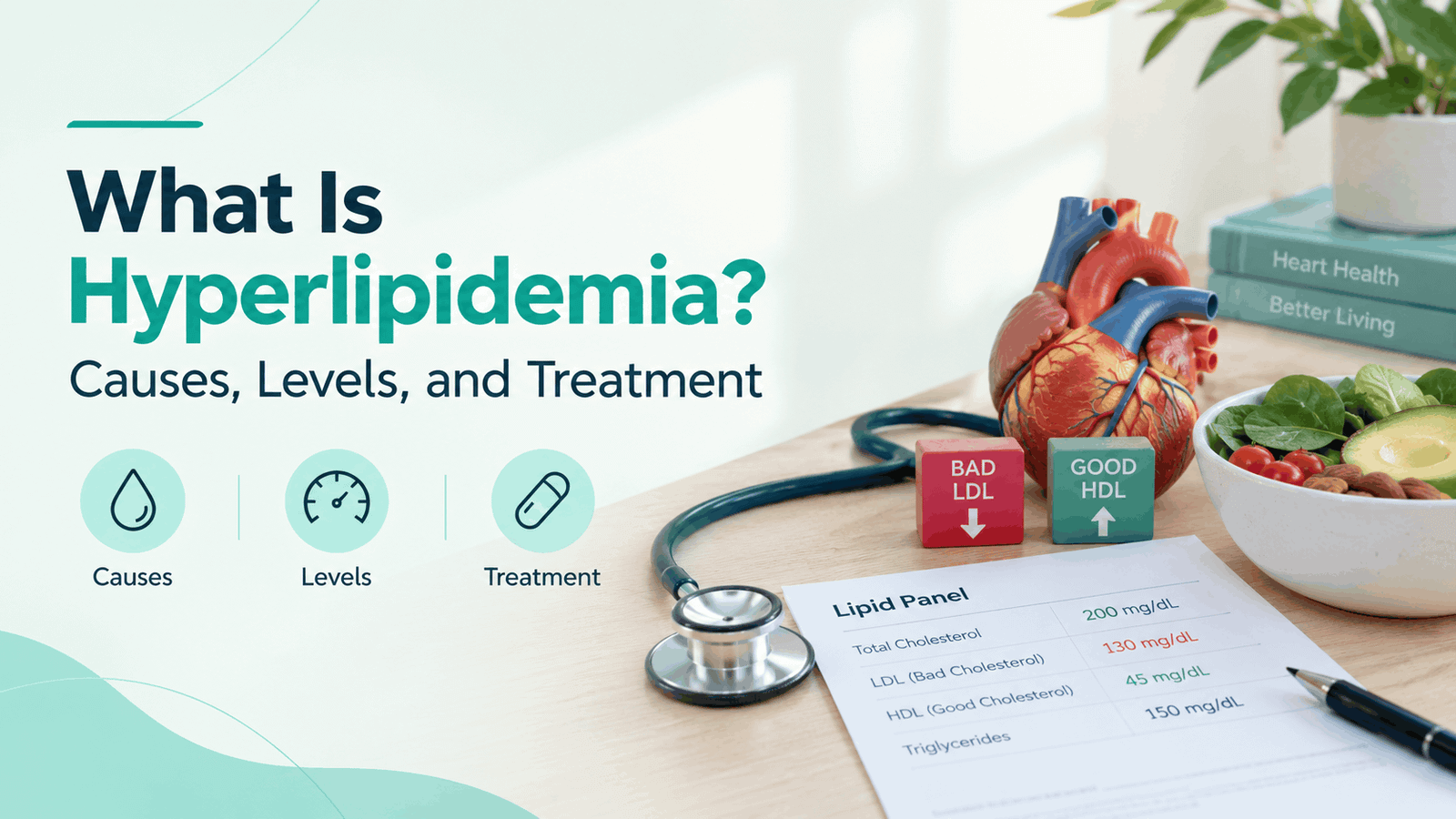
What Is Hyperlipidemia?
What Is Hyperlipidemia? Causes, Levels, and Treatment
Written by:

Mindshape Content Team
Medically Reviewed by:

Hyperlipidemia means you have too many lipids, or fats, in your blood, usually high LDL cholesterol, high triglycerides, or both. That’s the short answer to “what is hyperlipidemia?” It rarely causes symptoms, so most people find out from a blood test, and it’s treatable.
If you just saw this word on a lab report, take a breath. Because it’s so common, doctors know how to treat it. Below, you’ll see what your numbers mean and what comes next.
What is hyperlipidemia vs. high cholesterol vs. dyslipidemia?
Here’s the hyperlipidemia definition from the American Heart Association: your blood has too many lipids, or fats, such as cholesterol and triglycerides. It’s an umbrella label, not a single test result. Three terms get mixed up a lot, so here’s how they compare.
| Term | What it means |
|---|---|
| Hyperlipidemia | Too many lipids in the blood: high LDL cholesterol, high triglycerides, or both. |
| High cholesterol (hypercholesterolemia) | High LDL or total cholesterol. It’s one type of hyperlipidemia. |
| Dyslipidemia | Any abnormal lipid pattern, including low HDL cholesterol. |
In everyday talk, doctors often use hyperlipidemia and high cholesterol interchangeably. Strictly, high cholesterol points to cholesterol alone, while hyperlipidemia also covers high triglycerides. Either way, the numbers behind the label are what guide your care.
Dyslipidemia vs. hyperlipidemia comes down to scope. Dyslipidemia, which StatPearls defines as abnormal levels of lipids in the blood, covers low HDL too, so hyperlipidemia is one kind of dyslipidemia.
Types of hyperlipidemia
Not everyone who asks “what is hyperlipidemia” has the same type. Doctors sort it by cause and by which lipids are high.
Primary (familial) hyperlipidemia
Primary hyperlipidemia is inherited. Your genes change how your body makes or clears cholesterol, so your levels can run high even when your habits are good.
The best-known form is familial hypercholesterolemia, or FH. The CDC says it affects about 1 in 311 people. In adults, it often shows up as an LDL cholesterol of 190 mg/dL or higher.
Secondary (acquired) hyperlipidemia
Secondary hyperlipidemia is acquired. For example, diet, extra weight, diabetes, thyroid or kidney problems, and some medicines can all push your lipids up. When you treat the driver, your numbers often improve.
Mixed hyperlipidemia
Mixed hyperlipidemia means high LDL cholesterol and high triglycerides show up together, often with a low HDL cholesterol. It can be inherited, acquired, or a blend of both. For the numbers and treatment details, see our guide to mixed hyperlipidemia.
What your lipid panel numbers mean
A lipid panel is a blood test that reports four main numbers: total cholesterol, LDL cholesterol, HDL cholesterol, and triglycerides. Lower LDL and triglycerides are better, and a higher HDL is generally better.
| Test | Desirable | Borderline | High (low for HDL) |
|---|---|---|---|
| Total cholesterol | Below 200 | 200 to 239 | 240 and above |
| LDL cholesterol | Below 100 (100 to 129 is near optimal) | 130 to 159 | 160 and above (190 and above is very high) |
| HDL cholesterol | 60 and above | 40 to 59 for men; 50 to 59 for women | Below 40 for men; below 50 for women |
| Triglycerides | Below 150 | 150 to 199 | 200 and above (500 and above is very high) |
Your clinician reads these numbers together, not one at a time. A borderline LDL means one thing in a healthy 35-year-old and something else in a 60-year-old with diabetes. So the full answer to “what is hyperlipidemia” depends on the person.
That’s also why there’s no single “normal” LDL. The American Heart Association says your goal may be below 100, 70, or 55 mg/dL, depending on your risk.
Hyperlipidemia symptoms: why you usually won’t feel it
You usually can’t feel it, which is the strangest part of the answer to “what is hyperlipidemia.” The American Heart Association says many people with high cholesterol have no symptoms. So a blood test is how you find out.
Rarely, extra fat leaves visible clues, mostly in inherited forms such as FH:
- Xanthomas are yellowish, fatty bumps under the skin, often around the knuckles, elbows, knees, or Achilles tendon.
- Xanthelasma is a yellowish patch of fat on or near the eyelids.
- Corneal arcus is a whitish-gray arc around the edge of the cornea. StatPearls notes it points more strongly to FH in people younger than 45.
None of these signs proves anything on its own, and having none doesn’t mean your numbers are fine. That’s why testing matters, even when you feel great.
What causes hyperlipidemia?
Hyperlipidemia causes fall into two groups: what you inherit and what you pick up over time. Most people have a mix of both.
- Genetics: Inherited conditions such as FH raise LDL from a young age.
- Diet: Saturated and trans fats raise LDL, and lots of sugar or refined carbs can raise triglycerides.
- Inactivity: Too little movement is a risk factor for abnormal lipids.
- Excess weight: Extra weight, especially around your belly, can raise LDL and triglycerides and lower HDL.
- Type 2 diabetes: Insulin resistance tends to raise triglycerides and lower HDL.
- Hypothyroidism: An underactive thyroid can raise LDL cholesterol.
- Kidney disease: Chronic kidney disease often goes along with high triglycerides.
- Certain medications: Steroids, beta blockers, thiazide diuretics, and estrogens can raise lipids in some people, so never stop a prescription on your own.
- Alcohol: It can raise triglycerides, especially in larger amounts.
- Smoking: Smoking and vaping lower HDL, according to the AHA.
Often, several of these work together, which is why a good workup looks beyond the lipid panel.
Why hyperlipidemia matters
Here’s why “What is hyperlipidemia?” is worth asking. Over time, extra LDL cholesterol can build up as plaque inside your arteries. That raises the risk of several serious problems:
- Heart attack: Plaque can narrow the arteries that feed your heart.
- Stroke: The same process in the arteries leading to your brain can cut off blood flow.
- Peripheral artery disease: Narrowed arteries in your legs can cause pain when you walk.
- Pancreatitis: Triglycerides of 500 mg/dL or higher raise the risk of an inflamed pancreas, especially at 1,000 or higher.
Still, your risk isn’t set by lipids alone. Age, blood pressure, diabetes, smoking, and family history all count. That’s why doctors use calculators such as the PREVENT equations in the 2026 ACC/AHA guideline to estimate it.
Even so, none of this means trouble is around the corner. Risk builds over years, and treatment can lower it.
How hyperlipidemia is diagnosed
A lipid panel is how doctors answer “what is hyperlipidemia” for you specifically. It’s a simple blood draw, and the results show exactly which numbers are high.
Some panels require fasting for 9 to 12 hours, and others don’t, so follow your clinician’s instructions. The ACC uses a slightly higher triglyceride cutoff for nonfasting tests: 175 mg/dL or more, versus 150 mg/dL or more after fasting.
How often you need a panel depends on your age and risk. Younger adults usually get one about every 5 years, while men 45 to 65 and women 55 to 65 may need one every 1 to 2 years. After 65, it’s yearly, according to MedlinePlus.
Your chart may also show the billing code ICD-10 E78.5, which stands for “hyperlipidemia, unspecified.” That’s a label for hyperlipidemia without a specific type, not a measure of how serious your numbers are.
Doctors suspect familial hypercholesterolemia when LDL cholesterol hits 190 mg/dL or higher. Early heart disease in close relatives and visible signs, such as tendon bumps, raise the suspicion too. If that sounds like your family, bring it up with your clinician.
Hyperlipidemia treatment options
Hyperlipidemia treatment usually starts with lifestyle changes. Medicine joins in when your numbers or your overall risk call for it. Many people end up using both.
Lifestyle changes that move the numbers
Small, specific swaps beat a total overhaul. Start with a few of these:
- Swap butter for olive oil: Butter is high in saturated fat, and the AHA says cutting saturated and trans fat is the best way to lower cholesterol.
- Trade soda and juice for water: Sugar and refined carbs can raise triglycerides, so liquid sugar is a good first cut.
- Walk 30 minutes, five days a week: That adds up to the 150 minutes of moderate activity the AHA recommends.
- Add beans and whole grains: The AHA includes both among the foods to focus on.
- Aim for a 5% to 10% weight loss if you carry extra weight: The ACC lists that range in its lifestyle advice for people with high triglycerides.
- Limit alcohol: The ACC advises limiting it, and cutting it out when triglycerides are very high.
- Quit smoking: Quitting can lower triglycerides and raise HDL, the AHA says.
- Skip cholesterol supplements: The AHA doesn’t recommend dietary supplements for cholesterol management.
Give these changes at least 4 to 12 weeks, the window the ACC uses for triglycerides. Then repeat your labs, and your clinician can tell you whether the numbers moved enough.
Medications
When lifestyle changes aren’t enough, or your risk is high, your clinician may add medicine. Here are the main types in general terms, with more detail from the AHA:
- Statins lower LDL by reducing how much cholesterol your liver makes. They’re often the first medicine recommended, and the 2026 ACC/AHA guideline calls statin therapy the foundation of drug treatment, even when triglycerides stay high.
- Ezetimibe keeps your intestines from absorbing as much cholesterol. It’s also the most commonly used non-statin LDL medicine.
- PCSK9 inhibitors help your liver remove more LDL from your blood. Your clinician may consider them if your LDL stays high despite other treatment.
- Fibrates are especially good at lowering triglycerides. Because they haven’t shown a clear extra heart benefit when added to a statin, doctors often save them for very high triglycerides, partly to protect the pancreas.
- Prescription omega-3s are different from fish oil supplements. In the REDUCE-IT trial, a prescription omega-3 called icosapent ethyl cut major cardiovascular events by 25% in high-risk people already taking statins. However, atrial fibrillation and serious bleeding were more common.
Your clinician chooses the medicine and dose after reviewing your full picture, and a repeat lipid panel shows whether it’s working. Never start or stop a medicine on your own.
The weight and sleep connection
Many people ask “what is hyperlipidemia” without realizing how closely it ties to weight and sleep. Extra weight, especially around your belly, is a major link
The NHLBI explains that belly fat can raise your free fatty acids. These fatty acids and insulin resistance can then raise LDL and lower HDL. Insulin resistance also pushes triglycerides up.
Sleep also matters. The NHLBI lists sleep problems, including sleep apnea, as a risk factor for metabolic syndrome, a cluster of conditions that includes high triglycerides and low HDL.
Treating sleep apnea doesn’t fix lipids by itself, though. A meta-analysis of 14 randomized trials found that CPAP lowered total cholesterol slightly and didn’t significantly change LDL, HDL, or triglycerides. So the best plan treats both.
That’s why MindShape looks at both. If you snore, wake up tired, or carry extra weight, sleep apnea testing and treatment may be worth a conversation. Our medical weight loss program also covers GLP-1 medicines when they fit.
When to talk to a doctor
You’ve got the answer to “what is hyperlipidemia.” The better question is what your numbers mean for you. Book a visit if any of these sound familiar:
- Your lab report flagged high LDL, high triglycerides, or low HDL.
- Your LDL is 190 mg/dL or higher, or your triglycerides are 500 mg/dL or higher.
- A parent, sibling, or child had a heart attack or stroke at a young age.
- You have diabetes, sleep apnea, an underactive thyroid, or kidney disease.
- You take cholesterol medicine and haven’t had a repeat lipid panel.
Call 911 for chest pain or pressure, trouble speaking, or sudden weakness on one side of your body. Severe belly pain that won’t ease also needs urgent in-person care.
In a MindShape telehealth visit, a clinician can go over your lab report, talk through your risk, and help you plan next steps. You can book a MindShape telehealth visit or read more on our high cholesterol and hyperlipidemia care page. Availability depends on your state.
FAQs
Frequently Asked Questions
What is hyperlipidemia in simple terms?
Hyperlipidemia means you have too much fat in your blood, most often high LDL cholesterol, high triglycerides, or both. It usually causes no symptoms, so a lipid panel is how it’s found. It’s common and treatable, though the right plan depends on your numbers, your age, and your other health conditions.
Is hyperlipidemia serious?
It can be, but it’s manageable. Over time, high LDL cholesterol can build plaque in your arteries and raise your risk of heart attack and stroke, and very high triglycerides can inflame the pancreas. How serious it is for you depends on your numbers and other risk factors, so a clinician can help you size it up.
Can hyperlipidemia be reversed?
Sometimes. When something else drives it, such as weight, blood sugar, alcohol, or an underactive thyroid, treating that driver can bring your numbers back into range. When genes drive it, as in familial hypercholesterolemia, treatment controls it rather than curing it. Nobody can promise a specific result, so repeat labs show how you’re doing.
Is hyperlipidemia the same as high cholesterol?
They overlap, but they aren’t identical. High cholesterol usually means a high LDL, while hyperlipidemia is the broader label and also covers high triglycerides. Many clinicians use the two terms interchangeably in conversation, so ask which numbers on your report are actually high.
Is hyperlipidemia the same as dyslipidemia?
Not quite. Dyslipidemia is the wider term, and it covers any unhealthy lipid pattern, including a low HDL cholesterol. Hyperlipidemia refers to high levels of lipids such as LDL cholesterol and triglycerides. So hyperlipidemia is one kind of dyslipidemia, even though people often use the words interchangeably.
Is hyperlipidemia a heart disease?
No. Hyperlipidemia is a risk factor, not a heart disease. Over years, though, it can contribute to plaque in your arteries, which can lead to heart attack, stroke, or peripheral artery disease. Having it doesn’t mean you have heart disease right now, and treating it can lower your risk.
What foods should I avoid with hyperlipidemia?
Cut back on foods high in saturated and trans fat, such as butter, fatty red meat, and processed meats. If your triglycerides run high, limit sugary drinks, sweets, and refined carbs, and go easy on alcohol. Foods such as beans, vegetables, and whole grains can take their place. A registered dietitian can build a plan around foods you actually enjoy.
Can you have hyperlipidemia and be thin?
Yes. Weight is only one driver. Genetics, type 2 diabetes, an underactive thyroid, kidney disease, certain medicines, alcohol, and a diet high in saturated fat or sugar can raise lipids at any body size. If your numbers are high and you’re thin, ask your clinician about family history and other causes.
This article is for informational and educational purposes only and is not a substitute for professional medical advice, diagnosis, or treatment. If you are experiencing a medical emergency or a mental health crisis, please seek immediate care from emergency services or a local crisis line. This content has been written and reviewed by the Medical Team at mindshape.care. Read our full Medical Disclaimer.
References
View Clinical Sources & References
MindShape is dedicated to providing you with accurate and trustworthy health information.
- American Heart Association. Prevention and Treatment of High Cholesterol (Hyperlipidemia). Accessed on October 22, 2026 at American Heart Association: Prevention and Treatment of High Cholesterol.
- American Heart Association. Cholesterol-Lowering Medications. Accessed on October 22, 2026 at American Heart Association: Cholesterol-Lowering Medications.
- American Heart Association. Understanding Cholesterol and Lipids: Your Complete Guide to LDL, HDL, Triglycerides and Lipoprotein(a). Accessed on October 22, 2026 at American Heart Association: Understanding Cholesterol and Lipids.
- American Heart Association. Top Things to Know: Guideline on the Management of Dyslipidemia. Accessed on October 22, 2026 at American Heart Association: Key Points on the 2026 Dyslipidemia Guideline.
- American College of Cardiology. ACC Consensus on ASCVD Risk Reduction in Hypertriglyceridemia: Key Points. Accessed on October 22, 2026 at American College of Cardiology: Hypertriglyceridemia Consensus Key Points.
- National Heart, Lung, and Blood Institute. Third Report of the National Cholesterol Education Program (NCEP) Expert Panel on Detection, Evaluation, and Treatment of High Blood Cholesterol in Adults (Adult Treatment Panel III) Executive Summary. Accessed on October 22, 2026 at NHLBI: Adult Treatment Panel III Executive Summary.
- MedlinePlus. Cholesterol Levels: What You Need to Know. Accessed on October 22, 2026 at MedlinePlus: Understanding Cholesterol Levels.
- Centers for Disease Control and Prevention. About Familial Hypercholesterolemia. Accessed on October 22, 2026 at CDC: About Familial Hypercholesterolemia.
- National Heart, Lung, and Blood Institute. Metabolic Syndrome: Causes and Risk Factors. Accessed on October 22, 2026 at NHLBI: Metabolic Syndrome Causes and Risk Factors.
- StatPearls. Dyslipidemia. Accessed on October 22, 2026 at NCBI Bookshelf: Dyslipidemia.
- StatPearls. Familial Hypercholesterolemia. Accessed on October 22, 2026 at NCBI Bookshelf: Familial Hypercholesterolemia.
- Chen B, Guo M, Peker Y, et al. Effect of Continuous Positive Airway Pressure on Lipid Profiles in Obstructive Sleep Apnea: A Meta-Analysis. Accessed on October 22, 2026 at PubMed Central: CPAP Effects on Lipid Profiles in Obstructive Sleep Apnea.
Why You Can Rely on Us?
At Mindshape Clinic, we are committed to providing clear and trustworthy health information that you can rely on.
Reliable Information – Every article is based on credible sources.
Expert Review – Content is carefully checked before publishing.
Up to Date – We keep information current with the latest insights.
Clarity First – Our goal is to make knowledge simple and accessible.