Mouth Tape For Sleep Apnea
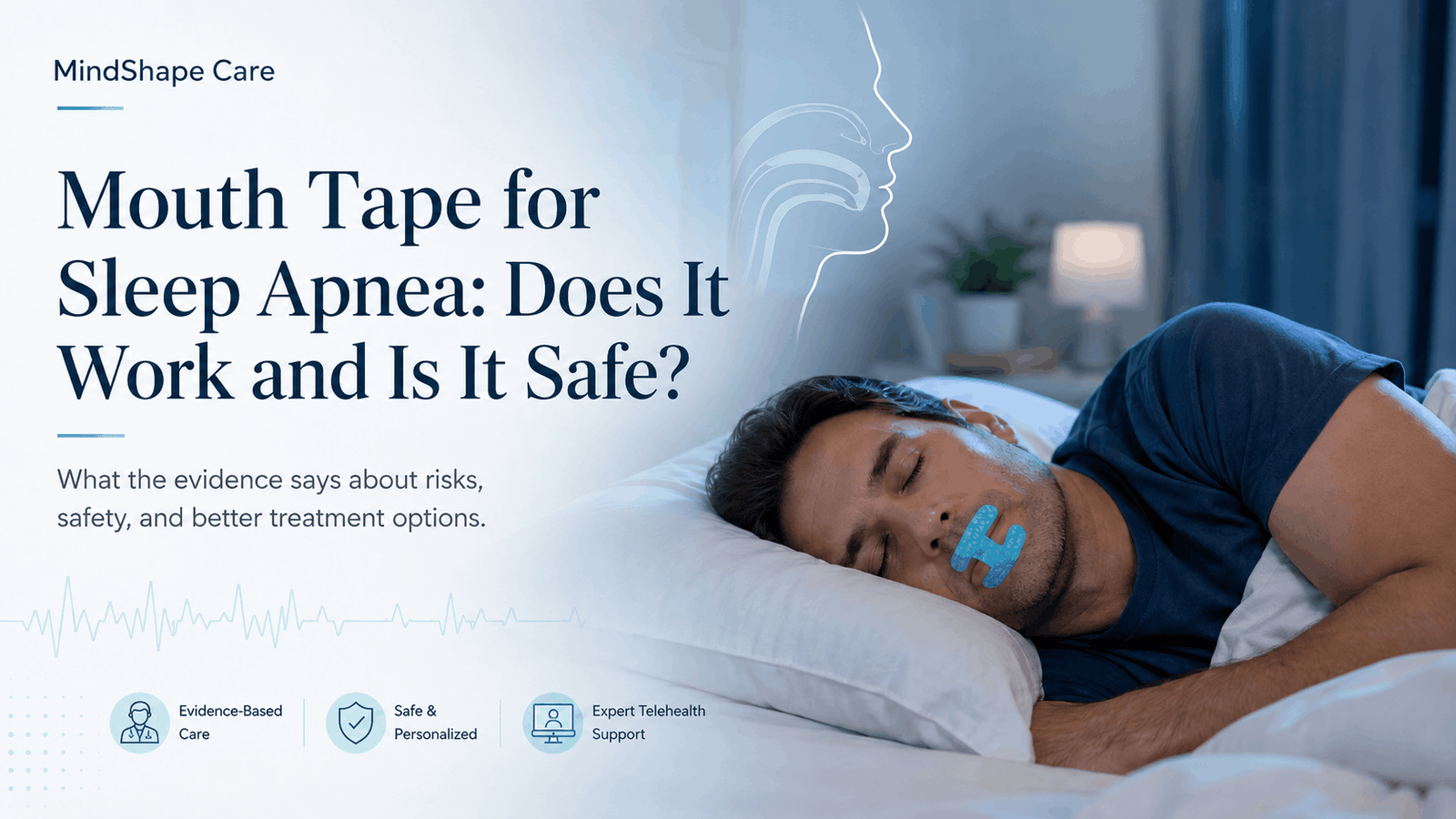
Mouth Tape for Sleep Apnea: Does It Work and Is It Safe?
Written by:

Mindshape Content Team
Medically Reviewed by:

Mouth taping has become a popular sleep trend. Supporters claim that placing tape over the lips before bed can encourage nasal breathing, reduce snoring, prevent dry mouth and improve sleep quality.
However, mouth tape is not a proven treatment for obstructive sleep apnea.
Small studies suggest that closing the mouth may improve snoring or airflow in carefully selected people. Other research shows that mouth closure can make airflow worse, particularly in people who rely on oral breathing because airflow through the nose or upper airway is restricted.
Does Mouth Tape Help With Sleep Apnea?
Current evidence does not support mouth tape as a standard or standalone treatment for obstructive sleep apnea.
Obstructive sleep apnea, or OSA, occurs when the upper airway repeatedly becomes narrowed or blocked during sleep. Mouth tape does not directly prevent this airway obstruction. It only attempts to keep the lips closed and encourage breathing through the nose.
Some people with mild OSA, mouth breathing and adequate nasal airflow may experience less snoring or fewer breathing events. However, the available studies are small, short and limited to selected participants.
A 2025 systematic review identified 10 eligible studies involving a total of 213 patients. Only two studies found statistically significant improvements in established sleep apnea measurements, and all included studies were rated as poor quality for different reasons. The review concluded that indiscriminate mouth taping could carry a potentially serious risk of harm.
What You Need to Know About Mouth Taping
- Mouth tape is not an established treatment for obstructive sleep apnea.
- It does not reliably prevent the upper airway from narrowing or becoming blocked.
- Mouth closure can worsen airflow in some people.
- Quieter snoring does not prove that sleep apnea has improved.
- Selected CPAP users may benefit from mouth tape under appropriate clinical guidance.
- Symptoms such as loud snoring, gasping and daytime sleepiness should be medically evaluated.
What Is Mouth Taping?
Mouth taping involves placing adhesive tape or a specially designed strip over or around the lips before sleep. The intended goal is to discourage mouth breathing and promote breathing through the nose.
Breathing through the nose helps warm, filter and humidify inhaled air. Keeping the mouth closed may also reduce dry mouth or morning bad breath in some people who normally sleep with their mouths open.
That does not mean taping the mouth is safe or beneficial for everyone.
People may breathe through their mouths because airflow through the nose or upper airway is restricted. Possible contributors include allergies, congestion, chronic rhinitis, nasal polyps, enlarged tonsils, a deviated septum or individual airway anatomy.
Closing the mouth does not diagnose or correct the underlying reason that mouth breathing is occurring.
Claims that mouth taping can reshape the jaw, create a more defined face, or cure sleep apnea are not supported by reliable clinical evidence.
Does Mouth Tape for Sleep Apnea Work?
Research into mouth taping is limited, and the available results are inconsistent.
What the 2025 Systematic Review Found
The 2025 systematic review published in PLOS ONE evaluated studies involving mouth taping, mouth sealing and other methods of oral closure in people with mouth breathing, sleep-disordered breathing or obstructive sleep apnea.
Ten studies involving 213 patients met the review’s inclusion criteria. Only two found statistically significant improvements in established sleep apnea markers such as the apnea-hypopnea index or oxygen desaturation measurements.
Several studies excluded people with nasal obstruction or nasal disease. This is important because people who try mouth tape at home may not know that allergies, chronic rhinitis, a deviated septum or another condition is restricting their nasal airflow.
The researchers concluded that stronger, higher-quality studies are needed before mouth taping can be recommended broadly. They also warned that indiscriminate use may create potentially serious risks, especially when nasal obstruction is present.
A Small 2022 Study Found Possible Improvement
A 2022 preliminary study evaluated 20 adults with mild obstructive sleep apnea who breathed through their mouths and could tolerate mouth sealing.
After one week, the participants’ median apnea-hypopnea index, or AHI, decreased from 8.3 to 4.7 breathing events per hour. Snoring measurements also improved.
AHI measures how often a person completely stops breathing or experiences a significant reduction in breathing during each hour of sleep.
Although the findings were encouraging, the study had important limitations.
- Study limitations
- It included only 20 participants.
- The intervention lasted only one week.
- It involved carefully selected adults with mild OSA.
- Participants had already demonstrated that they could tolerate mouth sealing.
- It did not establish long-term effectiveness or safety.
The findings should not be applied automatically to people with moderate or severe OSA, significant nasal obstruction or complex medical conditions.
Mouth Closure Worsened Airflow in Some Participants
A 2024 nonrandomized clinical trial published in JAMA Otolaryngology–Head & Neck Surgery examined the effects of controlled mouth closure in 54 adults with obstructive sleep apnea.
Mouth closure improved airflow overall, but the response differed substantially between participants. Airflow worsened in 12 of the 54 participants, representing approximately 22% of the study group.
The unfavorable response was seen particularly among people with high levels of mouth breathing and obstruction near the soft palate. In these patients, oral breathing appeared to provide an important alternative route around the obstruction.
The study was conducted under controlled conditions during drug-induced sleep endoscopy and evaluated acute changes in airflow. It did not test ordinary mouth taping throughout a full night of natural sleep.
What These Findings Mean for Patients
Mouth closure may affect snoring or airflow in a narrow group of people, but current evidence does not show that mouth tape reliably treats obstructive sleep apnea.
You cannot determine whether mouth tape is working safely based only on how quiet your snoring becomes. Proper sleep testing is needed to measure breathing events, oxygen levels and the severity of sleep disruption.
Why Mouth Tape Is Not a Sleep Apnea Treatment
Obstructive sleep apnea is not simply a habit of sleeping with the mouth open.
During an obstructive event, the upper airway becomes narrowed or blocked while the person continues trying to breathe. This can interrupt airflow and repeatedly disturb sleep.
Evidence-based OSA treatments are designed to keep the airway open, reduce airway obstruction or address factors contributing to the condition. Mouth tape does not reliably perform these functions.
Mouth tape also cannot tell you any of the following information.
- Information mouth tape cannot provide
- Whether you stop breathing during sleep
- How frequently breathing interruptions occur
- Whether your blood oxygen level falls
- How severe your sleep apnea may be
- Whether your symptoms are caused by OSA or another sleep disorder
- Where the airway is becoming restricted
Even if mouth tape makes snoring quieter, sleep apnea may still be present. A quieter bedroom is not proof that nighttime breathing has become healthy.
Is Mouth Taping Safe?
The long-term safety of mouth taping has not been established.
The main concern is not simply the adhesive. The greater concern is what may happen when someone’s mouth is closed without first understanding why they breathe through it.
It May Make Breathing More Difficult
Allergies, congestion, nasal polyps, enlarged tonsils, a deviated septum or upper-airway anatomy may restrict nasal breathing.
For some people, oral breathing provides an alternative route when airflow through the nose or soft-palate region is limited. Research shows that closing this route can worsen airflow in certain patients with OSA.
Being able to breathe through your nose while awake does not guarantee that mouth closure will remain comfortable or safe throughout the night. Nasal resistance, sleeping position and airway muscle tone can change during sleep.
It May Create False Reassurance
Mouth taping may make snoring quieter while breathing interruptions, oxygen drops and sleep fragmentation continue.
Depending on mouth tape instead of seeking an evaluation may delay the diagnosis and treatment of an underlying sleep disorder.
it Can Irritate the Skin and Lips
Adhesives can cause redness, soreness, skin irritation or an allergic reaction. Repeated application and removal may also damage sensitive skin around the lips.
It May Cause Anxiety or Disrupted Sleep
Some people experience panic, claustrophobia or a feeling of restricted breathing when their mouth is covered. This discomfort may make it harder to fall asleep or remain asleep.
It Should Not Replace Prescribed Treatment
Mouth tape should not replace CPAP, APAP, a prescribed oral appliance or another treatment recommended by a qualified healthcare professional.
Do not stop or reduce an existing sleep apnea treatment because mouth taping appears easier or makes snoring less noticeable.
Who Should Avoid Mouth Taping Without Medical Guidance?
Do not begin mouth taping without discussing it with a qualified healthcare professional if any of the following apply to you.
People who need medical guidance before mouth taping
- Diagnosed or suspected sleep apnea is present in your medical history.
- Loud, frequent, or disruptive snoring occurs on a regular basis.
- Gasping, choking, or sudden snorting repeatedly wakes you up.
- Witnessed breathing pauses have been noticed by a bed partner.
- Chronic nasal congestion frequently blocks your airway.
- Restricted airflow makes comfortable nose-breathing difficult.
- Structural issues exist, such as a deviated septum, nasal polyps, or enlarged tonsils.
- Prescribed sleep or breathing equipment is in use, including CPAP or oxygen therapy.
- Underlying health conditions affect your cardiac, respiratory, or nervous systems.
- Adhesive allergies, fragile skin, or facial sensitivities make tape risky.
- Claustrophobia, panic, or anxiety triggers whenever your mouth is covered.
- Limited physical mobility or dexterity prevents you from removing the tape yourself in an emergency.
Mouth taping should not be used on children unless it has been specifically recommended and supervised by an appropriately qualified pediatric clinician.
Can You Use Mouth Tape With CPAP?
Some people who use a nasal CPAP mask experience air leaking through the mouth. This may contribute to dry mouth, noise, discomfort and difficulty using CPAP consistently.
A 2025 randomized crossover study evaluated 62 people with OSA who experienced mouth breathing while using CPAP. Participants completed 30-day periods using CPAP with and without hypoallergenic silicone mouth tape.
With mouth tape, average CPAP use increased by 51.8 minutes per day. Participants also used CPAP more frequently, and several symptoms related to dryness, snoring, and nighttime awakenings improved. Adverse effects were also reported.
This study does not mean that every person using CPAP should tape their mouth.
The participants had already been diagnosed with OSA, were receiving CPAP therapy, used a specific type of tape and followed a defined clinical study protocol. If you experience dry mouth or air leakage while using CPAP, ask your sleep care team to review the following factors.
- CPAP issues to review with a clinician
- Your mask type, size and fit
- Whether a full-face mask may be more appropriate
- Your prescribed pressure settings
- Heated humidification
- Nasal congestion or obstruction
- Your sleeping position
- Whether another mask interface would provide a better seal
Positive airway pressure remains the most common treatment for sleep apnea. CPAP provides constant pressure through the nose, mouth, or both to help keep the airway open while you sleep. Do not add mouth tape or alter your prescribed CPAP treatment without discussing it with your healthcare provider.
What Should You Do Instead of Mouth Taping?
The appropriate next step depends on why you are snoring, breathing through your mouth or waking with a dry mouth.
Get Evaluated for Sleep Apnea
Consider a sleep apnea evaluation if you experience one or more of the following symptoms.
- Frequent or loud snoring
- Witnessed pauses in breathing
- Gasping or choking during sleep
- Morning headaches
- Dry mouth on waking
- Persistent fatigue
- Excessive daytime sleepiness
- Difficulty concentrating
- Irritability or mood changes
- Insomnia or repeated awakenings
- High blood pressure
- Drowsiness while driving
You can have sleep apnea without obvious snoring. Symptoms can also appear differently among women, older adults and people who do not fit the commonly assumed sleep apnea profile.
Complete the Appropriate Sleep Test
A healthcare provider may recommend a home sleep apnea test or an overnight study in a sleep laboratory, depending on your symptoms, risk factors and medical history.
Sleep studies help clinicians determine whether sleep apnea is present, identify the type of sleep apnea and estimate how severe it is.
A negative, incomplete or technically inadequate home test does not always end the evaluation. If concerning symptoms continue, your clinician may recommend further testing or an in-lab sleep study.
Address Nasal Obstruction
If allergies, chronic congestion or a structural nasal issue contributes to mouth breathing, treatment should address the underlying cause.
Depending on the findings, a clinician may recommend allergy management, appropriate medication or an evaluation by an ear, nose and throat specialist.
Nasal strips may improve nasal airflow for some people, but they do not treat the upper-airway obstruction responsible for OSA.
Use Evidence-Based Sleep Apnea Treatment
Treatment should be individualized according to your diagnosis, OSA severity, airway anatomy, medical history and preferences.
The National Heart, Lung, and Blood Institute identifies positive airway pressure as the most common sleep apnea treatment. It also lists custom oral appliances, lifestyle changes, orofacial therapy and selected surgical or device-based options.
Evidence-based treatment options
- CPAP or APAP therapy
- A professionally fitted oral appliance
- Positional therapy
- Weight management when medically appropriate
- Treatment for nasal or upper-airway obstruction
- Orofacial or myofunctional therapy
- Hypoglossal nerve stimulation for selected patients
- Surgery in appropriate cases
Medication May Be Appropriate for Selected Patients
In December 2024, the FDA approved Zepbound, or tirzepatide, for moderate-to-severe obstructive sleep apnea in adults with obesity. It is used in combination with a reduced-calorie diet and increased physical activity.
Zepbound is not suitable for every person with OSA. Eligibility, contraindications, possible side effects and alternative treatments require an individualized medical evaluation.
Get the Cause Checked Before Trying a Sleep Trend
Mouth breathing and snoring are symptoms, not diagnoses.
Taping your mouth may change how you breathe or how much noise you make, but it cannot confirm that your airway remains open or that your oxygen level stays within a healthy range.
A proper sleep apnea evaluation can help determine whether your symptoms are related to obstructive sleep apnea, nasal obstruction, primary snoring or another sleep problem.
Worried Your Symptoms May Be Sleep Apnea?
MindShape provides clinician-led telehealth evaluation for obstructive sleep apnea. During an online appointment, you can discuss your snoring, fatigue, nighttime breathing symptoms, medical history and testing options with a healthcare professional.
Your clinician can help determine whether sleep testing is appropriate and discuss evidence-based treatment options based on your individual needs.
FAQs
Frequently Asked Questions
Can mouth tape cure sleep apnea?
No. Mouth tape does not cure obstructive sleep apnea. It does not reliably prevent the upper airway from becoming narrowed or blocked during sleep.
Can mouth tape lower my AHI?
A few small studies have reported lower AHI measurements in selected patients. However, current evidence does not show that mouth tape reliably reduces AHI or treats sleep apnea in the wider population.
Does mouth taping stop snoring?
It may reduce snoring in some people whose snoring is associated with mouth breathing. However, quieter snoring does not prove that breathing interruptions, oxygen levels or sleep quality have improved.
Is mouth taping safe if I can breathe through my nose?
Not necessarily. Being able to breathe through your nose while awake does not rule out nighttime nasal resistance, upper-airway obstruction or sleep apnea.
Is mouth breathing always bad?
No. Mouth breathing may occur because of temporary congestion, chronic nasal obstruction, sleeping position or airway anatomy. In some people with OSA, it may provide an alternative route around an obstruction.
Is mouth tape safe with CPAP?
A clinical study found possible benefits for selected CPAP users with mouth leakage. However, mouth tape should only be considered after discussing mask fit, humidification, nasal airflow, and alternative mask options with your sleep care team.
Is a chin strap better than mouth tape?
A chin strap may help reduce mouth opening for some CPAP users, but it does not treat sleep apnea by itself. It may also be ineffective or uncomfortable if nasal airflow is restricted. Ask your provider whether it is appropriate for your treatment setup.
Is mouth tape an FDA-approved sleep apnea treatment?
Do not assume that one negative home test rules out every case of sleep apnea. If symptoms continue or the recording was incomplete, ask your clinician whether further evaluation or an in-lab sleep study is appropriate.
Can I use mouth tape after a negative home sleep apnea test?
Yes. Obesity raises your risk, but it isn’t required — jaw structure, airway anatomy, age, menopause, pregnancy, family history, thyroid disease, and other conditions all play a role too.
This article is for informational and educational purposes only and is not a substitute for professional medical advice, diagnosis, or treatment. If you are experiencing a medical emergency or a mental health crisis, please seek immediate care from emergency services or a local crisis line. This content has been written and reviewed by the Medical Team at mindshape.care. Read our full Medical Disclaimer.
References
View Clinical Sources & References
The following authoritative clinical sources support the medical information in this article.
- Rhee J, Iansavitchene A, Mannala S, Graham ME, Rotenberg B. PLOS ONE. Breaking Social Media Fads and Uncovering the Safety and Efficacy of Mouth Taping in Patients with Mouth Breathing, Sleep Disordered Breathing, or Obstructive Sleep Apnea: A Systematic Review . Published May 21, 2025; PLOS ONE 20(5):e0323643. Accessed July 26, 2026.
- Lee YC, Lu CT, Cheng WN, Li HY. Healthcare (Basel). The Impact of Mouth-Taping in Mouth-Breathers with Mild Obstructive Sleep Apnea: A Preliminary Study . Published September 13, 2022; 10(9):1755. Accessed July 26, 2026.
- Yang H, Huyett P, Wang TY, et al. JAMA Otolaryngology–Head & Neck Surgery. Mouth Closure and Airflow in Patients With Obstructive Sleep Apnea: A Nonrandomized Clinical Trial . Published November 2024; 150(11):1012-1019. Accessed July 26, 2026.
- Meksukree A, Pitipanyakul S, Laohavinij W, et al. Journal of Clinical Sleep Medicine. The Role of Mouth Tape for CPAP Use in Patients with Mouth Breathing and OSA . Published December 2025; 21(12):2063-2071. Accessed July 26, 2026.
- Cleveland Clinic. Mouth Taping: Is It Safe To Use? . Medically reviewed. Accessed July 26, 2026.
- U.S. Food and Drug Administration. FDA Approves First Medication for Obstructive Sleep Apnea . Published December 20, 2024. Accessed July 26, 2026.
Recent Blogs
Explore More Obstructive Sleep Apnea Guides
Why You Can Rely on Us?
At Mindshape Clinic, we are committed to providing clear and trustworthy health information that you can rely on.
Reliable Information – Every article is based on credible sources.
Expert Review – Content is carefully checked before publishing.
Up to Date – We keep information current with the latest insights.
Clarity First – Our goal is to make knowledge simple and accessible.