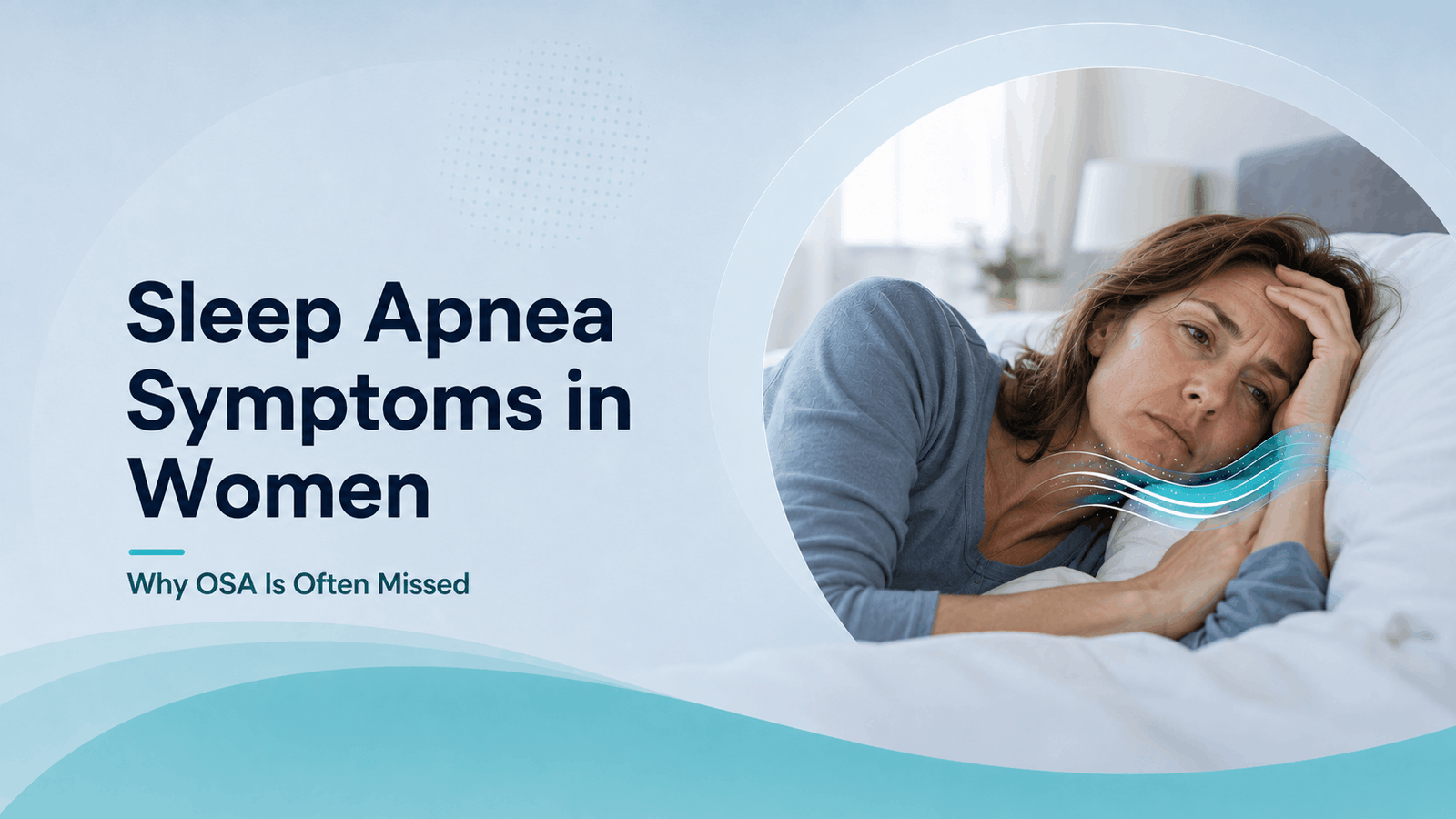
Sleep Apnea Symptoms in Women
Sleep Apnea Symptoms in Women: Why It's Often Missed
Written by:

Mindshape Content Team
Medically Reviewed by:

Sleep apnea in women doesn’t always come with loud snoring or witnessed breathing pauses. If you’re dealing with fatigue, insomnia, frequent awakenings, morning headaches, anxiety, depression, daytime sleepiness, or sleep that leaves you feeling like you never rested, it’s worth a conversation — especially after menopause, or alongside high blood pressure, obesity, diabetes, pregnancy, PCOS, or thyroid disease.
If you picture sleep apnea, you probably picture loud snoring and a partner who’s noticed you stop breathing. That picture has left a lot of women undiagnosed for years, because your symptoms may look nothing like it — persistent fatigue, trouble falling or staying asleep, morning headaches, mood changes, or sleep that never feels like it did any good.
Those symptoms overlap so heavily with anxiety, depression, stress, and menopause that the breathing problem underneath them often goes unrecognized for years. Here’s why that happens, what the research actually shows, and when it’s worth asking to be tested.
What Sleep Apnea Symptoms Actually Look Like in Women
Symptoms vary from person to person. Some women have the classic signs; many mostly notice how they feel during the day.
- Persistent tiredness or exhaustion
- Trouble falling asleep, or trouble staying asleep
- Frequent nighttime awakenings
- Sleep that doesn’t feel restorative, however long it lasted
- Morning headaches
- Daytime sleepiness
- Trouble concentrating or remembering things
- Irritability, anxiety, or low mood
- Waking often to urinate
- Dry mouth on waking
- Restless sleep
- Reduced interest in sex
- Snoring, gasping, or choking during sleep
- Breathing pauses someone else has noticed
Snoring still matters when it’s there — but its absence doesn’t clear you. The National Heart, Lung, and Blood Institute specifically calls out tiredness, headaches, and insomnia as symptoms women report more often than men. A recent clinical study backs this up directly: women with OSA more frequently reported insomnia, morning headaches, anxiety, depression, trouble concentrating, unrefreshing sleep, and night sweats than men with the same condition.
Why Sleep Apnea Looks Different in Your Body
Obstructive sleep apnea happens when your upper airway repeatedly narrows or closes during sleep, cutting off airflow and sometimes dropping your blood oxygen.
What’s different for women is often the pattern underneath that: you can have a genuinely lower AHI (apnea-hypopnea index, the standard severity measure) than a man with similar complaints, and still feel just as unwell — because the events themselves tend to look different.
Research has found women are more likely to have:
- Breathing disturbances concentrated during REM sleep
- Partial airway obstruction rather than complete blockage
- Shorter individual breathing events
- Events that trigger a brain arousal rather than a big oxygen drop
- Fatigue or insomnia instead of the obvious daytime sleepiness more common in men
That last point turns out to matter more than it sounds like it should, because a lot of testing and scoring still leans heavily on oxygen desaturation to define an event.
A 2025 study published in the Journal of Clinical Sleep Medicine tested this directly: switching to broader, arousal-inclusive hypopnea criteria increased sleep-disordered breathing diagnoses by 30.4% in women, compared with 21.7% in men.
The Menopause Connection
Your risk of obstructive sleep apnea rises during and after menopause. Estrogen and progesterone appear to support upper-airway muscle tone and breathing control before menopause; as those hormones decline, that support fades, and fat tends to redistribute toward the neck and abdomen — both of which make airway collapse more likely.
That doesn’t mean every new sleep problem after menopause is menopause. Hot flashes, insomnia, restless legs, mood changes, and obstructive sleep apnea can all show up around the same time, and treating all of it as “just menopause” risks missing a separate, treatable sleep disorder underneath.
If sleep stops feeling restorative during perimenopause or afterward — especially alongside fatigue, headaches, snoring, gasping, or blood pressure that’s hard to control — it’s worth raising with your provider specifically.
Hormone therapy isn’t an established OSA treatment on its own; any decision about menopausal hormone therapy should weigh your full symptoms, history, and risks, not sleep apnea alone.
Why This Gets Missed So Often
Your symptoms look like something else
Fatigue, poor concentration, insomnia, and mood changes also show up with depression, anxiety, thyroid disorders, anemia, menopause, and plain chronic stress. Those deserve real evaluation in their own right — the problem is when they become the only explanation anyone considers.
Screening was built around male-typical signs
Standard screening questions focus on loud snoring, witnessed apnea, daytime sleepiness, neck circumference, and male sex. They’re genuinely useful for catching high-risk patients — they were just never designed to weigh insomnia, headaches, fatigue, or fragmented sleep very heavily, which is exactly where a lot of women’s symptoms live.
You may be sleeping without a witness
If you sleep alone, there’s no one to report choking, gasping, or breathing pauses. That absence of a witness doesn’t mean the events aren’t happening — it just means nobody’s told you about them.
Some events are harder to catch at home
Most home sleep apnea tests don’t record brain activity, so they can’t directly measure sleep stages or arousals. That’s a real limitation specifically when your breathing disturbances interrupt sleep through arousal rather than a dramatic oxygen drop — which, per the research above, is more common in women.
Why Catching This Earlier Actually Matters
Untreated obstructive sleep apnea affects more than how tired you feel. Repeated breathing interruptions, oxygen swings, and fragmented sleep are linked to higher risk of:
- Hard-to-control high blood pressure
- Heart disease
- Atrial fibrillation
- Heart attack and stroke
- Insulin resistance and type 2 diabetes
- Memory and concentration problems
- Motor vehicle and workplace accidents
- Lower quality of life overall
These are associations, not a guarantee for any individual — your actual risk depends on OSA severity, oxygen levels, other health conditions, and treatment. And if you already have an anxiety or depression diagnosis, finding OSA on top of it doesn’t undo that diagnosis. It means treating the sleep apnea may address one real contributor to your fatigue and mood that mental health treatment alone hasn’t been able to touch.
When It's Worth Getting Tested
Bring this up with a provider if any of these sound like you:
- Exhausted no matter how much time you spend in bed
- Wake up repeatedly overnight without knowing why
- Regularly wake with a headache or dry mouth
- Sleep changed during perimenopause or after menopause
- Someone’s noticed you snore, gasp, choke, or stop breathing
- Treatment for insomnia, anxiety, or depression hasn’t fully resolved your sleep symptoms
- High blood pressure that’s hard to control
- Have obesity, prediabetes, or type 2 diabetes
- You have PCOS or an underactive thyroid
- You’re pregnant and have developed new snoring, breathing trouble, or marked daytime sleepiness
- Caught yourself getting sleepy while driving
That last one deserves its own sentence: if you’re struggling to stay awake behind the wheel, don’t wait for a scheduled appointment — that needs medical attention now.
Home Sleep Test or In-Lab Study — Which One Do You Need?
A home sleep apnea test (HSAT) is a reasonable, convenient option for uncomplicated adults whose symptoms point toward moderate-to-severe OSA, ordered by a licensed provider and reviewed by a qualified clinician. It isn’t the right first test for everyone, though. In-lab polysomnography (PSG) is generally the better choice if you have severe insomnia, significant heart or lung disease, suspected sleep-related hypoventilation, neuromuscular weakness, chronic opioid use, a history of stroke, possible central sleep apnea, or another sleep disorder that needs direct observation.
A home test typically estimates events using total recording time rather than confirmed sleep time, which can underestimate how often they’re actually happening. Most home tests also can’t detect brain-wave arousals — which is exactly why the American Academy of Sleep Medicine recommends an in-lab study when an HSAT comes back negative, inconclusive, or technically inadequate but your symptoms still point to OSA.
If your main symptoms are insomnia, fatigue, or repeated awakenings rather than classic snoring, it’s worth asking directly whether your study will evaluate arousal-based breathing events and report both AHI and RDI (respiratory disturbance index) — given everything above, that distinction may be the difference between a clear answer and an inconclusive one.
FAQs
Most common Questions
Is it possible to have sleep apnea without snoring?
Yes. Snoring is common with OSA but far from universal — some women have quiet snoring or none that anyone’s noticed. Persistent fatigue, insomnia, morning headaches, unrefreshing sleep, and repeated awakenings are reason enough on their own to bring it up with a provider.
Is sleep apnea common after menopause?
Risk rises during and after menopause, driven by hormonal changes, aging, weight changes, and shifting body-fat distribution. A new sleep problem around this time shouldn’t automatically get chalked up to “just menopause.”
Does birth control or hormone therapy affect sleep apnea?
Hormonal changes do influence breathing and upper-airway function, but the evidence doesn’t support birth control or menopausal hormone therapy as a standard OSA treatment. Bring up every hormone medication you’re on as part of your evaluation — it’s relevant context, not a fix on its own.
Is it normal to get a sleep apnea diagnosis after already having an anxiety or depression diagnosis?
It happens more often than it should, because the symptoms overlap so much. It doesn’t mean your earlier diagnosis was wrong — anxiety and depression are real, treatable conditions on their own — but if treatment hasn’t fully resolved your fatigue, insomnia, or unrefreshing sleep, an additional sleep evaluation is a reasonable next step.
Do women need a different sleep apnea test than men?
The tests themselves are the same. What deserves more attention is how the results get interpreted — an in-lab study is more informative when insomnia is severe, another sleep disorder is suspected, or a home test comes back negative while your symptoms continue.
Do thin women get obstructive sleep apnea?
Yes. Obesity raises your risk, but it isn’t required — jaw structure, airway anatomy, age, menopause, pregnancy, family history, thyroid disease, and other conditions all play a role too.
This article is for informational and educational purposes only and is not a substitute for professional medical advice, diagnosis, or treatment. If you are experiencing a medical emergency or a mental health crisis, please seek immediate care from emergency services or a local crisis line. This content has been written and reviewed by the Medical Team at mindshape.care. Read our full Medical Disclaimer.
References
View Clinical Sources & References
The following authoritative clinical sources support the medical information in this article.
- Jennum P, Ibsen R, Ibsen M, Andersen S, Kjellberg J. SLEEP (Oxford Academic). Long-Term Welfare Consequences of Sleep Apnea in 20–64-Year-Olds — Influence of Gender: A Nationwide Cohort Study . Published July 2025; Sleep 48(7):zsaf057. Accessed July 26, 2026.
- SLEEP (Oxford Academic), editorial commentary. The Gender Gap in Obstructive Sleep Apnea: Unmasking the Disproportionate Costs on Women . Published July 2025. Accessed July 26, 2026.
- Haile K, Mungarwadi M, Ibrahim NA, et al. Journal of Clinical Sleep Medicine. Using Expanded Diagnostic Criteria Mitigates Gender Disparities in Diagnosis of Sleep-Disordered Breathing . 2025;21(3):543–548. Accessed July 26, 2026.
- National Heart, Lung, and Blood Institute (NIH). Sleep Apnea — Symptoms . Official patient resource. Accessed July 26, 2026.
- Kapur VK, Auckley DH, Chowdhuri S, et al. American Academy of Sleep Medicine. Clinical Practice Guideline for Diagnostic Testing for Adult Obstructive Sleep Apnea . J Clin Sleep Med 2017;13(3). Accessed July 26, 2026.
Recent Blogs
Explore More Obstructive Sleep Apnea Guides
Why You Can Rely on Us?
At Mindshape Clinic, we are committed to providing clear and trustworthy health information that you can rely on.
Reliable Information – Every article is based on credible sources.
Expert Review – Content is carefully checked before publishing.
Up to Date – We keep information current with the latest insights.
Clarity First – Our goal is to make knowledge simple and accessible.